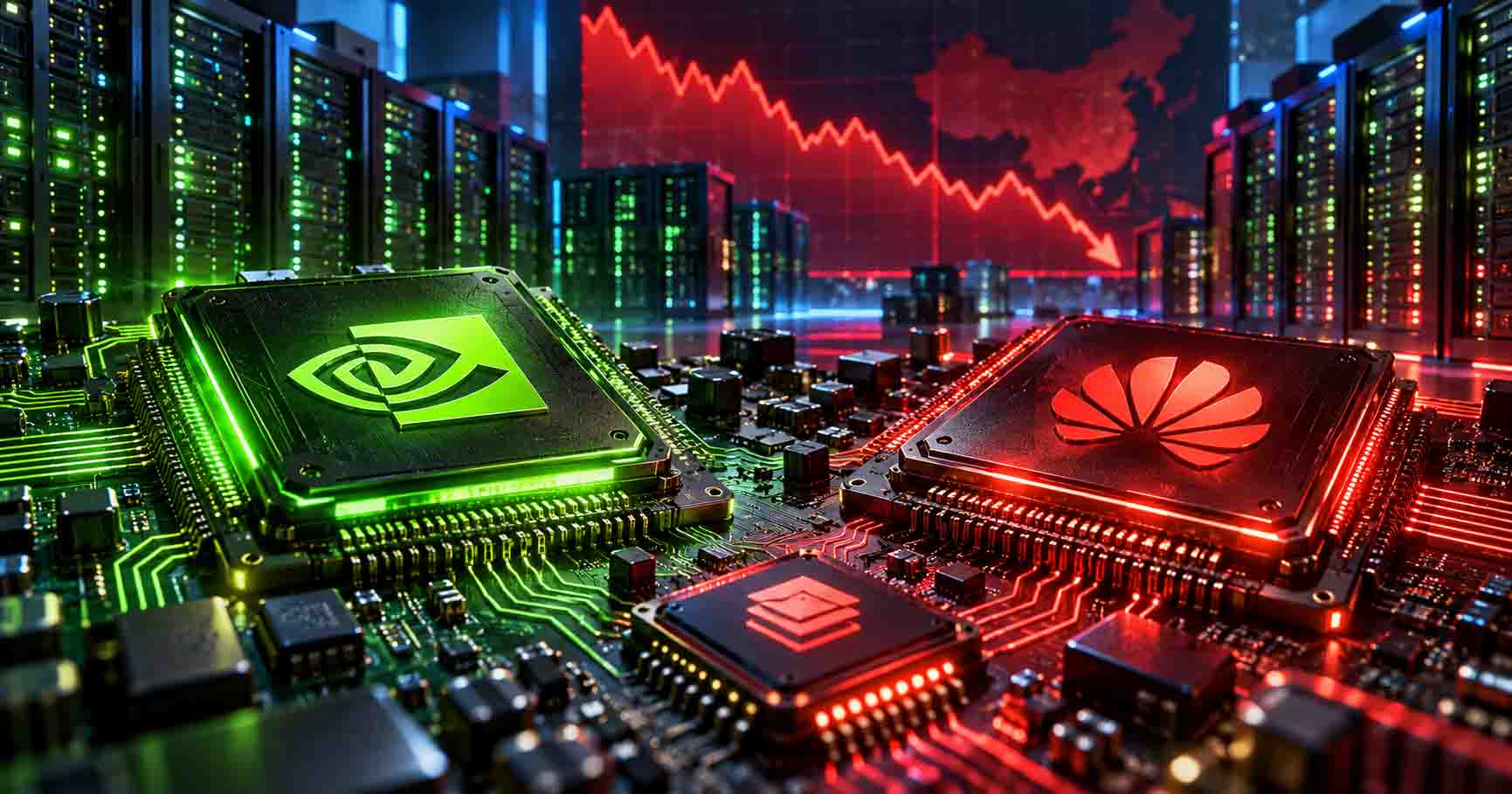
AMD Stock Jumps 9% as Company Crosses $1 Trillion

AMD stock surged more than 9% on Monday, September 21, 2026, pushing Advanced Micro Devices above a $1 trillion market capitalization for the first time as investors poured back into semiconductor companies benefiting from the artificial-intelligence infrastructure boom.
In the latest live market reading available while this report was being prepared, AMD traded near $610.54, up around 9.06%, giving the company a market capitalization of approximately $1.013 trillion. The shares reached an intraday high of about $615.61.
AMD stock live price
The share price continues to move during the Wall Street session. The market panel below displays AMD’s latest available price and daily change.
Market data is provided through TradingView and may be delayed depending on exchange and data-source rules.
Why is AMD stock surging?
Artificial intelligence remains the primary catalyst, with investors betting that global spending on data centers, AI accelerators and computing infrastructure will remain strong despite elevated interest rates and economic uncertainty.
Reuters reported that AMD crossed the $1 trillion valuation threshold for the first time as investors increased their exposure to semiconductor companies linked to AI demand.
The shares have gained roughly 185% in 2026, substantially outperforming the Nasdaq over the same period.
AMD joins the $1 trillion chip club
AMD became the fourth U.S. semiconductor company to cross the trillion-dollar mark, following Nvidia, Broadcom and Micron.
Nvidia remains substantially larger, but AMD’s milestone highlights how the artificial-intelligence boom is spreading across the semiconductor industry.
Investors are increasingly looking for companies capable of becoming major alternatives to Nvidia in AI accelerators and complete data-center systems.
Record revenue backs the AI story
AMD reported record revenue of $11.5 billion in the second quarter of 2026, up 50% from a year earlier.
Its Data Center segment generated $6.7 billion, a 107% year-over-year increase driven by strong demand for EPYC processors and AMD Instinct GPUs.
AMD CEO Lisa Su said artificial intelligence is driving a significant expansion in demand for computing across the company’s markets.
Helios and Instinct take aim at Nvidia
AMD is increasingly moving beyond individual chips toward complete AI computing platforms.
Its strategy combines EPYC CPUs, Instinct accelerators, networking technology, software and the Helios rack-scale architecture.
AMD has identified OpenAI, Anthropic, Meta, Microsoft and Oracle among organizations using or deploying technology within its expanding AI ecosystem.
AMD is also gaining against Intel
The company’s growth is not limited to AI accelerators.
Demand for server CPUs used alongside GPUs in AI inference systems has also helped AMD strengthen its position in the processor market.
Reuters said strong EPYC demand has helped AMD gain additional market share from Intel.
Intel and other chip stocks rally
AMD’s surge was part of a broader semiconductor rally.
Intel jumped around 13% during the session, while Micron and other chipmakers also advanced as investors returned to AI-related equities.
The technology rally helped lift the Nasdaq by roughly 1.6% and the S&P 500 by more than 1% during Monday trading.
Falling oil gives technology another boost
Technology stocks also benefited from a sharp decline in crude oil prices.
U.S. crude fell around 4.8% to roughly $95.49 a barrel in one of Reuters’ latest readings, while Brent dropped more than 3% as Saudi supply flows improved and investors looked toward possible diplomatic progress during U.N. meetings.
Lower energy prices reduce inflation concerns and can ease pressure on bond yields, which tends to support high-growth technology valuations.
China remains a critical variable
U.S.-China relations remain one of the largest risks for AMD and the wider semiconductor industry.
Washington maintains restrictions on exports of certain advanced AI chips to China, while China remains important to global electronics manufacturing and technology supply chains.
AMD’s rally comes as Washington and Beijing hold negotiations involving artificial intelligence, trade and critical minerals.
Profile News has covered the latest U.S.-China talks covering AI, trade and critical minerals.
Can AMD seriously challenge Nvidia?
Crossing $1 trillion does not mean AMD has caught Nvidia in market value or AI accelerator market share.
But investors are betting that the artificial-intelligence market will become large enough to support more than one major supplier.
AMD is trying to compete with an integrated platform combining CPUs, AI accelerators, networking and software rather than relying on a single product category.
What comes after $1 trillion?
Investors will now focus on demand for AMD’s latest Instinct accelerators, deployment of Helios systems and orders from hyperscale cloud providers and AI laboratories.
Export controls on China, semiconductor development costs, profit margins and the enormous capital-spending budgets of technology companies will remain major variables.
In the immediate term, the question is whether AMD can maintain a valuation above $1 trillion through the close after crossing the threshold for the first time during Monday’s session.
Report Sources: Reuters — AMD reaches $1 trillion, Reuters — Wall Street and AI stocks, AMD — Q2 2026 financial results, TradingView — AMD market data.