

Daily Report September 6, 2026 – Strait of Hormuz tensions and Middle East escalation
Large-scale Israeli escalation in southern Lebanon dominated developments on September 6, with airstrikes, drone attacks, artillery shelling and explosions reported across numerous towns and areas in the south. Lebanon’s Ministry of Public Health reported deaths and injuries during the day and said a hospital in Nabatieh al-Fawqa was completely destroyed.
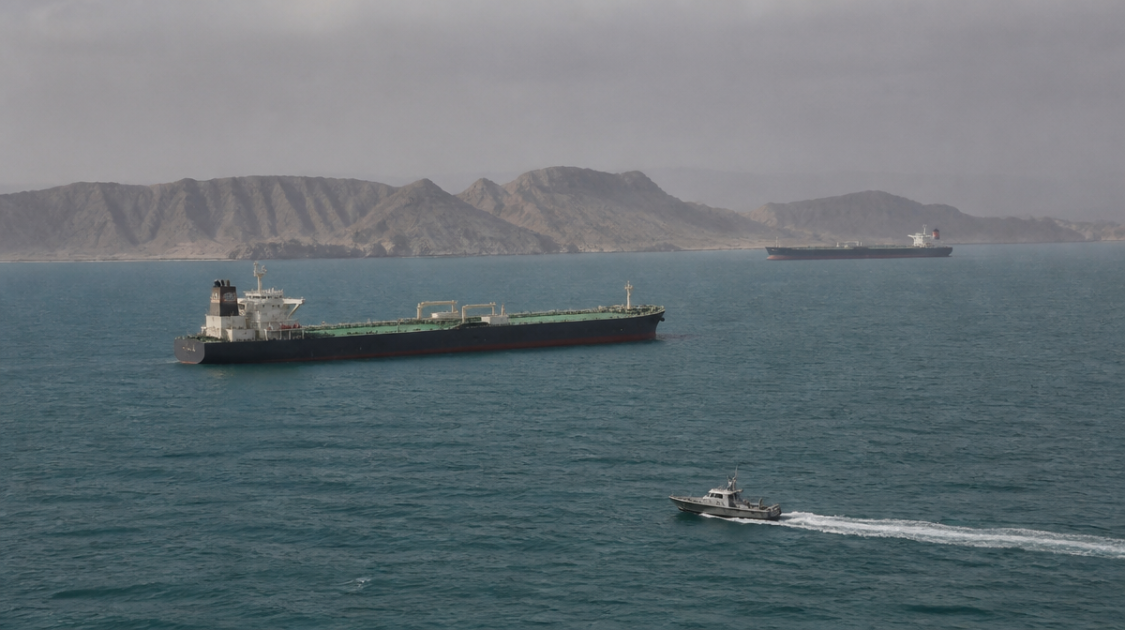
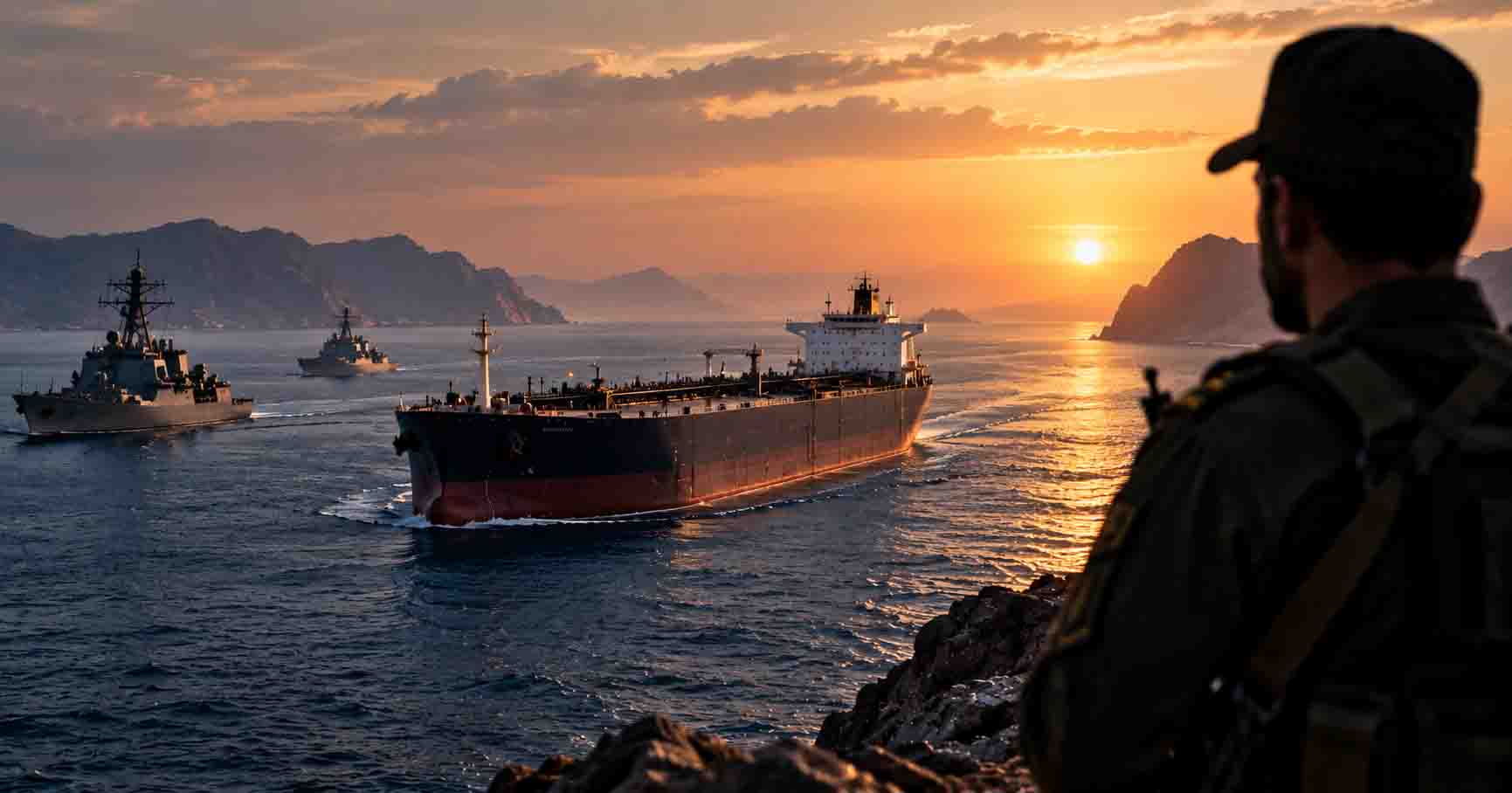
Regionally, the Strait of Hormuz and the U.S.-Iran confrontation remained among the leading stories, amid conflicting claims over attacks on U.S. naval assets. Tehran also announced plans to establish a restricted zone in parts of the Gulf, while Washington maintained that commercial shipping continued through the strait.
On Ukraine, U.S. envoys Steve Witkoff and Jared Kushner traveled from Moscow to Kyiv after talks with Russian President Vladimir Putin. They subsequently held discussions with Ukrainian President Volodymyr Zelenskyy focusing on a potential settlement, security and economic guarantees, and the territorial issue.
The day’s developments followed trends highlighted in Profile News’ Daily Report for September 5, 2026, including developments in the Strait of Hormuz, Yemen, Lebanon and the Russia-Ukraine diplomatic track.
Daily Report: Southern Lebanon — Widespread Airstrikes and Shelling
Southern Lebanon witnessed a broad escalation from the morning hours. Warplane strikes were reported in Kfar Rumman, Nabatieh, Nabatieh al-Fawqa, Arabsalim, Qantara and Wadi Zibqin. Drone strikes also targeted Nabatieh al-Fawqa, Nabatieh and the area between Shawkin and Nabatieh al-Fawqa.

Artillery shelling extended to Wadi al-Hujair, Wadi al-Salouqi, the outskirts of Kfar Rumman, Baraachit, Nabatieh al-Fawqa, Mansouri, the Kunin woodland, Zawtar al-Sharqiyah, Aitaroun, the area between Hinniyah and Mansouri, Haddatha, Beit Yahoun and Wadi Zibqin.
Explosions were also reported in Mansouri, Zawtar al-Sharqiyah, Kfar Tibnit, Wadi al-Salouqi and Aitaroun, while explosive canisters were reported in the Ali al-Taher woodland.
According to the news flow, the strike on Arabsalim was preceded by an Israeli evacuation warning for a building before the town was hit. The Israeli military said its operations in southern Lebanon came in response to Hezbollah launching two drones toward its forces. It later said it had attacked armed operatives and infrastructure it described as belonging to Hezbollah.
The developments form part of a broader wave of Israeli strikes on southern Lebanon, which have seen an expansion in the scope of targeting and operations in recent days.
Regarding casualties, civil defense authorities in southern Lebanon initially reported two people killed in the Arabsalim strike. Lebanon’s Ministry of Public Health later said the day’s strikes had killed four people and wounded 20, adding that a hospital in Nabatieh al-Fawqa had been completely destroyed.
In the evening, the ministry reported three people killed in a drone strike on Nabatieh. The source material does not establish whether this toll was included in the earlier figures or was additional, so the numbers should not be combined.
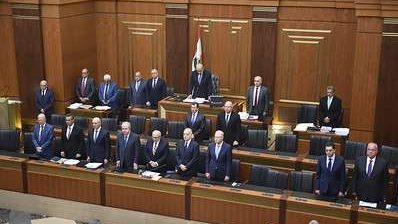
Politically, Lebanon’s president said the attacks had gone beyond violations of the cessation-of-hostilities agreement to target state institutions, calling on the United States and the international community to act. The prime minister reaffirmed support for the return of residents and efforts to meet their needs, while the parliament speaker said Israel had failed to comply with ceasefire arrangements.
Assessment: The combination of airstrikes, drone attacks, artillery fire and explosions across a wide geographical area, alongside reported damage to a healthcare facility, suggests that the September 6 developments went beyond a series of isolated strikes. A key indicator will be whether operations continue at the same intensity and whether their geographical scope expands.
Daily Report: Iran and Strait of Hormuz — Naval Confrontation and Conflicting Claims
Iran’s Islamic Revolutionary Guard Corps said it targeted a U.S. aircraft carrier and destroyer with missiles, accusing them of harassing Iranian vessels and participating in the blockade. It claimed the two vessels withdrew from the engagement area after sustaining damage.
The IRGC also said it targeted a U.S. unmanned vessel that allegedly attempted to enter a protected area of the Strait of Hormuz, while asserting that the strait was under what it described as Iranian management.
U.S. Central Command, however, denied the Iranian claim that a U.S. vessel had been hit in the strait, leaving the two accounts in direct conflict without independent confirmation in the source material.
The New York Times cited U.S. Central Command as saying that shipping through the strait continued and that it had helped facilitate the passage of 1,600 commercial vessels carrying 800 million barrels of oil. The U.S. energy secretary also said approximately nine million barrels of oil were passing through the strait each day.
In another development, Iran’s national security chief announced that Tehran would establish a restricted zone outside the Strait of Hormuz, beginning from what he described as the line of the U.S. naval blockade and extending into parts of the Gulf. He said vessels entering the zone would be placed on a sanctions list.
Economically, Iranian financial outlets reported that the U.S. dollar reached 2.229 million rials on the parallel market, marking a new record low for the Iranian currency. TankerTrackers, meanwhile, reported that Middle Eastern oil exports in August were 39% lower than levels recorded in January and February.
Assessment: The dispute now extends beyond military encounters to competing claims over navigation rules and effective control of maritime space. Shipping volumes, energy flows through the Strait of Hormuz and the implementation of Tehran’s announced restricted zone will be important indicators of what comes next.
Daily Report: Russia and Ukraine — Witkoff and Kushner Travel From Moscow to Kyiv
Moscow described Russian President Vladimir Putin’s talks with U.S. envoys Steve Witkoff and Jared Kushner as highly constructive and candid.
According to Russian presidential aide Yuri Ushakov, Putin expressed readiness for constructive dialogue with the United States while emphasizing the need to address what Moscow considers the root causes of the conflict.
The talks were part of the continuing U.S. diplomatic effort surrounding the Russia-Ukraine war and efforts to advance a settlement.
Witkoff and Kushner then traveled to Kyiv, where they held talks with Ukrainian President Volodymyr Zelenskyy. The Ukrainian president said Kyiv’s proposals were ready and that Ukraine wanted to bring the end of the war closer while securing security guarantees.
Following the talks, Zelenskyy said discussions covered post-war security and economic guarantees for Ukraine. He said the territorial issue remained the principal unresolved question and could only be settled at the leaders’ level.
He also announced that the next round would involve the United States, Britain, France and Germany.
Witkoff said both Russia and Ukraine would have to make concessions to end the war, while Kushner said U.S. President Donald Trump’s objective was to establish a framework for a comprehensive and lasting peace rather than simply ending the current war.
Assessment: The envoys’ direct journey from Moscow to Kyiv puts U.S. mediation at the center of the diplomatic process. Zelenskyy’s comments on territory, however, indicate that one of the most sensitive issues remains unresolved.
Yemen — Strikes and Fighting Across Several Fronts
Yemeni government forces said they destroyed Houthi capabilities at the Al-Labnat camp in Al-Jawf province, while reports indicated powerful explosions in Taiz during the early hours of the day.
Later, government forces said they were engaged in intense fighting in the Al-Kadha sector west of Taiz and subsequently announced airstrikes against Houthi positions in Al-Barh, southern Hodeidah, Marib and Al-Jawf.
In a maritime development, Yemen’s coast guard said it intercepted an oil tanker after it unloaded an unauthorized shipment at the Houthi-controlled Ras Isa port.
Gaza and West Bank — Fatal Strikes and Field Escalation
In Gaza, funeral ceremonies were held for 100 people whose bodies had been recovered from beneath the rubble of destroyed buildings in Gaza City’s Zeitoun neighborhood. The source material does not specify when they were killed, so they should not be counted as casualties from September 6.
During the day, medical sources reported that two people, including a child, were killed and others wounded in an Israeli strike west of Gaza City.
Later, a source at Al-Shifa Hospital reported one person killed and others wounded in a strike on the Rimal neighborhood. Al-Aqsa Martyrs Hospital separately reported that a child was killed and others injured in shelling that targeted a school sheltering displaced people in central Gaza.
In the West Bank, reports said several Palestinians were wounded by Israeli forces and settlers in the village of Hajjah, east of Qalqilya.
In Jerusalem, the governorate said Israeli authorities had issued 15 orders barring religious figures and Jerusalem residents from Al-Aqsa Mosque over six days.
Politically, eight Arab and Muslim countries condemned statements by two Israeli ministers regarding the displacement of Palestinians from Gaza, reiterating their rejection of attempts to displace Palestinians inside or outside Palestine.
Israel — Surprise Drill for a Multi-Front Scenario
The Israeli military announced a surprise General Staff-level exercise designed to test preparedness for a large-scale, multi-front event, with commanders summoned and reserve forces mobilized to participate.
Israel’s military chief said the situation could erupt on several fronts and indicated that the level of readiness had been raised during the Jewish holidays.
The military also announced a scheduled exercise in Eilat and the Arava Valley involving security forces, naval assets and aircraft.
Syria — Israeli Shelling in Quneitra Countryside
Syrian state television reported that Israeli forces fired an artillery shell toward the vicinity of the village of Al-Samadaniyah al-Sharqiyah in the central Quneitra countryside.
The development comes amid Israeli escalation in southern Syria, where movements and shelling have been reported in parts of the Damascus and Quneitra countryside.
The available material did not provide information about casualties or damage from the latest shelling.
Other International Developments
In Germany, preliminary results reported by Al Jazeera’s correspondent showed the Alternative for Germany party leading the election in Saxony-Anhalt.
In Indonesia, Agence France-Presse cited a government source as saying flights at Jakarta’s main airport were suspended following a volcanic eruption.
In Ukraine, the governor of Kharkiv said Russian attacks on 14 areas of the region over 24 hours killed four people and wounded eight. TASS separately reported that Russian forces had targeted a Ukrainian cargo vessel in the Black Sea.
What to Watch in the Coming Hours
- Southern Lebanon: Whether airstrikes, shelling and explosions continue following the broad September 6 escalation, and whether Lebanese authorities issue an updated casualty toll.
- Strait of Hormuz: Whether Iran begins implementing its announced restricted zone and how this affects shipping and oil flows.
- U.S.-Iran confrontation: Whether independent information emerges regarding Iranian claims of attacks on U.S. naval assets, which Washington has denied.
- Ukraine: The outcome of the next round of talks involving the United States, Britain, France and Germany, particularly regarding territory and security guarantees.
- Yemen: Developments on the Taiz, Hodeidah, Marib and Al-Jawf fronts following government announcements of expanded operations.
- Gaza and Lebanon: Updated casualty figures and whether military operations continue into the following day.