Daily Report September 9, 2026 | Hormuz Escalates, Oil Tops $100

Daily Report September 9, 2026 | Hormuz Escalates as Oil Tops $100
The Daily Report for September 9, 2026 tracks an extraordinary day of escalation across the Middle East, as the confrontation between the United States and Iran rapidly expanded to oil tankers, commercial shipping and the Strait of Hormuz, while Iran fired missiles toward Jordan and Houthi attacks on Saudi Arabia continued.
Within hours, ships and tankers came under attack in the Gulf, the Gulf of Oman and Iraqi waters, shipping traffic through the Strait of Hormuz declined, and Brent crude climbed above $100 a barrel amid growing concern that the military escalation could develop into a broader crisis for global energy supplies and trade.
Beyond the Gulf, Yemen and Saudi Arabia, Gaza and the West Bank, Lebanon and the Russia-Ukraine war saw new political and military developments, while Iran’s nuclear program faced renewed international pressure.
Iran and the US: Confrontation Spreads to Oil Tankers
The escalation between the United States and Iran dominated developments on September 9, as oil tankers and commercial vessels became directly involved in the military confrontation.
U.S. Central Command said American forces destroyed five Iranian oil tankers during the latest wave of strikes and had targeted 10 Iranian tankers over the past week.
According to the U.S. account, the strikes followed attempts by Iran’s Islamic Revolutionary Guard Corps to target a U.S. warship with ballistic missiles. Washington said the attempts failed and caused no injuries among U.S. forces.
Iran’s Revolutionary Guards, meanwhile, said they carried out operations against U.S. ships and tankers in Gulf waters, describing them as retaliation for U.S. attacks on Iranian oil tankers.
U.S. Central Command denied Iranian claims that two American destroyers had been damaged.
For more on the military confrontation, see Profile News’ coverage of U.S. strikes on Iran.
Strait of Hormuz Becomes the Most Dangerous Maritime Front
The Strait of Hormuz and the Iran-U.S. escalation saw one of the most dangerous days of the crisis as attacks on vessels expanded across the Gulf and Gulf of Oman.
Iran said it targeted 10 vessels near the strait in retaliation for U.S. strikes on its oil tankers, while maritime security reports said several commercial vessels had been damaged.
The United Kingdom Maritime Trade Operations said it had received reports of commercial vessels coming under attack in the northern Gulf and Gulf of Oman.
A tanker carrying about 2 million barrels of Iraqi fuel oil was also attacked by a drone in Iraqi waters, sparking a fire on board that was later brought under control. No crew members were reported injured.
In another incident, reports said one tanker crew member was killed and another was listed as missing.
The maritime developments have become a central part of the crisis because of the importance of the Strait of Hormuz and maritime shipping to global energy exports.
Oil Flows Through Hormuz Decline
The crisis is no longer focused solely on the possibility of the strait being closed, but also on how much oil can safely move through it.
Estimates cited by Reuters indicated that oil flows through Hormuz had fallen sharply from prewar levels, while measuring tanker traffic had become more difficult because some vessels were switching off their tracking systems during transit.
Uncertainty over the actual volume of supplies moving through the strait has become another source of pressure on markets, forcing shipping companies, insurers and energy traders to assess the risk of attacks alongside the availability of supplies.
Oil Rises Above $100
The escalation quickly affected energy markets, with Brent crude climbing above $100 a barrel for the first time since July amid concerns over supplies and shipping traffic.
The increase came as three major factors converged: the U.S.-Iran confrontation in the Gulf, disruption to tanker traffic through the Strait of Hormuz, and Houthi attacks on facilities and other targets in Saudi Arabia.
For more on the market impact, read Profile News’ analysis of oil above $100 a barrel.
European natural gas prices also rose, indicating that concerns were spreading beyond oil to the broader energy market.
Jordan Intercepts 18 Iranian Missiles
The confrontation expanded geographically after the Jordanian military said the kingdom had come under a missile attack originating from Iran.
The Jordanian military said it intercepted 18 missiles, while two fell in areas away from population centers. No injuries were reported.
Missile interceptions were reported over the capital, Amman, as well as northern and eastern parts of the kingdom.
Iran’s Revolutionary Guards said they targeted the Azraq base with ballistic missiles, while Iran’s Foreign Ministry later said the targeting of U.S. sites in Jordan was, according to Tehran’s account, an act of self-defense.
U.S. officials said no American personnel were injured.
The developments have renewed attention on U.S. bases in the Middle East and their role in regional escalation calculations.
Iran Nuclear File Returns to the UN Security Council
Alongside the military confrontation, Iran’s nuclear program entered a new phase of international pressure.
The International Atomic Energy Agency’s Board of Governors voted to refer Iran’s noncompliance case to the United Nations Security Council, the first such step in about 20 years.
The decision followed a dispute over Iran’s cooperation with the agency’s investigation into traces of uranium found at undeclared sites.
Iran denied wrongdoing, said its nuclear program was peaceful and criticized the decision as politically motivated.
The developments come as Iran’s nuclear program remains at the center of the political and security confrontation between Tehran and the West.
Yemen and Saudi Arabia: A Second Regional Front
The Yemen-Saudi war and Houthi attacks remained one of the most dangerous fronts running parallel to the escalation in the Gulf.
The developments followed Houthi attacks targeting cities, civilian and economic facilities, and energy infrastructure in southern Saudi Arabia. Saudi authorities said the September 8 attacks injured 73 civilians.
The United Nations envoy for Yemen condemned the cross-border attacks, warning that they could widen the conflict, endanger civilians and undermine political efforts.
Inside Yemen, military operations by government forces against the Houthis continued on several fronts, including Al Jawf, Marib, Taiz and Al Bayda.
The developments mark an important shift in the war in Yemen after years in which cross-border attacks had declined.
Lebanon: Negotiation Talk as Israeli Strikes Continue in the South
In Lebanon, the Lebanese president said the decision to pursue negotiations with Israel was taken in Lebanon’s interest and that his call to end hostilities meant ending wars the country could not afford.
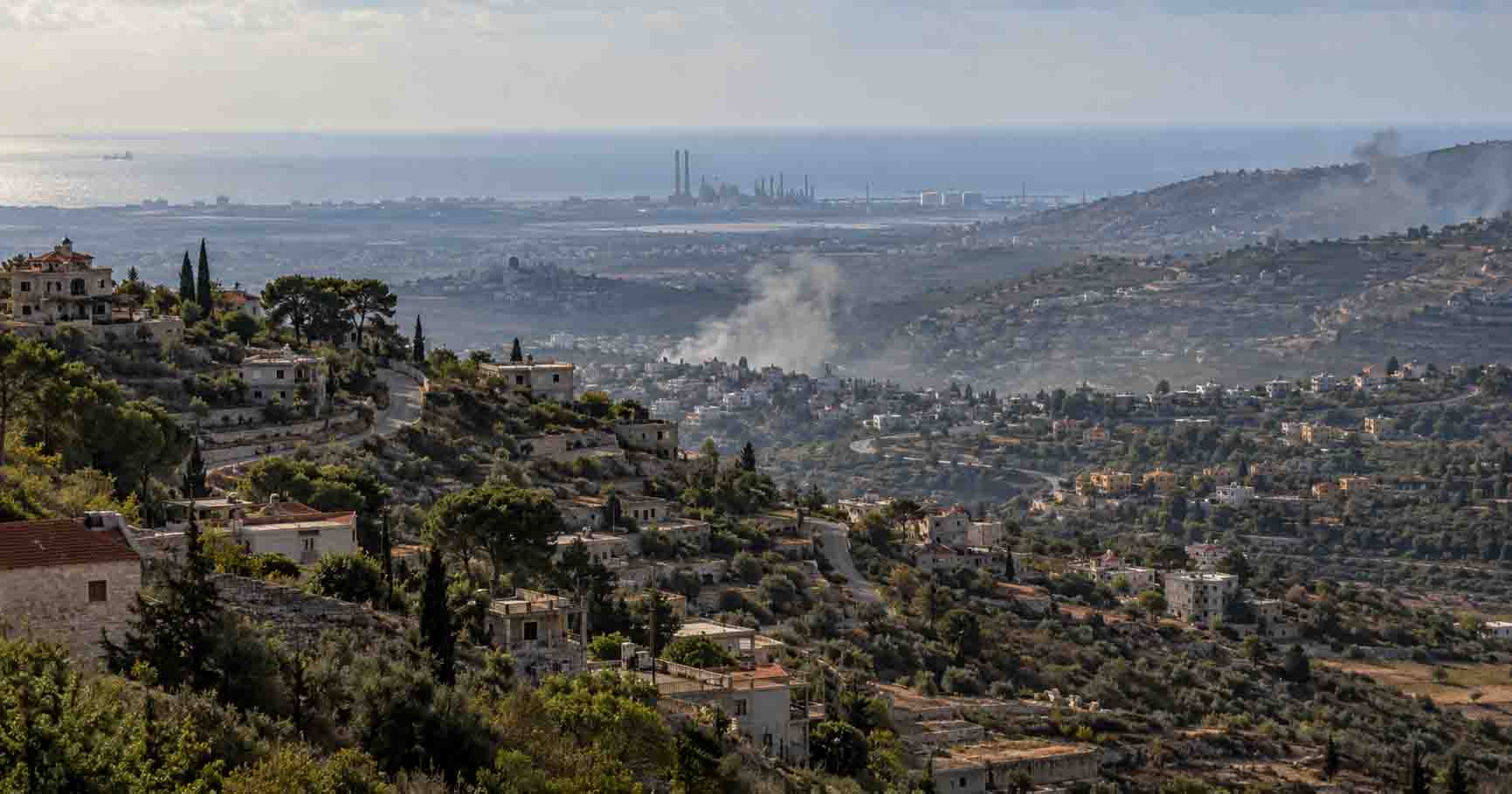
On the ground, reports said an Israeli drone carried out a strike on the town of Harouf in the Nabatieh district of southern Lebanon.
Southern Lebanon also saw a broad series of Israeli strikes on September 9, including airstrikes, drone attacks, artillery shelling and explosions in several towns and areas, as well as the use of sound bombs and explosive devices.
Domestically, on September 9, 2026, retired military personnel staged protests in Beirut and several other areas, briefly blocking roads over the draft 2027 budget and demanding adjustments to salaries and pensions. Their representatives met with a ministerial committee, which agreed to continue assessing the financial cost with the Finance Ministry, without reaching a final agreement.

Politically, the Cabinet continued discussing the draft budget and amended some of its provisions. It also discussed repeated Israeli strikes on Lebanon and the diplomatic measures taken in response, with further government meetings expected to continue consideration of the issues.
Summary of Israeli Strikes on Lebanese Territory on September 9, 2026
Airstrikes carried out by Israeli warplanes:
- Between Nabatieh al-Fawqa and Kfar Tebnit
- Wadi Zibqin

- Wadi al-Salouqi
- Al-Khiam
- Between Hadatha and Haris
- Sarbain
- Nabatieh al-Fawqa
- Al-Qantara
- Al-Mansouri


Israeli drone strikes:
- Marj Harouf
Israeli artillery shelling:
- Nabatieh al-Fawqa
- Dawhat Kfar Roummane
- Wadi al-Salouqi
- Zawtar al-Sharqiya
- Hadatha
- Majdal Selm
- Mays al-Jabal
- Beit Yahoun
- Braashit
- Al-Mansouri
- Houla
- Qabrikha
Explosions carried out by Israeli forces in southern towns:
- Al-Mansouri
- Markaba
- Bani Hayyan
- Tayr Harfa
- Al-Qantara
- Between Al-Qantara and Aadchit al-Qusayr
- Al-Tiri
- Al-Khiam
- Majdal Zoun
Sound bombs:
- Al-Mansouri
- Hadatha
Explosive devices:
- Al-Mansouri
- Bani Hayyan
The geographic spread of the strikes during the day showed the extent of Israeli military activity in southern Lebanon. The activity was not limited to airstrikes but also included artillery shelling, explosions and drone strikes in several border and inland areas.
The developments kept the Lebanese front under close watch as political discussions focused on negotiations and ending hostilities, while attention remained on developments on the ground in the hours ahead.
Gaza and the West Bank: Strikes and Home Demolitions
Israeli operations continued in the Gaza Strip, where reports said Palestinians were injured in a strike targeting a motorcycle on Al-Rashid Street. An Israeli strike also destroyed a house after it had been evacuated in the Shati refugee camp west of Gaza City.
The developments come amid the continuing situation in Gaza after the ceasefire, where military operations and the humanitarian crisis remain major issues.
In the West Bank and East Jerusalem, Israeli forces began demolishing a house in Silwan, while the Jerusalem Governorate reported that demolition orders had been distributed for homes in Issawiya.
The Israeli military also said it detained three Palestinian police officers in Beitunia, west of Ramallah.
Israel and Britain: Consulate Dispute Escalates
The diplomatic dispute between Israel and Britain widened following British measures against products from Israeli settlements in the occupied Palestinian territories.
Israel informed Britain that its consulate in East Jerusalem had 30 days to close, a move that followed British measures related to the settlements.
Britain’s foreign secretary said closing the consulate would have negative consequences, while London defended its settlement-related measures as part of its position on a two-state solution.
Russia and Ukraine: War Continues as Diplomacy Moves Forward
Military operations continued in the Russia-Ukraine war alongside U.S.-led diplomatic efforts aimed at restarting negotiations.
The Kremlin said it hoped Washington-mediated talks would resume soon following U.S. contacts in Moscow and Kyiv.
Fundamental differences between Russia and Ukraine remain, particularly over territory and the terms of a settlement.
On the battlefield, Russian authorities said a Ukrainian drone attack on Novorossiysk caused deaths and injuries, as strikes continued away from the traditional front lines.
Daily Report: What to Watch After September 9
- Strait of Hormuz: Tanker movements and any Iranian announcement expanding areas restricted to shipping.
- Iran and the United States: The possibility of additional attacks on tankers or ships and the other side’s response.
- Jordan: The possibility of further attacks on sites associated with U.S. forces.
- Oil: Whether Brent crude can remain above $100 a barrel.
- Saudi Arabia and Yemen: The nature of the Saudi response to Houthi attacks and the direction of fighting inside Yemen.
- Iran’s nuclear program: The political implications of referring the issue to the UN Security Council.
- Lebanon: The direction of political contacts as Israeli strikes continue.
- Gaza and the West Bank: Military operations, humanitarian conditions and tensions over settlements.
- Ukraine: Prospects for renewed talks as Russian and Ukrainian attacks continue.
Daily Report September 9, 2026: Key Takeaways
The Daily Report for September 9, 2026 shows that the center of gravity in the region’s crises has shifted clearly toward maritime routes and energy. The U.S.-Iran confrontation is no longer limited to conventional military strikes, with oil tankers, commercial vessels and traffic through the Strait of Hormuz now directly involved.
At the same time, Iranian missiles fired toward Jordan and renewed Houthi attacks on Saudi Arabia have expanded the geographic scope of the crisis, while oil has risen above $100 and risks to trade and energy flows have increased.
The developments coincided with significant developments involving Iran’s nuclear program, Yemen, Lebanon, Gaza, the West Bank and Ukraine, making the trajectory of escalation in the Gulf and the responses from Washington and Tehran central to the direction of events in the coming hours.
For comparison with the previous day’s developments, see the Daily Report for September 8, 2026.
Follow Breaking News
For live developments and breaking news around the clock, visit the Profile News breaking news page.
Breaking news from “Mirror of the Event” is also available through the Profile News WhatsApp channel.
Sources
- Reuters — Iran and US hit tankers in biggest wave of attacks on shipping since war began
- Reuters — Oil prices fly blind as the Hormuz enigma deepens
- Reuters — Israel sets deadline for Britain to close East Jerusalem consulate
- Reuters — Russia hopes US-mediated talks with Ukraine will resume
- Associated Press — IAEA board reports Iran to the UN Security Council