


Iran Sanctions Monitoring Ends After Russia-China Veto at UN Security Council
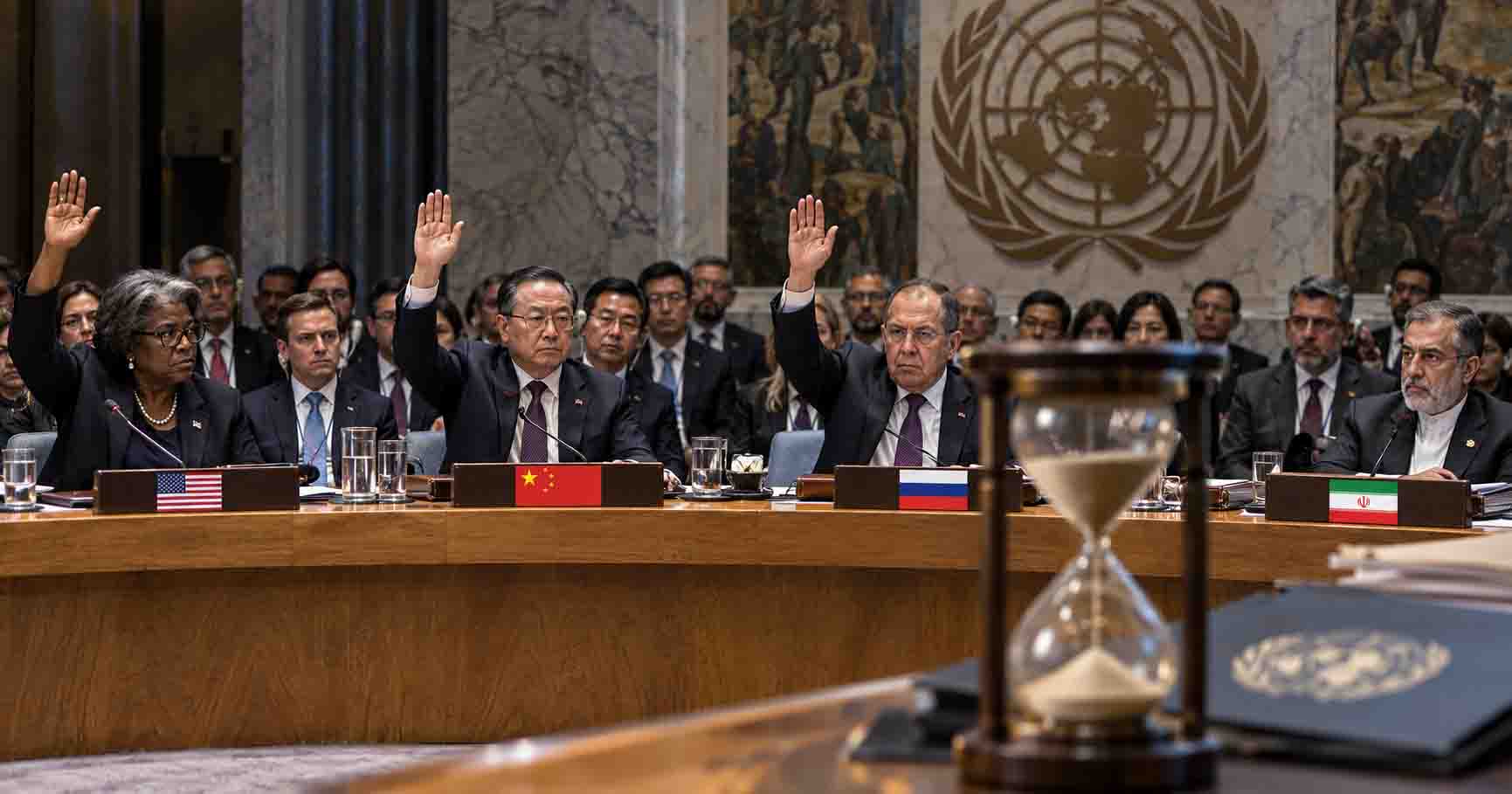
Iran sanctions monitoring entered a new phase after Russia and China vetoed a U.S.-backed United Nations Security Council resolution that would have extended the mandate for independent monitoring of international sanctions on Tehran.
According to Reuters, 11 of the Security Council’s 15 members voted in favor of the resolution, while Pakistan and Somalia abstained. The Russian and Chinese vetoes blocked the measure and ended the mandate for the independent panel of experts.
The panel was intended to monitor implementation of U.N. sanctions on Iran, investigate possible violations, report its findings to the Security Council and recommend further action when appropriate.

Iran Sanctions Monitoring Loses Independent Expert Panel
U.N. sanctions on Iran were reimposed a year ago after France, Britain and Germany triggered the so-called snapback mechanism linked to the 2015 nuclear agreement, accusing Tehran of failing to comply with commitments under the deal.
Iran denies seeking nuclear weapons and disputes the Western legal and political case for restoring the sanctions, arguing that Western governments had themselves failed to meet their obligations under the agreement.
Although the sanctions regime restored the independent expert mechanism, the Security Council was unable over the past year to agree by consensus on appointments to the panel. As a result, the experts never became operational during that period.
After the vote, U.S. Deputy Ambassador to the United Nations Jennifer Locetta said the loss of an independent panel would deprive the Security Council of a major source of impartial, evidence-based reporting on sanctions violations and create a significant monitoring gap.
Russia and China Reject Western Approach
Russia and China, however, accused Western governments of politicizing the Security Council’s handling of Iran and argued that disagreements over Tehran’s nuclear program should be addressed through political and diplomatic negotiations rather than additional sanctions pressure.
Russia’s U.N. Ambassador Vassily Nebenzia warned that Western actions risked further complicating efforts to resolve the crisis in the Persian Gulf and called for a diplomatic approach to concerns surrounding Iran’s nuclear activities.
Iran’s mission to the United Nations welcomed the Russian and Chinese vetoes and described the U.S.-backed draft as politically motivated.
Iran Returns to Center of UN Diplomacy
The vote comes as Iran again moves to the center of international diplomacy ahead of the United Nations General Assembly in New York and amid U.S. consultations with Gulf governments over the future of the conflict.
Profile News has previously reported on President Donald Trump’s statements on Iran and his planned consultations with Gulf leaders.
The Security Council vote also follows a U.N. report examining possible violations connected to the Iran war, underscoring the growing international focus on the country.
The failed resolution means the Security Council will for now operate without the independent expert panel that was expected to produce specialized reporting on sanctions implementation. The dispute over the sanctions regime and Iran’s nuclear program is likely to remain a major point of diplomatic confrontation between Western governments on one side and Russia, China and Iran on the other.
Report Sources: Profile News, United Nations, Reuters, Reuters.


