Israeli Strikes Hit Southern Lebanon as Salam Warns of UNIFIL Vacuum

Israeli strikes on southern Lebanon continued throughout September 21, 2026, with airstrikes, artillery fire, demolitions and illumination rounds reported across a wide stretch of the south as Prime Minister Nawaf Salam carried Lebanon’s security agenda to New York.
According to field information gathered by Profile News, Israeli military activity affected areas across Nabatieh, Bint Jbeil, Marjayoun and Tyre districts. Lebanese and regional media separately confirmed strikes on Wadi al-Hujair, Kfar Tebnit, the outskirts of Nabatieh al-Fawqa and Zawtar al-Sharqiya.
Israeli strikes on southern Lebanon: September 21 field summary
Profile News field information recorded the following activity during the day:
- Airstrikes: Nabatieh al-Fawqa, Kfar Tebnit, Wadi al-Hujair, Wadi al-Slouqi, the outskirts of Baraachit and Zawtar al-Sharqiya.
- Artillery fire: Zawtar al-Sharqiya, the Mifdoun area, Baraachit outskirts, Haddatha, Beit Lif, Mansouri, Kfar Tebnit, Aita al-Jabal, Wadi al-Slouqi, Houla, Wadi Zibqin, Kounine outskirts, Touline outskirts, Khiam plain and Qantara.
- Demolitions: Mansouri, Meiss El Jabal, Alman al-Shomariya, Ainata and Deir Siryan.
- Illumination rounds: Zawtar al-Sharqiya, Markaba, Houla, Wadi Zibqin, Haddatha and Wadi al-Slouqi.
The distribution of the incidents shows military activity extending across several sectors of southern Lebanon rather than remaining concentrated in a single location.

New evening strikes hit Kfar Tebnit and Zawtar al-Sharqiya
The strikes continued into the evening, with two Israeli airstrikes reported on Kfar Tebnit and the outskirts of Zawtar al-Sharqiya.
Earlier in the day, airstrikes were reported around Wadi al-Hujair, Kfar Tebnit and Nabatieh al-Fawqa, alongside artillery fire in several other southern areas.
Israeli drones were also reported flying at low altitude over parts of southern Lebanon and later over Beirut and its southern suburbs.
Mansouri remains under pressure
Mansouri again featured prominently in the day’s field reports, with artillery fire and demolition activity recorded in and around the town.
UNIFIL recently raised concerns over continuing Israeli demolition activity in the area and said such actions conflicted with international arrangements governing southern Lebanon.
The developments come as Israeli forces remain present inside parts of Lebanese territory and implementation of security arrangements remains incomplete.

Salam: Weapons must remain under state authority
As the military activity continued, Prime Minister Nawaf Salam began a diplomatic push in New York on the sidelines of the United Nations General Assembly.
During a meeting with U.S. Senator Jeanne Shaheen, a senior member of the Senate Foreign Relations Committee, Salam reaffirmed his government’s commitment to extending state authority and ensuring that weapons are held exclusively by the state.
He also emphasized continued U.S. support for the Lebanese Armed Forces and international assistance for Lebanon’s recovery and reconstruction.
Profile News previously examined international efforts to support the Lebanese army and prepare for the post-UNIFIL period.
What happens after UNIFIL?
The future of the international presence in southern Lebanon was one of the central issues raised by Salam in New York.
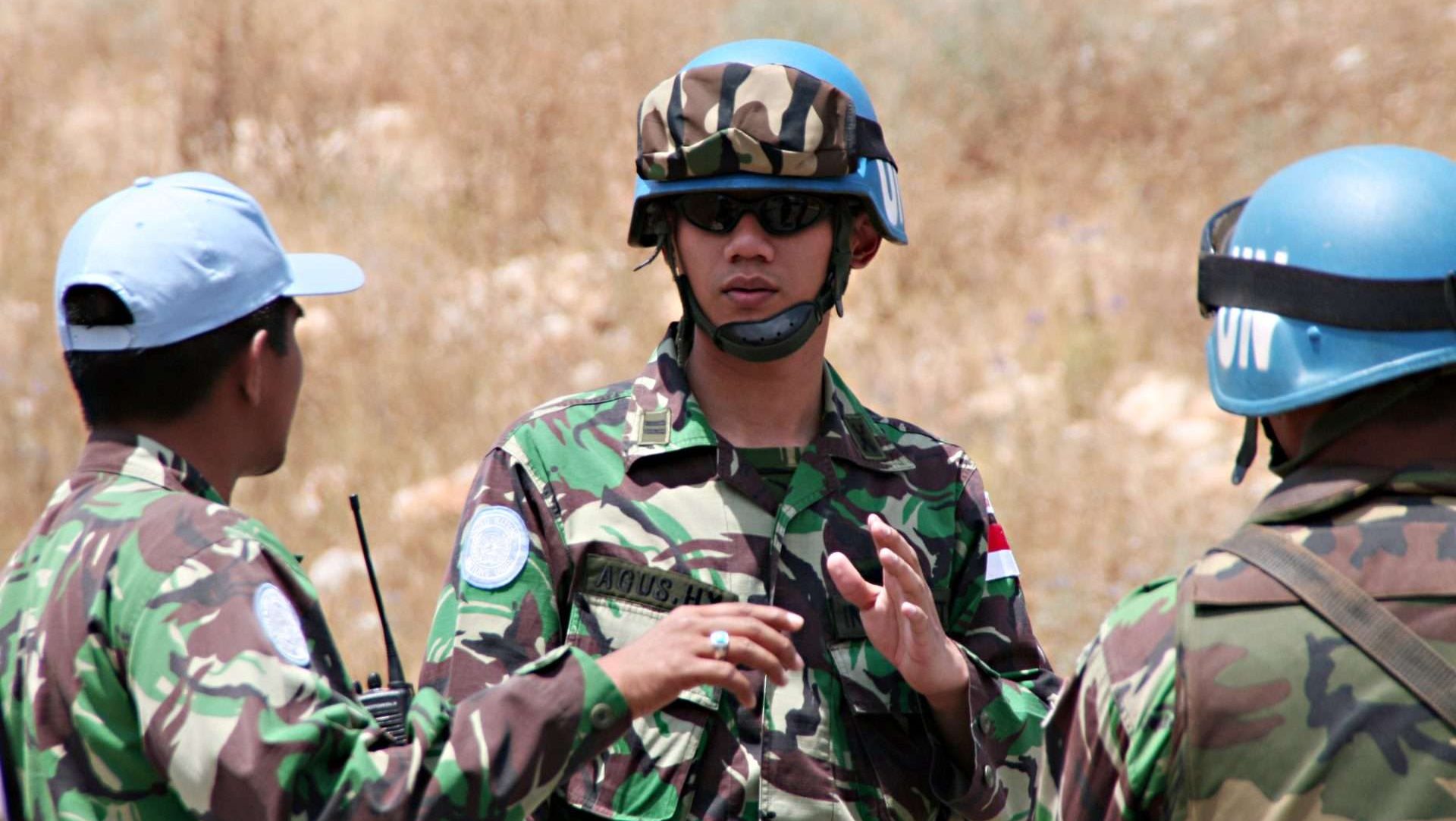
He said Lebanon must avoid a security vacuum when UNIFIL’s current mission ends and stressed the need for a continuing international presence in the south.
UNIFIL commander Major General Diodato Abagnara has also said a smooth transition will be critical before the mission begins its scheduled withdrawal at the end of 2026.
The transition is expected to shift additional responsibilities toward the Lebanese army and other United Nations agencies.
Army support becomes central to Lebanon’s diplomatic effort
Lebanon views military support as essential to any plan for expanding state authority in the south.
Salam told Shaheen that continued U.S. assistance was needed to strengthen the army’s capabilities, while the U.S. senator emphasized continued progress toward placing weapons under state control.
Salam had also told parliament earlier in September that the army was expanding its deployment in southern Lebanon and that the government intended to restore full state authority throughout the country.
Lebanon-Israel negotiations remain part of the equation
The negotiating track between Lebanon and Israel remains part of the broader security picture.
Salam has said Lebanon’s objectives include a full Israeli withdrawal, broader Lebanese army deployment and restoration of state authority.
Profile News previously covered the security negotiations between Lebanon and Israel and Beirut’s stated objectives.
Qatar discusses army, energy and reconstruction with Lebanon
Salam also met Qatari Prime Minister and Foreign Minister Sheikh Mohammed bin Abdulrahman Al Thani in New York.
According to the Lebanese prime minister’s office, their discussions included regional de-escalation, support for the Lebanese army, energy and electricity cooperation, investment and reconstruction.
The diplomatic push reflects Beirut’s effort to link security stabilization with economic recovery and reconstruction.
Southern Lebanon caught between military pressure and diplomacy
September 21 highlighted two parallel tracks for Lebanon.
On the ground, Israeli airstrikes, shelling and demolitions continued across the south. Diplomatically, Beirut sought support for the army, a post-UNIFIL security arrangement and progress toward an Israeli withdrawal.
That overlap makes southern Lebanon one of the main issues Lebanon is carrying into U.N. General Assembly week in New York.
Report Sources: Profile News field information; Al Jazeera — September 21 southern Lebanon developments; Lebanese Prime Minister’s Office — Salam-Shaheen meeting; Reuters — UNIFIL transition; L’Orient Today — Salam’s New York agenda.