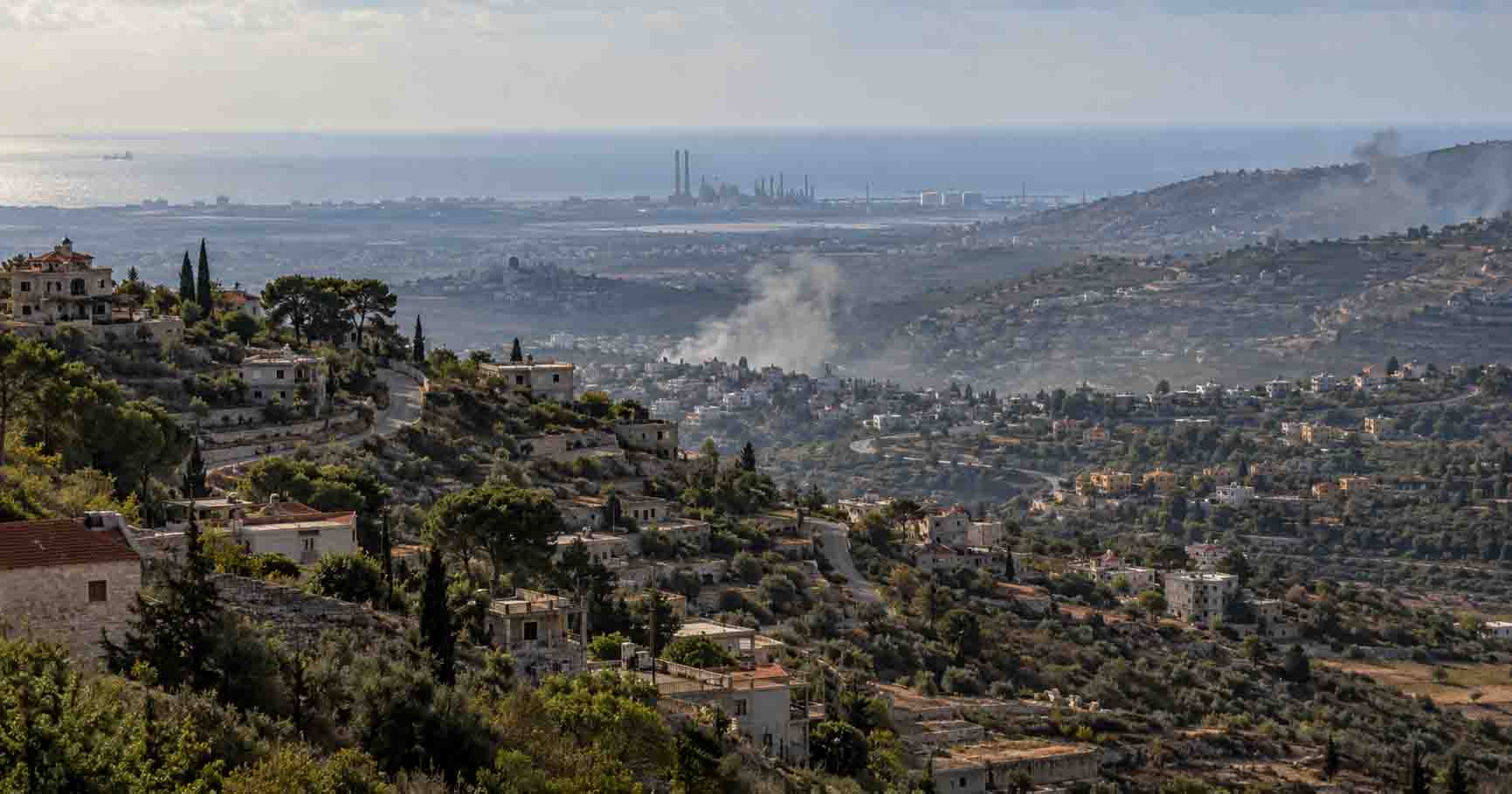
Israeli strikes on southern Lebanon brought tensions back to the forefront of the field situation, after the Israeli military announced attacks it said came in response to the launch of two drones it attributed to Hezbollah toward its forces. The strikes targeted areas around Nabatieh, Kfar Rumman, Nabatieh al-Fawqa and Arab Salim, alongside artillery shelling and drone activity in more than one location.
According to field information, the strikes hit Kfar Rumman, Nabatieh, Nabatieh al-Fawqa and Arab Salim, while drone activity was recorded around Dar al-Moallemin between Nabatieh and Nabatieh al-Fawqa. Artillery shelling also targeted Wadi al-Saluki – al-Hujeir, al-Mansouri and Doha Kfar Rumman.
🔴 New Update 10:55 | Beirut Time | A Profile News correspondent reported that an Israeli drone strike targeted Mahmoud Fakih Street, near the Fakhr El-Din parking area in Nabatieh al-Tahta, injuring three people according to preliminary information.

🔴 New update 10:55 | Beirut time: A Profile News correspondent reported that Israeli forces carried out a detonation in the town of al-Mansouri, Tyre district, southern Lebanon, amid the ongoing wave of escalation in the area.

Lebanon’s Health Ministry said in its latest update that four people were killed and 20 others injured in the Israeli strikes that targeted Nabatieh, Kfar Rumman and Arab Salim, adding that the majority of the victims were women and children.

Israeli strikes on southern Lebanon after reported drone launches
The Israeli military said the latest escalation came after two drones were launched toward its forces, blaming Hezbollah for the attack. According to the Israeli account, the strikes came in response to what the military described as a direct threat. However, independent verification of the details of the operations remains difficult during the escalation, especially with competing narratives and the overlap between military targets and civilian areas.
The Nabatieh area and its surroundings hold field significance because they are not limited to the immediate border line, but form a vital area in southern Lebanon. Therefore, targeting areas such as Kfar Rumman, Arab Salim and Nabatieh al-Fawqa reflects the widening of security pressure and raises fears that tensions may move closer to more densely populated towns.
Areas of shelling and drone activity
In Arab Salim, the Israeli military issued an evacuation warning for a building before targeting it with an airstrike. Israel uses such warnings in some operations before striking buildings it says contain military activity or infrastructure linked to Hezbollah. However, these warnings do not remove the humanitarian risks, as residents often have limited time to move amid panic and fear of subsequent strikes.
Drone activity was recorded around Dar al-Moallemin between Nabatieh and Nabatieh al-Fawqa, reflecting continued aerial surveillance over civilian and vital areas. In such cases, the overflight itself becomes a psychological and security pressure factor, even before any direct strike takes place.
In Nabatieh al-Fawqa, field information showed damage to the Ghandour Hospital building after it was targeted, a development that raises concerns over the extension of strikes to the vicinity of civilian and service facilities.

Artillery shelling also hit Wadi al-Saluki – al-Hujeir, al-Mansouri and Doha Kfar Rumman. Artillery shelling is among the escalation tools that most affect daily movement in villages, as it targets the vicinity of roads, valleys and open areas, pushing residents to limit movement or temporarily leave their homes.
Humanitarian and political implications
The continuing strikes raise repeated humanitarian concerns, especially when they affect populated areas or locations close to civilian facilities and main roads. Even when Israel says it is targeting military infrastructure, the risk of collateral damage remains present in towns where homes and public facilities overlap with areas of tension.
Villages in southern Lebanon have been living for months under continuous security pressure, amid strikes, drone overflights, artillery shelling and evacuation warnings. This has disrupted daily life, weakened local economic activity and increased the likelihood of temporary or repeated displacement from areas closest to the shelling lines.
Politically, the escalation in the south is tied to a broader regional context and the open confrontation between Israel and Hezbollah since the outbreak of the Gaza war. The danger lies in the fact that both sides present their operations within a logic of response and defense, making the rules of engagement fragile and vulnerable to escalation if major casualties or sensitive targets are involved.
In conclusion, Israeli strikes on southern Lebanon reflect a highly sensitive phase in the confrontation between Israel and Hezbollah. The strikes that hit Kfar Rumman, Nabatieh, Nabatieh al-Fawqa and Arab Salim, alongside artillery shelling and drone activity, place the south before a new test between continued limited escalation and the risk of sliding into a wider confrontation.
Source
Profile News – Field follow-up