Lebanon’s IMF Deal Hangs on Financial Gap Law as Washington and South Lebanon Take Center Stage

Lebanon and the IMF led the country’s political and economic agenda on September 28, 2026, as Finance Minister Yassine Jaber sought a new staff-level agreement with the International Monetary Fund in Washington, while passage of a financial gap law remained the key condition for moving toward a full financing program.
Also in Washington, Prime Minister Nawaf Salam met U.S. Secretary of State Marco Rubio, putting Lebanon’s sovereignty, a full Israeli withdrawal, exclusive state control over weapons and support for the Lebanese Armed Forces at the center of talks.
In Beirut, Lebanese Army Commander General Rodolph Haykal met European Union Ambassador Sandra De Waele to discuss developments in Lebanon and the region as well as the post-UNIFIL phase, with the EU envoy reaffirming continued support for the military.
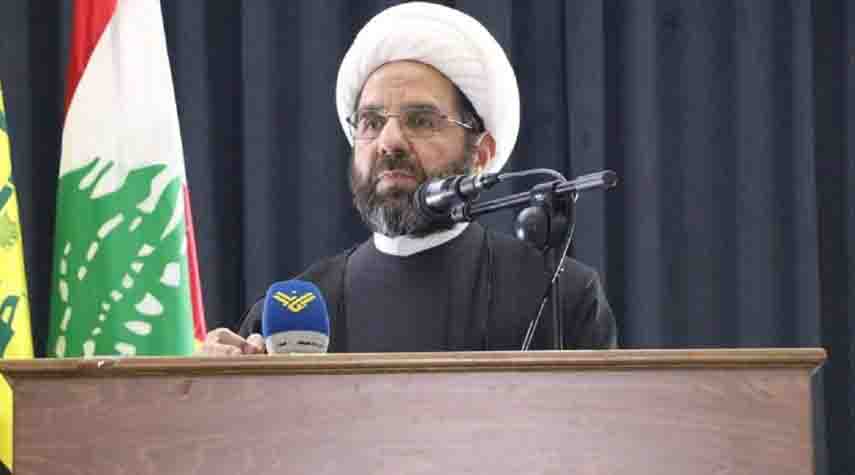
Domestically, remarks delivered by Hezbollah Secretary-General Naim Qassem on September 27 remained part of the political debate after he called for direct negotiations with Israel to be frozen and linked discussions over exclusive state control of weapons to an Israeli withdrawal and the return of residents to southern Lebanon.
On the ground, Israeli airstrikes, artillery shelling and demolitions continued across southern Lebanon on September 28, according to field information gathered by Profile News correspondents.
Lebanon and the IMF: Is a new agreement getting closer?
Finance Minister Yassine Jaber said Lebanon hopes to reach a new staff-level agreement with the International Monetary Fund, more than four years after the first agreement signed in April 2022 failed to develop into a full financing program.
According to Reuters, Jaber was in Washington on Monday to meet IMF Managing Director Kristalina Georgieva and said Lebanon had worked seriously on financial reforms over the past 18 months.
He pointed to passage of the banking restructuring law, welcomed by the IMF in August, as a signal that Lebanon’s government and parliament were moving forward with reforms.
Financial gap law remains the central hurdle
A full IMF program still depends on passage of Lebanon’s financial gap law.
The legislation is intended to determine how losses from the financial collapse that began in 2019 will be distributed among the state, the central bank, commercial banks and depositors.
The government estimated those losses at about $70 billion in 2022, while Reuters reported that the figure is likely higher now.
Jaber said a full IMF agreement would have to wait until the law is passed, while any final lending program would also require approval from the IMF’s executive board.
Reuters cited one source as saying a new staff-level agreement could be reached quickly, while another said it could come by the end of the year, leaving the timeline uncertain.
What would a staff-level agreement mean?
A staff-level agreement is not itself a loan but represents a major technical and political step toward a broader IMF program.
A full program, if its conditions are met and the IMF board approves it, would establish a framework for Lebanon’s banking and fiscal reforms and could help unlock wider international financial support.
Salam and Rubio discuss withdrawal and state control over weapons
Prime Minister Nawaf Salam met U.S. Secretary of State Marco Rubio at the State Department in Washington on September 28.
According to Salam’s public account of the meeting, the talks covered developments in Lebanon and the region and the restoration of full Lebanese sovereignty.
Salam called for activating the tripartite framework through practical steps based on reciprocity and sequencing, with the goal of achieving a complete Israeli withdrawal and exclusive state control over weapons across Lebanese territory.
He also called for a clear timetable and a verification mechanism to monitor implementation, alongside continued support for the Lebanese Armed Forces.
The meeting follows a negotiating track previously covered by Profile News in its report on Lebanon-Israel talks and U.S. mediation.
Lebanese Army and EU discuss the post-UNIFIL phase
At army headquarters in Yarzeh, Lebanese Army Commander General Rodolph Haykal received EU Ambassador Sandra De Waele and an accompanying delegation.
According to the Lebanese Army, discussions covered developments in Lebanon and the region as well as the post-UNIFIL phase.
De Waele reaffirmed continued European Union support for the military and praised its role in maintaining security and stability, while Haykal welcomed European initiatives supporting the army.
Profile News has previously examined international support for the Lebanese Army and planning for the post-UNIFIL period.
Naim Qassem calls for a return to indirect negotiations
Remarks by Hezbollah Secretary-General Naim Qassem, delivered on Sunday, September 27, remained politically significant the following day.
Qassem called on Lebanese authorities to freeze direct negotiations with Israel and return to indirect talks, arguing that the direct negotiating rounds had failed to deliver results from Hezbollah’s perspective.
On the issue of weapons, he said Hezbollah was prepared to discuss exclusive state control over arms but linked that discussion first to an Israeli withdrawal from southern Lebanon and the return of residents.
The position underscored continuing disagreement inside Lebanon over the sequencing of withdrawal, state authority and the weapons issue.
Three tracks converge around the role of the state
The September 28 developments placed three major challenges before the Lebanese state at the same time.
The first is financial: completing the reforms required for a viable IMF program.
The second is political and security-related: implementing the negotiating framework with Israel, securing withdrawal and strengthening the Lebanese Army.
The third concerns the post-UNIFIL phase and how Lebanon can prevent a security vacuum in the south as the army assumes broader responsibilities.
Profile News has also followed President Joseph Aoun’s emphasis on the army’s role during his visit to Nabatieh with the army commander.
Southern Lebanon on September 28: Airstrikes, shelling and demolitions
Military activity continued across southern Lebanon on September 28, according to field information collected by Profile News correspondents.


Airstrikes were reported in Wadi Zibqin, the area between Hadatha and Haris, Tallousa, Mays al-Jabal, Zawtar al-Sharqiyah and Qantara.
Artillery shelling affected Wadi al-Salouqi, the Kfar Tebnit-Nabatieh al-Fawqa area, al-Mansouri, Wadi Zibqin and its outskirts, Baraachit, Beit Yahoun, Haris, Nabatieh al-Fawqa, Hadatha, Khiam and Zawtar al-Sharqiyah.
Demolitions by Israeli forces were reported in Mays al-Jabal, al-Mansouri, Aitaroun, Alman al-Shoumariya and Khiam.
Illumination flares were reported over the Hadatha-Haris area, Wadi al-Salouqi, the Khiam plain and al-Mansouri.
The developments form part of Profile News’ continuing coverage of the southern Lebanon escalation.
What are we watching next?
- Whether Lebanon reaches a new staff-level agreement with the IMF.
- The progress of the financial gap law.
- Any practical timetable for implementing the framework discussed by Salam and Rubio.
- The scale of international support for the Lebanese Army in the post-UNIFIL phase.
- The direction of Lebanon’s internal debate over weapons after Qassem’s remarks.
- The level of military activity in southern Lebanon on September 29.
Conclusion
Lebanon’s September 28 agenda combined a financial crisis seeking a route toward an IMF program, diplomatic talks in Washington focused on sovereignty and withdrawal, and security preparations for the post-UNIFIL phase.
At the same time, domestic disagreement over the sequencing of the weapons issue remained unresolved, while military activity continued in southern Lebanon.
The common thread running through these files is the state’s ability to translate external financial, political and military support into institutions capable of managing Lebanon’s economy, security and sovereignty.
Sources
- Reuters — Lebanon hopes for new staff-level agreement with IMF, September 28, 2026
- An-Nahar — Salam-Rubio meeting, September 28, 2026
- L’Orient Today — Naim Qassem speech, September 27, 2026
- Lebanese Army — Meeting between General Rodolph Haykal and EU Ambassador Sandra De Waele, September 28, 2026.
- Profile News correspondents in southern Lebanon — Field reporting for September 28, 2026.