


Middle East Oil Exports Are Back — Even as Tanker Attacks Rise
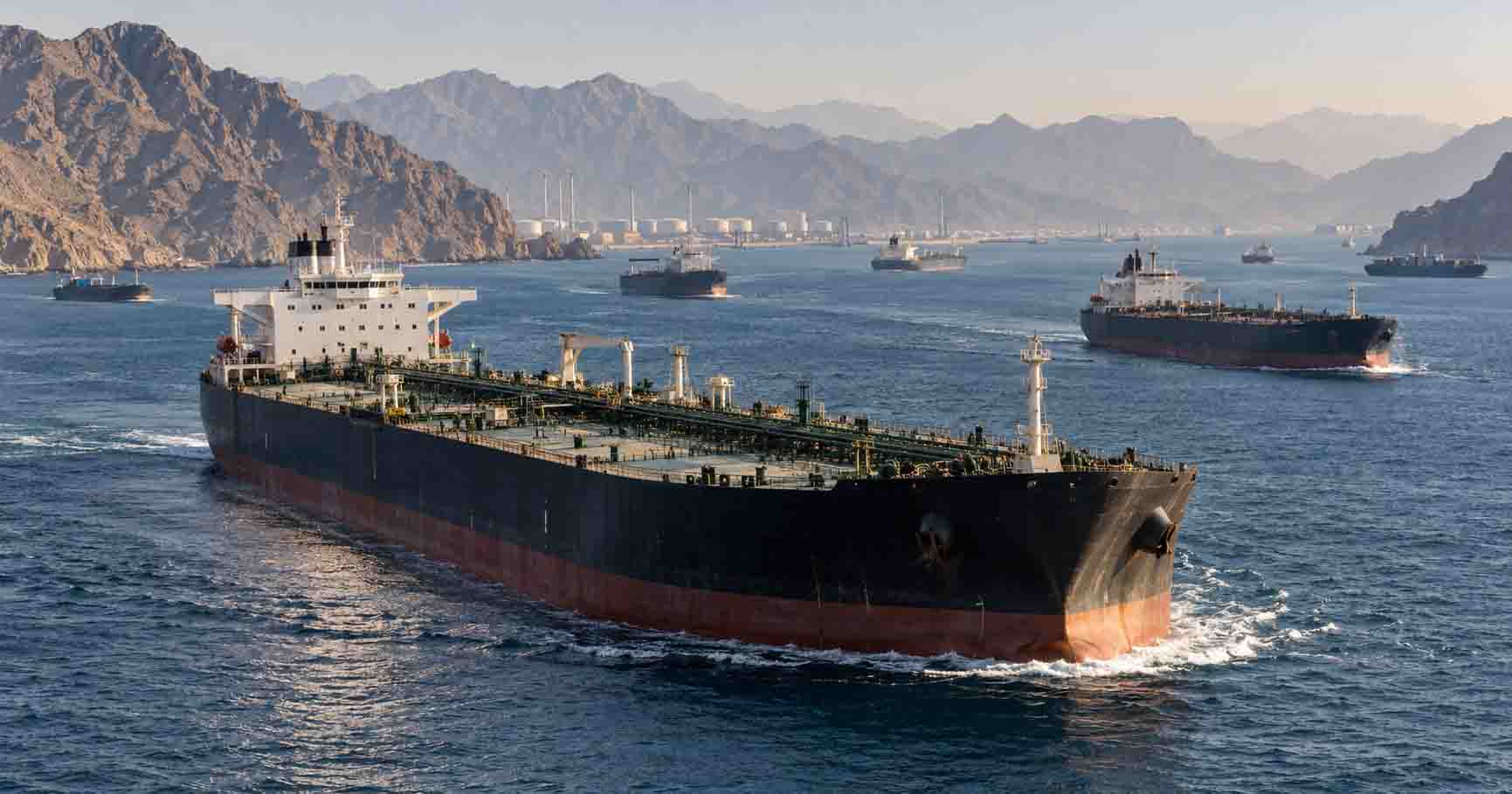
Middle East oil exports have returned to levels exceeding their pre-war average on some days, even as disruptions around the Strait of Hormuz persist and attacks involving tankers in the region increase.
But the recovery in barrels does not mean the export system has returned to normal. Oil is now moving through a different mix of pipelines, Red Sea and Fujairah terminals, and offshore ship-to-ship transfers, reshaping how Middle East crude reaches global markets.
Middle East Oil Exports Exceed Pre-War Levels
Crude exports from the Middle East ranged between about 19.5 million and 22.5 million barrels per day on several days during the final week of September, according to shipping data cited by Reuters.
By October 1, average exports stood at about 18.5 million barrels per day, compared with roughly 18 million bpd before the U.S.-Israeli war with Iran began in February 2026.
Including petroleum products, chemicals and non-gas liquids, the weekly export average reached about 22.4 million barrels per day.
The Oil Is Back — But the Routes Have Changed
Kpler data shows that Gulf crude exports excluding Iran returned in September to their pre-war average of about 16.5 million barrels per day.
The biggest change is how that oil leaves the region. Before the war, about 83% of regional crude crossed the Strait of Hormuz. Around 40% now leaves without passing through the strait, supported in particular by Saudi and Emirati pipelines leading to the Red Sea and Fujairah.
Kpler also found that more than 70% of the crude that crossed Hormuz in August changed tankers outside the strait, particularly near Fujairah and Sohar, reflecting a maritime network rebuilt around heightened security risks.
Saudi Arabia Leads the Export Recovery
Saudi Arabia led September exports with at least 5.1 million barrels per day of confirmed crude, according to Kpler. The figure could reach about 5.6 million bpd when Red Sea cargoes assessed as likely Saudi are included.
The United Arab Emirates followed at about 3.2 million bpd, with Iraq at around 2.6 million bpd.
Saudi Arabia’s East-West Pipeline to Yanbu and the UAE’s Abu Dhabi Crude Oil Pipeline to Fujairah have provided key alternatives to shipping through Hormuz.
Tanker Incidents Are Rising
The export recovery has coincided with worsening maritime security. Reuters reported at least seven recent incidents involving vessels in the Strait of Hormuz and surrounding waters.
In the latest case, the master of a tanker reported to United Kingdom Maritime Trade Operations that the vessel had been struck by an unknown projectile inside the Strait of Hormuz, damaging its engine room.
UKMTO said the crew was safe and no environmental impact had been reported, while authorities were investigating.
Maritime authorities have not identified who was responsible for the incident, and the recent cases cannot be attributed to a single actor without further evidence.
Hormuz Is No Longer the Only Route
One of the biggest changes since the war began is that regional export volumes no longer depend solely on how much crude can transit the Strait of Hormuz.
Saudi Arabia has increased its reliance on Red Sea export routes, while the UAE can move crude to Fujairah outside the strait. Kuwait, Qatar and most Iraqi exports remain more dependent on Hormuz.
Profile News examined the political dimension of the waterway in its report on the Strait of Hormuz and Iran’s conditions for reopening it.
Why Does Oil Transport Remain Expensive?
The export recovery eases concerns over the availability of crude but does not eliminate the cost of moving it.
Rerouted tankers, offshore transfers, higher insurance and freight costs, and continuing security risks around Hormuz all make delivering oil to buyers more expensive and complicated than before the war.
The shift comes after OPEC Plus kept its November production targets unchanged while Saudi Aramco cut crude prices for Asian buyers amid elevated shipping costs. Profile News examined those developments in its report on OPEC Plus and oil prices.
What Has Actually Changed?
The headline number shows that exports have recovered, but the system behind them has changed. More crude bypasses Hormuz, ship-to-ship transfers have become increasingly important and shipping routes are more complex, while risks to tankers persist.
The stability of future supplies will therefore depend not only on how much oil the region can produce, but also on whether those barrels can be transported safely and at a sustainable cost.
Sources
Reuters — Middle East crude export data and recent tanker incidents — October 5, 2026.
Kpler — Analysis of how Gulf crude export flows returned to pre-war levels.


