


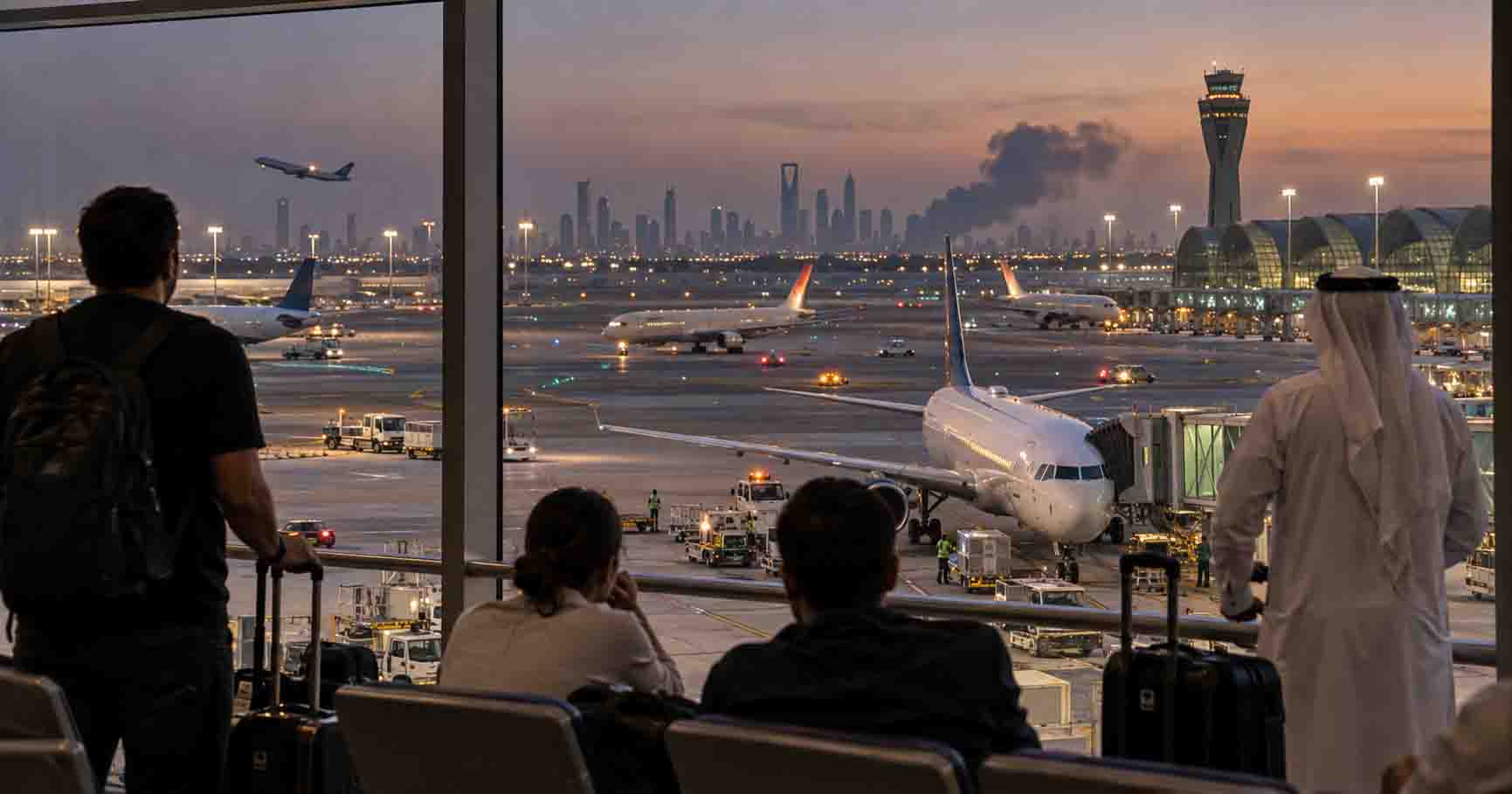
Middle East travel warning concerns intensified on September 20 after the United States urged Americans in the region to exercise heightened vigilance and prepare for possible flight cancellations, temporary airspace closures and broader travel disruption as Saudi-Houthi tensions rise.
Washington also advised Americans outside the Middle East to seriously reconsider travel to or through the region, warning that the current security environment could produce rapid and unforeseen escalation.
Middle East travel warning: What did the U.S. say?
The U.S. State Department said the regional security environment remains complex and warned that the conflict involving Saudi Arabia and Yemen’s Houthis could escalate rapidly.
Americans already in the Middle East were advised to closely monitor security conditions and prepare for possible:
- Flight cancellations.
- Temporary or periodic airspace closures.
- Schedule and route changes.
- Other travel disruptions.
Travelers were also advised to check directly with airlines and airports before departing.
Has Middle East airspace been closed?
No region-wide airspace shutdown had been announced at the time of publication.
The U.S. warning refers to the possibility of closures and cancellations if military escalation worsens, rather than confirming that flights across the Middle East have already stopped.
Flight conditions can vary significantly between countries and airlines and may change rapidly in response to missile or drone activity.
Why was the warning issued now?
The latest alert follows renewed fighting between Saudi Arabia and Yemen’s Houthis.
Saudi Arabia said it intercepted a ballistic missile heading toward Riyadh and thwarted other attempted attacks on locations including Yanbu, Taif, Bish and Farasan.
Smoke and flames were also seen near King Khalid International Airport during the escalation, although Saudi authorities did not conclusively attribute the fire to a missile or drone strike.
Profile News covered the escalation in its report on the Houthi attacks on Saudi Arabia and the missile interception near Riyadh.
Saudi Arabia, Lebanon and Gulf travel advisories
U.S. travel advisory levels differ across the Middle East.
Saudi Arabia is currently listed at Level 3, “Reconsider Travel,” with the State Department citing risks from missile and drone attacks, armed conflict and terrorism.
Lebanon remains at Level 4, “Do Not Travel,” because of armed conflict and other security risks. The advisory also notes that hostilities can disrupt commercial aviation and access to Beirut’s international airport.
The United Arab Emirates and Qatar are also currently listed at Level 3 because of armed-conflict risks.
What does this mean for Gulf travelers?
There was no announcement of a comprehensive suspension of flights at the Gulf’s major international airports at the time of publication.
However, the security alert means passengers should monitor airlines closely, particularly when using Gulf hubs for connections between Asia, Europe and North America.
Past phases of regional conflict have led to large-scale flight cancellations, rerouting and temporary airport closures, making aviation particularly sensitive to renewed missile and drone activity.
Iran adds another layer of risk
The alert also comes amid continuing tension between Washington and Tehran.
Iran says it has sent conditions to Washington through mediators for renewed negotiations and an end to the war, while Iranian military officials have warned that U.S. bases and interests in the region could be targeted if Iran comes under renewed attack.
Profile News examined the diplomatic track in its report on Iran’s conditions to end the war and Tehran’s wait for President Trump’s response.
What should travelers watch next?
For passengers, the most important developments will be operational decisions by airlines, airports and national aviation authorities.
New attacks affecting airports or major flight corridors could trigger schedule changes or diversions even without a prolonged formal closure of national airspace.
For now, the situation remains one of heightened warning and potential disruption rather than a region-wide shutdown of commercial aviation.
Report Sources: U.S. Department of State — Middle East Consular Information, U.S. Department of State — Saudi Arabia Travel Advisory, U.S. Department of State — Lebanon Travel Advisory, Gulf News — September 20 Security Alert.


