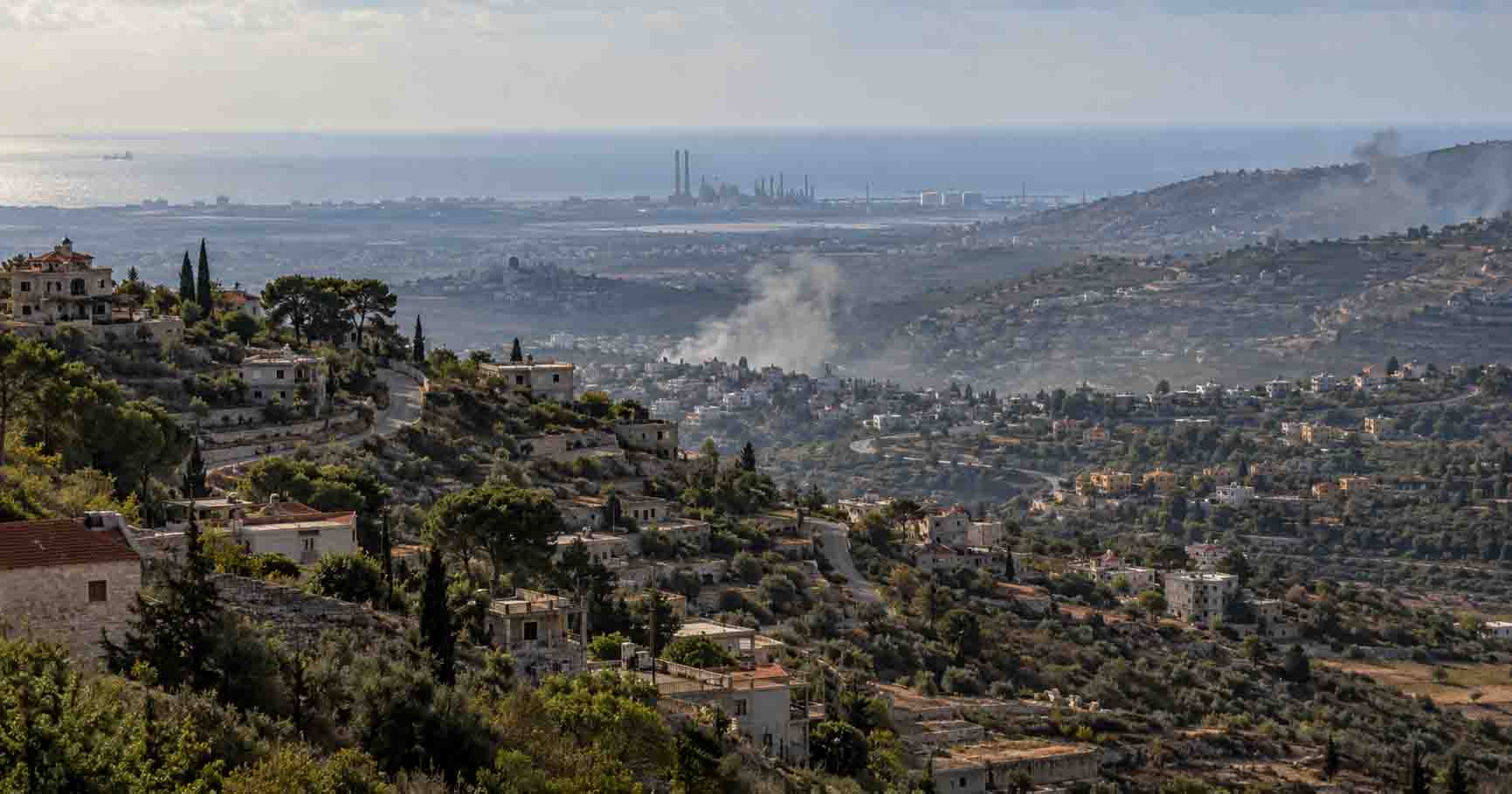
Hezbollah accuses Israel of 300 violations and expansion, Israeli army orders halt

South Lebanon ceasefire agreement under scrutiny.. 300 violations, casualties, and mutual accusations between Hezbollah and Israel
The ceasefire agreement between Israel and Hezbollah faced an early test on Saturday, with both sides exchanging accusations over responsibility for field violations, as Israeli media reported that Chief of Staff Eyal Zamir ordered a halt to hostilities in southern Lebanon after a security assessment.
This came as reports continued of sporadic airstrikes and attacks, despite the truce taking effect from Friday evening, at a time when Iran announced the closure of the Strait of Hormuz in protest against the continued fighting in Lebanon, threatening its understanding with Washington.
Hezbollah accuses Israel of continuing violations
In this context, Hezbollah said in a statement from its media relations office that Israeli accusations of the group violating the ceasefire are “not based on facts,” considering they come within the framework of justifying ongoing military operations inside Lebanon and an attempt to “sabotage the agreement between Iran and the United States.”
Hezbollah added that Israeli forces carried out more than 300 violations since Friday, including airstrikes from warplanes and drones, artillery shelling of various calibers, and the firing of phosphorus shells, targeting more than 25 towns and villages including the city of Nabatieh, resulting in more than 111 killed and 176 wounded, with alleged use of internationally prohibited cluster bombs, according to its account.
The group considered that the continuation of Israeli military operations contradicts the announced understandings regarding the ceasefire, calling on relevant international parties to pressure for the implementation of existing agreements and to prevent further escalation.
Accusations of expanding control areas
Hezbollah reaffirmed its commitment to the ceasefire but said its forces confronted an Israeli advance attempt toward the Ali al-Taher height in southern Lebanon during the night, indicating that Israel carried out an infiltration attempt.
It added that the clash resulted in deaths and injuries among the advancing force, according to the field data available to it, while noting that Israeli airstrikes continued after the incident. Hezbollah stressed it remains committed to the ceasefire but said it would continue to respond to any attempts to advance inside Lebanese territory or change the existing field situation to control Lebanese areas.
Israel holds Hezbollah responsible for tensions and denies expansionist ambitions
In response, Israel rejected the accusations directed at it and held Hezbollah responsible for violating the ceasefire.
Israel’s Ambassador to the United States, Yeheil Leiter, said on the X platform that Hezbollah was the one that initiated the violation of the truce, adding that “Israel respects the ceasefire while defending itself against Hezbollah’s attacks, as any self-respecting state would do.”
Leiter stressed that “Israel has no territorial ambitions in Lebanon,” and that it seeks to live “side by side with its neighbors behind secure and recognized borders,” denying that Israel has any goals related to controlling Lebanese territory.
معارك عنيفة اندلعت الليلة اثر محاولة تقدم اسرائيلية نحو تلة علي الطاهر .
المشهد لقصف صاروخي يستهدف مواقع الجيش الإسرائيلي محيط التلة. pic.twitter.com/bsgaacCzoA
— الحرب العالمية (@WWIIIAR) June 20, 2026
Casualty toll and continued tension
Alongside the exchange of narratives, Lebanese reports said that 28 people were killed and more than 30 others injured in Israeli strikes that targeted various areas in southern and eastern Lebanon on Saturday, including a Lebanese army soldier and two Palestinians, while initial information indicated missing persons under the rubble, including children and women.
The Lebanese Ministry of Health announced that the death toll from Israeli military operations in Lebanon since March 2 has risen to 3,980 killed and 12,001 wounded.
These developments reflect the continued fragility of the field situation, despite the announcement of the ceasefire, amid mutual accusations over responsibility for violations and conflicting accounts of what happened on the ground.
Israeli orders to halt fire.. regional repercussions
In the latest developments, the Israeli website Walla reported that Chief of Staff Eyal Zamir issued orders to halt fire in southern Lebanon after a situation assessment. The announcement came hours after the escalation of field tensions and mutual accusations between the two sides, which was seen as an attempt to contain the escalation and prevent the expansion of confrontations on the Lebanese front.
Meanwhile, Iran’s Islamic Revolutionary Guard Corps Navy announced on Saturday evening the closure of the Strait of Hormuz to all ships, citing what it described as a “violation of the memorandum of understanding with America” and the continuation of Israeli strikes on Lebanon. Tehran accused Washington of a “clear violation of the promise” contained in the first clause of the 14-point agreement, which stipulates “the immediate and permanent cessation of military operations on all fronts, including Lebanon.”
In response, the US Central Command confirmed that navigation in the strait “remained safe,” and that 55 commercial ships transited the vital waterway. This comes days after the signing of the memorandum of understanding, which stipulated that Iran “will make arrangements using its best efforts for the safe passage of commercial ships without fees for a period of 60 days.”
Broader context and test for regional understandings
This tension comes after Israel and Hezbollah announced on Friday they had reached a ceasefire with US-Qatari mediation, following a round of confrontations in southern Lebanon. While each side affirms its commitment to the agreement, it simultaneously maintains its narrative regarding responsibility for the latest violations, leaving the future of the truce dependent on field developments in the coming days.
The escalation coincided with the signing of the Iran-US agreement, which stipulates the immediate and permanent cessation of military operations on all fronts, including Lebanon. The continued fighting led to the postponement of the Iranian-American talks scheduled for Friday in Switzerland, with Tehran warning of its readiness to respond to any violations, putting the agreement before an early test of its ability to contain regional tensions and curb Israeli behavior.
Related topics:
Israel draws “security zone” in south Lebanon.. test facing Iran-US agreement