Typhoon Dujuan in Japan Leaves Four Dead, Six Missing Near Tokyo
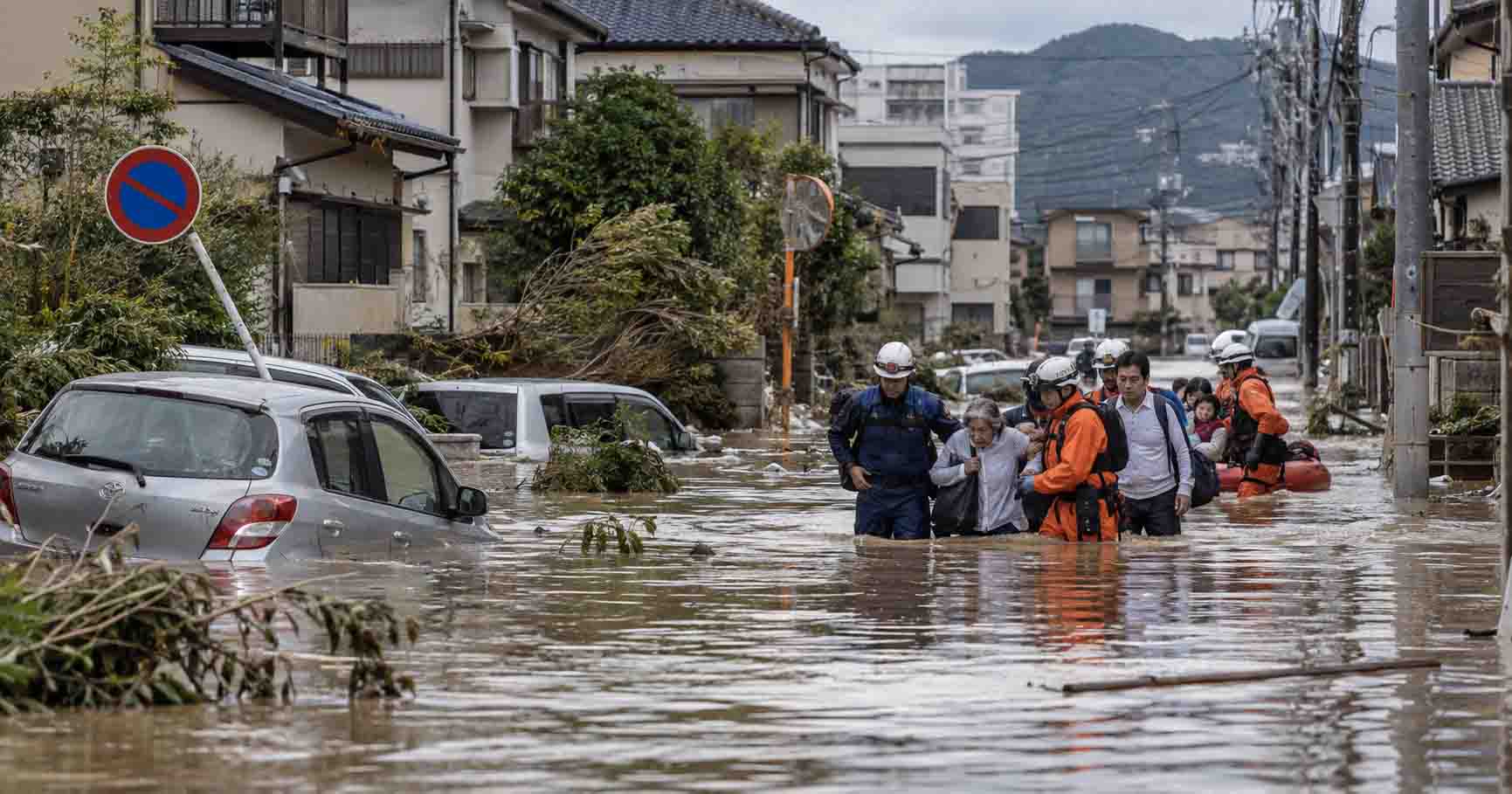
Typhoon Dujuan in Japan has left four people dead and six missing after torrential rain triggered flooding and landslides across eastern parts of the country, while about 45,000 households remained without electricity near Tokyo on Tuesday, September 22, 2026.
Emergency crews continued search operations in Kanagawa and Chiba prefectures after floodwaters swept through residential areas and landslides damaged homes as the typhoon moved along Japan’s Pacific coast.
Typhoon Dujuan in Japan leaves four dead and six missing
Japan’s public broadcaster NHK reported, according to Reuters, that the death toll had risen to four, with six people still missing.
Among those killed was a woman in her 60s after mud entered her home in Yokosuka, Kanagawa Prefecture. Three other victims were reported to be between their 50s and 80s.
Rescue operations were concentrated in Kanagawa and Chiba, while emergency workers in Miura, south of Tokyo, cleared debris and mud as they searched around homes struck by landslides.
Flooding and landslides hit areas near Tokyo
Torrential rainfall affected the Kanto region, which includes Tokyo and several surrounding prefectures, causing rivers to overflow and flooding residential districts.
In Sakura, Chiba Prefecture, floodwater entered homes and covered streets after a nearby river overflowed following the intense rainfall.
Field images showed partially submerged vehicles and flooded roads, while landslides damaged residential areas in neighboring Kanagawa.
About 45,000 households without electricity
Tokyo Electric Power Co. said about 45,000 households remained without power in the affected region on Tuesday.
The number had earlier approached 50,000 before electricity began to be restored in some areas.
AFP reported that more than 45,000 households in Chiba were still without electricity on Tuesday afternoon and that more than 460 homes had sustained damage.
Record rainfall around Tokyo
Dujuan dumped exceptional amounts of rain over parts of eastern Japan.
Oshima, an island about 120 kilometers south of central Tokyo, recorded approximately 832 millimeters of rain over 48 hours, more than twice its average rainfall for the entire month of September, according to figures reported by NHK.
Tokyo’s Edogawa Ward recorded 282.5 millimeters over 24 hours, setting a local rainfall record.
Japan issued its highest landslide warning
Before the typhoon reached the Tokyo region, the Japan Meteorological Agency warned that conditions could deteriorate rapidly across Kanto and nearby islands.
Authorities issued the highest-level landslide emergency warning for parts of the Izu Islands, including Oshima, after some locations had already received more than 300 millimeters of rain.
The weather agency also warned that linear rain bands could develop over Kanto and central Japan. Such systems can repeatedly bring intense rainfall over narrow areas, sharply increasing the risk of flash floods and landslides.
Nearly 1.9 million faced evacuation orders
At the height of the storm, evacuation orders or advisories affected about 1.9 million people in areas threatened by flooding and landslides.
The severe weather also disrupted transportation and public events, with flight and rail services affected in parts of the country.
Organizers of the Asian Games in Aichi Prefecture postponed an equestrian eventing competition because of the approaching typhoon.
Where is Typhoon Dujuan now?
Dujuan moved northeast away from Japan and toward the Pacific Ocean, allowing authorities to lift or downgrade many of the heavy-rain and landslide warnings that had been issued during the storm’s peak.
However, officials continued to warn of landslide risks because soil in badly affected areas remained saturated after the record rainfall.
Emergency crews were continuing to search for missing people, restore electricity and clear damaged roads as authorities assessed the full extent of the destruction across Chiba, Kanagawa and other parts of eastern Japan.
Other major storms under watch
Typhoon Dujuan comes amid continued attention to severe tropical weather in different parts of the world. Profile News previously covered Hurricane Irene and its impact on the U.S. East Coast, as forecasters continue to monitor powerful storms across multiple regions.
Sources
- Reuters — Typhoon Dujuan casualties and latest damage update
- Reuters — Japan weather warnings and Dujuan’s approach
- AFP — Damage, power outages and rainfall totals
- Japan Meteorological Agency — RSMC Tokyo Typhoon Center