

Daily Report September 11, 2026: Lebanon, Bab al-Mandab and Hormuz in Focus
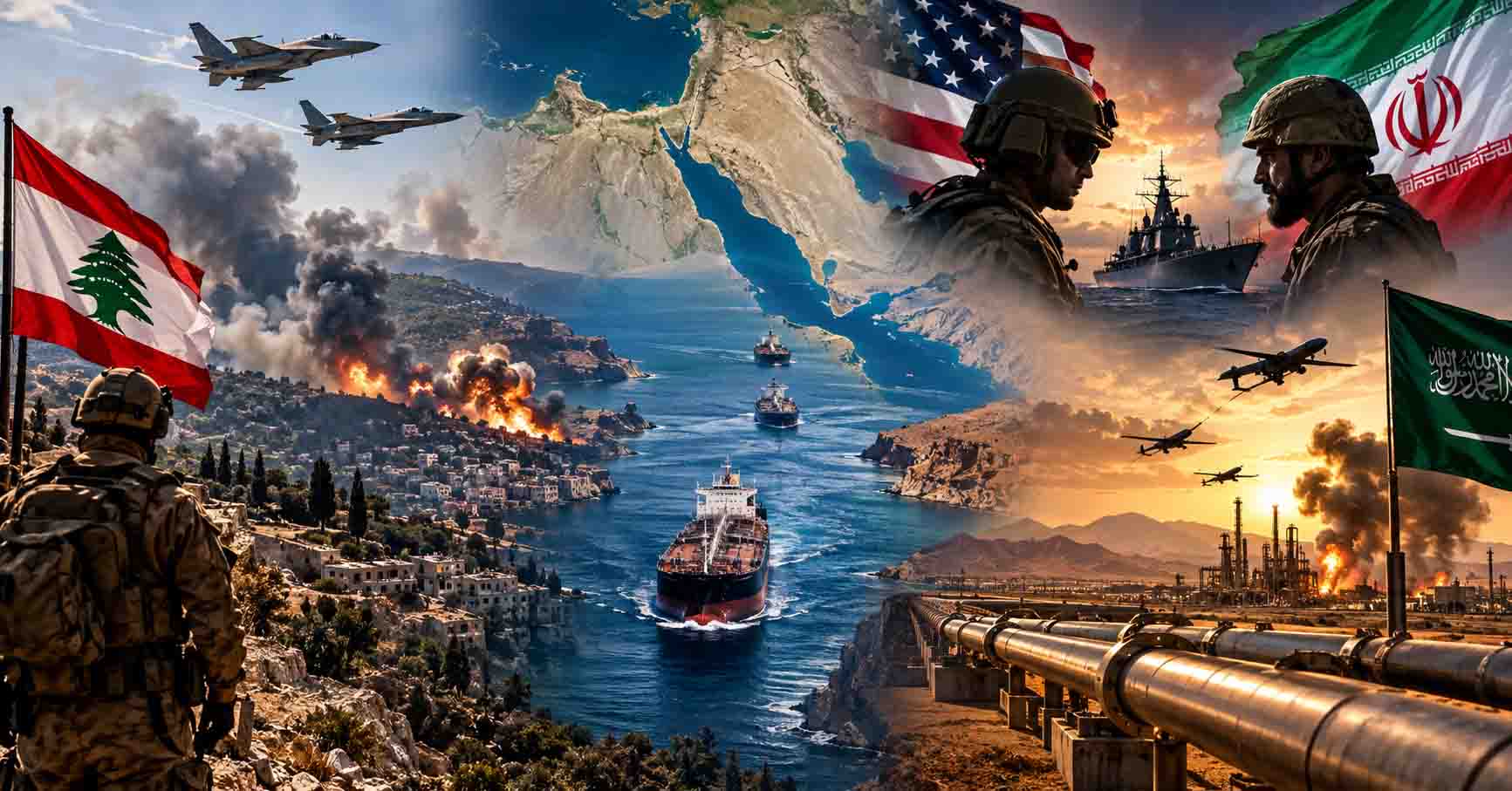
Friday, September 11, 2026, saw simultaneous escalation across several fronts in the Middle East, from southern Lebanon and Yemen to the Strait of Hormuz and Saudi Arabia, as strategic waterways and energy infrastructure became increasingly central to the military and political landscape.
The day’s developments extended trends documented in the September 10, 2026 daily report, but with more sensitive shifts: fighting in Yemen moving closer to Bab al-Mandab, conflicting claims from Washington and Tehran over control of the Strait of Hormuz, an attack on Saudi Arabia’s East-West pipeline, and continued Israeli airstrikes and shelling in southern Lebanon following the Ali al-Taher operation.
Yemen Fighting Reaches the Approaches to Bab al-Mandab
Fighting intensified in southwestern Yemen amid a new wave of displacement as clashes continued across several fronts.
Ansar Allah’s military spokesman announced the start of a military operation in several western coastal districts, while Yemeni government forces said they had launched counter-operations on fronts northwest of Marib and urged civilians to avoid roads between Taiz and Mokha and between Mokha and Dhubab.
In a potentially significant development, Agence France-Presse quoted a local Yemeni government official as saying the Houthis had seized Mayyun Island and completed their control of the Bab al-Mandab Strait. Reuters, meanwhile, cited Yemeni government sources as saying the Houthis had reached the coastal town of Dhubab.
Reuters also reported, citing four Yemeni government sources, that the Houthis had reached the strategically located Mayyun Island in the strait.
The advance to Mayyun and Dhubab brings the fighting into direct proximity to one of the world’s most important shipping routes, raising questions about the Houthi advance toward Bab al-Mandab and its implications for shipping.
Yemeni government forces also said they had downed five Houthi drones east of al-Hazm and targeted a battle-management center, gatherings and Houthi positions on fronts northwest of Marib.
Washington Moves to Coordinate With Saudi Arabia
The escalation in Yemen coincided with increased U.S. engagement with Saudi Arabia, with reports saying the commander of U.S. Central Command traveled to the kingdom for meetings and coordination over the latest developments.
U.S. media cited officials as saying Washington was focused on ensuring freedom of navigation in the Red Sea while enabling regional partners to address security challenges.
The developments come as Washington maintains a cautious approach toward opening another military front, an issue previously examined by Profile News in its coverage of President Donald Trump’s position on directly striking the Houthis.
Hormuz: Washington and Tehran Offer Competing Claims of Control
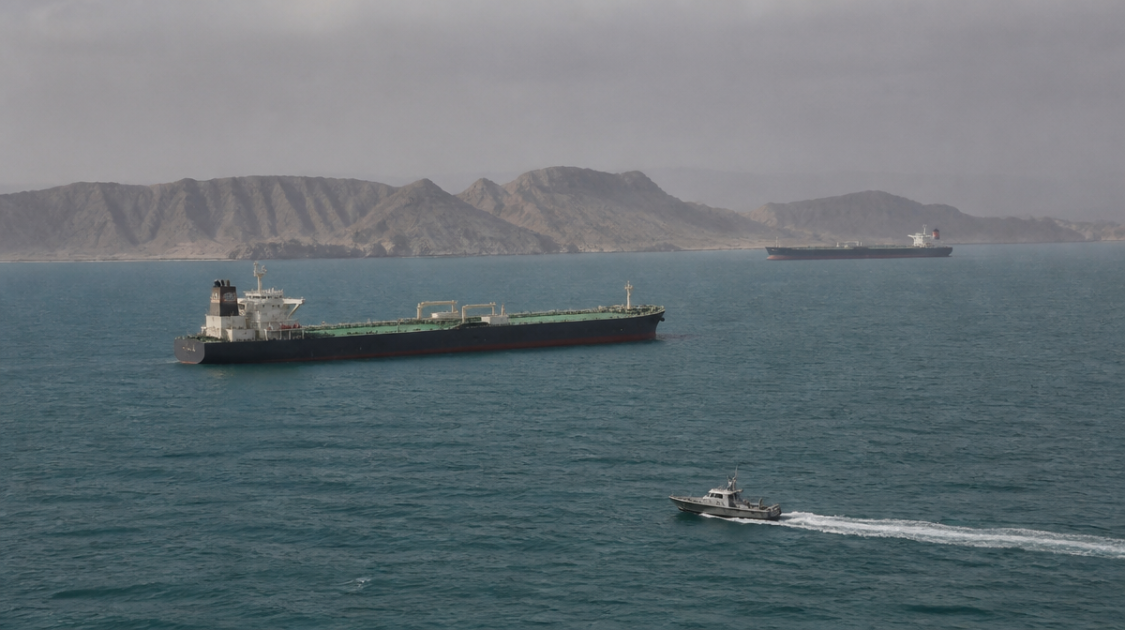
Washington and Tehran offered conflicting accounts of the situation in the Strait of Hormuz.
U.S. President Donald Trump said the United States, not Iran, controlled the strait, adding that 22 boats had been removed from the waterway during the previous night.
Iran’s Foreign Ministry, by contrast, said the strait was under Iranian control and that its closure was a consequence of what Tehran described as U.S. and Israeli attacks.
There was no independent confirmation resolving the competing claims over military control of the strait, while shipping data showed a sharp decline in the number of vessels transiting the waterway compared with prewar levels.
U.S. Central Command said it had rerouted 99 commercial vessels since the start of what it described as the blockade of Iran.
Diplomatic Track Opens a Window in Hormuz
Alongside the military escalation, Iran’s Foreign Ministry said Tehran and Oman had reached an understanding on temporary shipping routes through the Strait of Hormuz.
Tehran said a meeting would be held Monday in Oman involving Iraq and Gulf states to discuss the outcome of Iranian-Omani talks on establishing safe shipping routes.
During a meeting with Iranian President Masoud Pezeshkian, Indian Prime Minister Narendra Modi stressed the need to protect freedom of navigation and trade and ensure the safety of sailors.
Oil prices fell by more than 2% amid efforts to reach a temporary understanding on navigation through the strait.
Trump Escalates Rhetoric on Iran
Trump made a series of statements about the war and Iran’s military capabilities, saying the conflict would end “immediately after the U.S. midterm elections.”
He also said Iran’s missile capabilities had been largely destroyed and that the United States had eliminated Iran’s nuclear capabilities, while acknowledging that Tehran remained capable of launching some missiles.
No independent assessment was available confirming the extent of damage to Iran’s nuclear program or missile arsenal.
Alongside military pressure, Washington continued to use economic measures, including U.S. sanctions targeting individuals and entities that American authorities say are linked to regional financing networks.
On the Iranian side, President Masoud Pezeshkian said he did not support continuing the war but called for resilience so that Iran would not be forced to negotiate under different circumstances.
The commander of Iran’s Basij said any negotiations should be conducted from a position of strength, calling for internal differences to be set aside and resources mobilized to confront the United States and Israel.
Oil Markets Under Pressure From the War
The war continued to weigh on energy markets as the International Energy Agency warned of continued disruption to the oil market and delays in the recovery of supplies.
The agency’s September 2026 report showed that the war continued to have significant effects on oil production and supplies, particularly in the Gulf region.
In the United States, concerns increased over the impact of supply disruptions on fuel prices.
Reuters, citing two sources familiar with the matter, reported that the White House was considering how to use the Defense Production Act to expand U.S. oil refining capacity amid rising fuel prices and disruptions to global crude supplies.
Lebanon: Six Areas Hit by Airstrikes as Shelling Spans a Wider Front
In southern Lebanon, Profile News correspondents recorded a broad series of Israeli airstrikes, artillery attacks and explosions on September 11.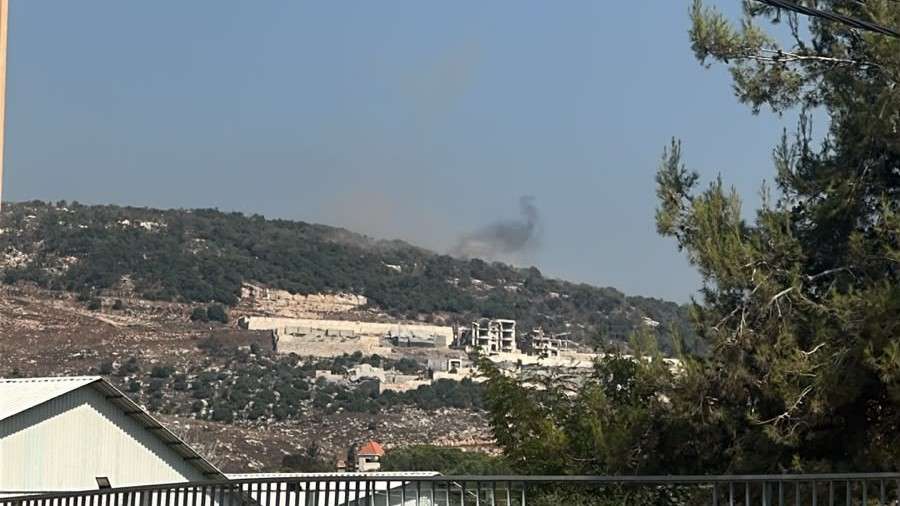
According to Profile News correspondents in southern Lebanon, Israeli warplanes carried out strikes on Kfar Tibnit, Nabatieh al-Fawqa, al-Mansouri, Wadi al-Salouqi, al-Qantara and Wadi Zibqin.
The field reporting was consistent with Al Jazeera reports of two strikes on Nabatieh al-Fawqa at 5:27 p.m. and 5:37 p.m. Later, at 10:04 p.m., the network reported two strikes on the Ali al-Taher Heights and the outskirts of al-Qantara, followed by a strike on Wadi Zibqin at 10:06 p.m.
Artillery fire covered a wider area.
Profile News correspondents recorded Israeli shelling of Wadi Zibqin, Doha Kfar Rumman, Nabatieh al-Fawqa, the area between Mayfadoun and Zawtar al-Sharqiya, Wadi al-Hujair, Wadi al-Salouqi, al-Mansouri, Zawtar al-Sharqiya, Kfar Tibnit, Kfar Shuba, Khiam, the outskirts of Ali al-Taher, Mays al-Jabal, Srebbine and Bayt Yahun.
The correspondents also recorded Israeli explosions in Baraachit and al-Mansouri, as well as sound bombs in Yater.
The field tally showed the widening scope of Israeli operations in southern Lebanon a day after the major operation at Ali al-Taher, with strikes and shelling spread across Nabatieh, the central and western sectors and border areas.
Ali al-Taher: Israeli Withdrawal as Strikes Continue
Israeli Army Radio said in the morning that Israeli forces had withdrawn from the Ali al-Taher Heights and repositioned along rear lines in the Shaqif area.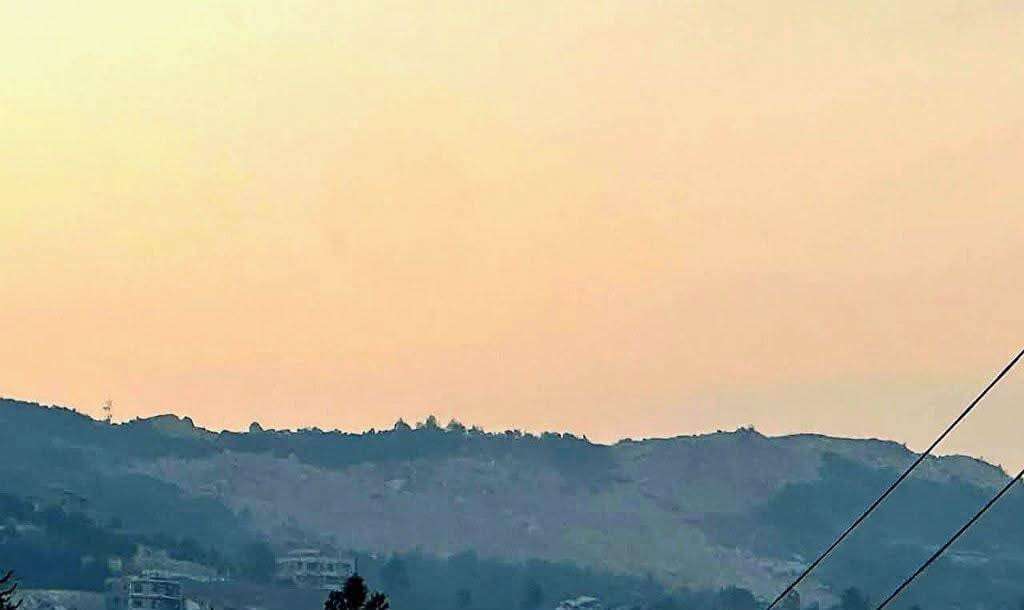
The radio station said the military would continue to maintain what it described as “fire control” over the heights and would respond to any attempt by Hezbollah to return to the area.
The area remained under attack in the evening. Profile News correspondents recorded artillery shelling around Ali al-Taher, while Al Jazeera later reported two airstrikes on the heights and the outskirts of al-Qantara.
The withdrawal announced by Israel therefore coincided with continued air and artillery strikes on the area, while the nature of the “fire control” and the extent of Israel’s new deployment remain based on the Israeli military’s account.
What Does Israel Say It Found at Ali al-Taher?
Israeli Prime Minister Benjamin Netanyahu, during a visit to a military camp in Metula in the Upper Galilee, said Israeli forces had removed large quantities of weapons from the Ali al-Taher facility that he said were funded by Iran.
Israel’s military chief said the army had destroyed what he described as “terrorist infrastructure” in the heights.
Defense Minister Israel Katz said the destruction of the facility had created a “stronger safe zone” that would allow Israel to tighten its control and threaten Hezbollah deeper inside Lebanon.
There was no independent confirmation of the quantity of weapons Israel said it had found, the scale of the facilities it said it had destroyed, or its assessment of the operation’s strategic impact.
In a related statement, Israeli military chief Eyal Zamir said progress on an agreement between Israel and Lebanon would not be possible unless the Lebanese army was effective on the ground.
Saudi Arabia: East-West Pipeline Hit in Attack
Saudi Arabia’s East-West pipeline was hit in an aerial attack, forcing its temporary shutdown and adding further pressure on the region’s energy export routes.
Saudi authorities said the attack was carried out by several drones that came from Iraq.
Riyadh did not identify any specific Iraqi group as responsible for launching the drones.
Saudi Arabia said it had chosen not to respond at this stage and would support the Iraqi government’s efforts, while reserving the right to take necessary measures to protect its sovereignty, security and infrastructure.
Baghdad Investigates Attack on Saudi Arabia
The Iraqi government condemned the attacks on Saudi Arabia and said it rejected the use of Iraqi territory or airspace as a launching point for attacks against any country.
Iraq’s prime minister ordered an urgent investigation to determine who was behind the attacks and called for legal action against anyone found to be involved.
Iraq’s Interior Ministry also said it had found drones, projectiles and equipment associated with their operation in Anbar province, although no link between the seized equipment and the attack on Saudi Arabia had been established.
Qatar condemned the attack on the pipeline and expressed solidarity with Saudi Arabia. The secretary-general of the Gulf Cooperation Council issued a similar statement.
Iraq Moves to Bring Weapons in Sinjar Under State Control
Iraq’s prime minister said the Sinjar Mountain resistance factions would begin handing over their weapons to the state and that the federal government would assume full control of them.
He said placing weapons under state authority and unifying security decision-making were essential to protecting residents of Sinjar district and establishing stability.
Gaza: Qassam Brigades Announce Death of Khan Younis Brigade Commander
The Qassam Brigades announced the death of Khan Younis Brigade commander Mohammed al-Yazouri after Palestinian sources had told Al Jazeera that he was killed in an Israeli strike west of Khan Younis at dawn.
The sources said al-Yazouri was killed along with another person in the operation, while the Qassam Brigades described the incident as an Israeli assassination.
In other developments, Nasser Medical Complex said one person was killed and nine others, including children, were wounded in an Israeli strike on the al-Mawasi area of Khan Younis.
There were also reports of injuries from Israeli shelling in Beit Lahia in the northern Gaza Strip.
West Bank and Jerusalem
The Israeli military announced the start of a surprise military exercise in the West Bank, saying it was intended to improve troop readiness ahead of the holiday period.
In Jerusalem, the governorate said settlers held prayers and rituals at the Bab al-Rahma cemetery adjacent to the eastern outer wall of Al-Aqsa Mosque.
In al-Bireh, Al Jazeera reported that Israeli forces fired live ammunition during a raid on the city, while the Palestinian Red Crescent said one person was wounded by gunfire.
Russia and Ukraine: Strikes on Odesa and Kyiv
Russia’s Defense Ministry said it had targeted port infrastructure in the Odesa region and vessels it said were being used to transport military equipment.
In Kyiv, the city’s mayor said two people were killed when a Russian drone struck a gas station, while later reports said explosions were heard and air defenses were activated.
In another development, the deputy head of Russia’s Security Council said Moscow would be forced to respond to Lithuania’s plans to lift its ban on the deployment of nuclear weapons.
Sudan: Sanctions and Panel of Experts Mandate Extended
The U.N. Security Council extended the mandate of the Panel of Experts on Sudan until November 9, 2026.
The council also adopted a U.S.-drafted resolution renewing the sanctions regime on Sudan until October 9, 2026.
Al Jazeera cited diplomatic sources as saying the technical renewal would allow more time for negotiations after members failed to reach consensus on a proposal to expand the arms embargo to cover all of Sudan.
September 11 Daily Report: Strategic Corridors at the Center of the Crisis
September 11 ended with a more complex regional landscape than at the start of the day.
In Yemen, fighting reached Bab al-Mandab as the Houthis advanced to Mayyun and Dhubab. In Hormuz, both Washington and Tehran claimed control, while Oman moved to establish temporary shipping routes.
In Saudi Arabia, the East-West pipeline was attacked by drones that Riyadh said came from Iraq, without identifying who launched them, while Baghdad opened an investigation.
In southern Lebanon, Profile News correspondents recorded airstrikes on six areas and locations and artillery shelling across 15 areas and locations, as well as explosions in Baraachit and al-Mansouri and sound bombs in Yater. The attacks coincided with Israel’s announcement that it had withdrawn from Ali al-Taher while maintaining what it described as fire control over the area.
From Bab al-Mandab and Hormuz to the East-West pipeline and the southern Lebanon front, a common thread emerged from the day’s developments: the widening confrontation is no longer placing pressure solely on military fronts but is increasingly reaching the strategic corridors and infrastructure that underpin regional energy flows and trade.