


Maradona’s ‘Hand of God’ Ball Sells for $3.35 Million — Why Did It Fall Short of the $10 Million Estimate?
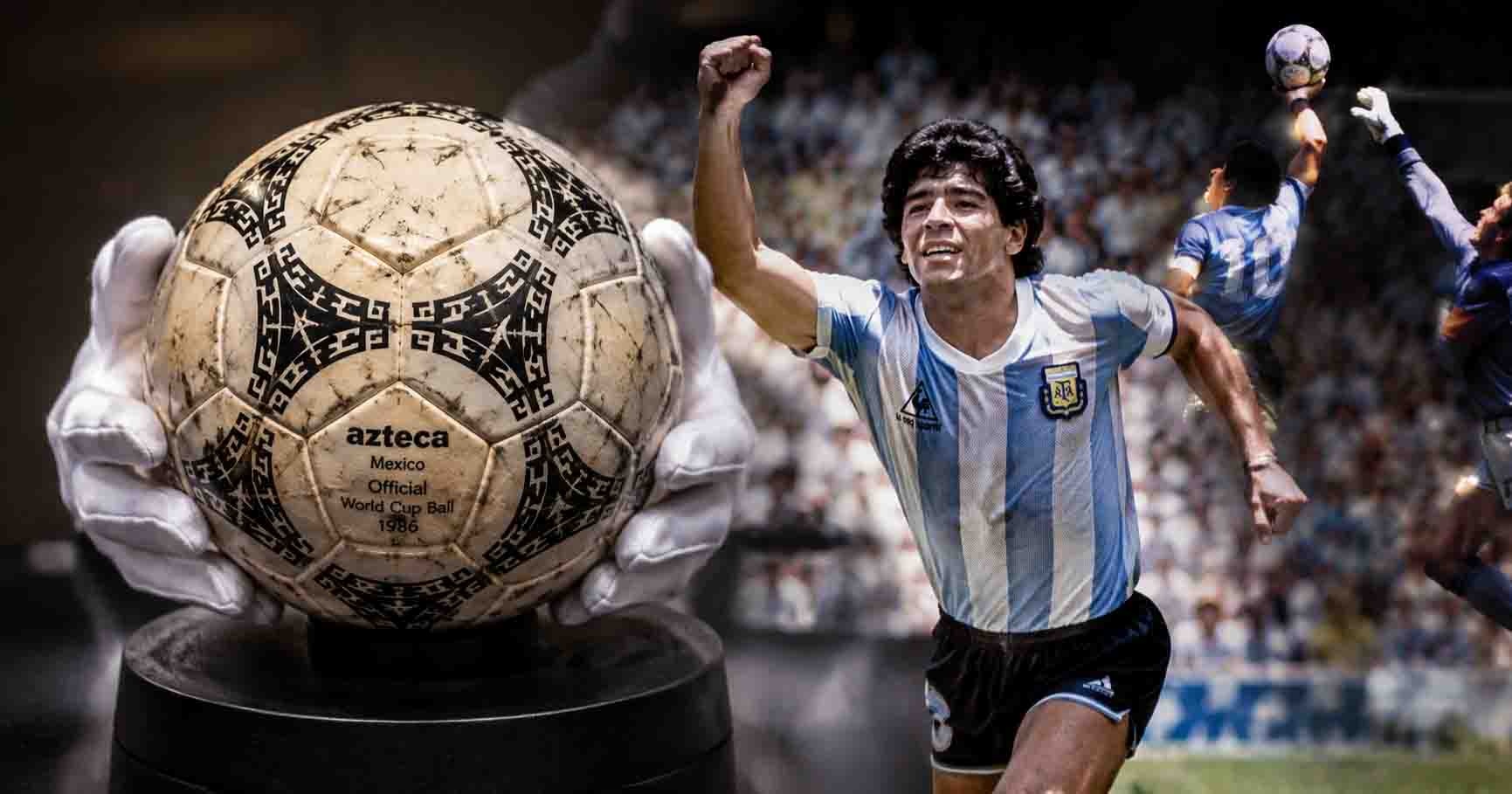
Maradona’s Hand of God ball has returned to the auction block, but the final price came as a surprise compared with expectations. The ball used by the late Argentine legend Diego Maradona to score both of his goals against England in one of the most famous matches in World Cup history sold for $3.35 million, after pre-auction estimates had valued it at $10 million or more.
The ball is not associated solely with the “Hand of God” goal. It was the same ball Maradona used minutes later to score what became known as the “Goal of the Century” in Argentina’s 2-1 victory over England in the quarterfinals of the 1986 World Cup in Mexico.
A single piece of memorabilia therefore represents two contrasting moments among the most famous of Maradona’s career: one goal that sparked decades of controversy and another that became one of the most celebrated individual goals in World Cup history.
Maradona’s Hand of God ball: How much did it sell for?
The Adidas Azteca ball sold for $3.35 million at an auction organized by Heritage Auctions in the United States, according to the announced final price.
The auction house had estimated the ball at $10 million or more, while bidding opened at $2.5 million, leaving the final result well below the pre-auction valuation.
Even so, the price exceeded the amount paid when the ball was sold in 2022 for about $2.37 million.
One ball, two goals that made World Cup history
The ball’s story dates to June 22, 1986, when Argentina faced England in a World Cup quarterfinal at the Azteca Stadium in Mexico City.
Maradona scored the opening goal using his hand in an aerial challenge with England goalkeeper Peter Shilton, but the goal was allowed to stand. The incident later became known around the world as the “Hand of God.”
About four minutes later, Maradona produced a very different moment. He carried the ball past five England players before beating Shilton and scoring a goal that was later voted the “Goal of the Century” in a poll conducted by FIFA, soccer’s world governing body.
Argentina won the match 2-1 and went on to claim its second World Cup title.
Who kept Maradona’s ball for all those years?
After the match, Tunisian referee Ali Bin Nasser, who officiated the Argentina-England quarterfinal, kept the ball for more than three decades. In 2022, the historic item moved from his possession to the auction market, returning the ball used for both of Maradona’s goals to the international spotlight.
Ali Bin Nasser’s decision to put Maradona’s historic ball up for sale highlighted how the Tunisian referee had kept it since the 1986 World Cup in Mexico, before it was later sold for about $2.37 million.
Before that sale, the auction listing and estimated value of what was described as one of the most famous balls in soccer history drew widespread attention, offering an early indication of the exceptional value the item had acquired through its association with Maradona’s two goals against England.
The ball later returned to the auction market, selling most recently for $3.35 million — more than at its previous sale but still well below estimates ahead of the latest auction.
Why was the ball expected to reach $10 million?
Ahead of the auction, Heritage Auctions estimated the ball at $10 million or more, saying it could compete to become the most expensive soccer-related item ever sold at auction.
One of the key benchmarks was the jersey Maradona wore in the same match. The shirt sold at auction in 2022 for 7.1 million pounds, equivalent to about $9.3 million at the time.
Bidding for the ball, however, stopped at $3.35 million, leaving the final price well below both the pre-auction estimate and the amount fetched by the jersey.
The gap made the auction result notable: the ball’s historical significance was not in question, but buyers were unwilling to pay as much as pre-sale estimates had anticipated.
Has the value of Maradona’s Hand of God ball increased?
Compared with its previous sale, the price has increased. The ball sold for about $2.37 million in 2022 and fetched $3.35 million at the latest auction.
A comparison with the $10 million estimate, however, tells a different story. The item achieved roughly one-third of the minimum value the auction house had hoped it would reach.
That does not necessarily indicate a broader decline in the value of Maradona memorabilia. Auction results vary depending on the item, its history and provenance, the timing of the sale and competition among bidders.
Why does Argentina vs. England remain such an extraordinary match?
The ball derives its value not only from its association with Maradona but also from the match itself. The quarterfinal produced two of the most famous goals in World Cup history within minutes of each other, with Maradona at the center of both.
The refereeing controversy surrounding the first goal became part of the match’s history. The second became a showcase of individual skill as Maradona carried the ball over a long distance, beating a succession of England players before scoring.
The memories have returned to prominence during the 2026 World Cup year, amid renewed interest in the tournament’s history and its landmark matches. Profile News is also following developments surrounding Argentina and England at the 2026 World Cup.
Maradona’s jersey or the ball: Which is worth more?
Even after the latest sale, the jersey Maradona wore in the 1986 match remains considerably more expensive than the ball.
The shirt sold at auction in 2022 for 7.1 million pounds, equivalent to about $9.3 million at the time, while the ball fetched $3.35 million at the latest auction.
Both items come from the same match and are associated with the same two goals, but the market assigned the jersey a substantially higher value.
Maradona after his death: Memorabilia worth millions
Maradona died in November 2020 at the age of 60, but memorabilia associated with the defining moments of his career has continued to appear on the international auction market.
Alongside interest in his sporting legacy, legal proceedings connected to his death have also remained in the spotlight. Profile News has covered developments in the case surrounding Diego Maradona’s death and the related legal proceedings.
The legal questions surrounding his death remain separate from his sporting legacy. Profile News previously examined the judicial questions that followed the Argentine star’s death.
Maradona’s Hand of God ball: $3.35 million for a piece of history
Four decades after the match in Mexico, Maradona’s Hand of God ball retains a significance that goes far beyond that of a ball used in an international match. It was part of a goal that remained the subject of global controversy and, minutes later, another that became a symbol of the Argentine star’s extraordinary talent.
Its $3.35 million sale price represented an increase from the 2022 auction but remained far below the $10 million estimates that preceded the latest sale.
Between those figures, one fact stands out: the ball kept for decades by the match referee has become one of the most valuable physical artifacts from a game that remains embedded in World Cup history 40 years later.
How much did Maradona’s Hand of God ball sell for?
The ball used in the 1986 World Cup quarterfinal between Argentina and England sold for $3.35 million at an auction organized by Heritage Auctions in the United States. Pre-auction estimates valued it at $10 million or more, while bidding opened at $2.5 million, leaving the final price well below expectations announced before the sale.
Is the Hand of God ball the same ball used for the Goal of the Century?
Yes. The item is the Adidas Azteca used in the match in which Maradona scored both of Argentina’s goals against England. The first came from the incident later known as the “Hand of God.” Minutes later, he scored his celebrated individual goal after beating five England players and goalkeeper Peter Shilton, a strike that later became known as the “Goal of the Century.”
Who owned Maradona’s ball before it was sold?
Tunisian referee Ali Bin Nasser, who officiated the 1986 match between Argentina and England, kept the ball for more than three decades. It later entered the auction market and was sold in 2022 for about $2.37 million. It was offered again in 2023 but failed to meet the reserve price before eventually selling for $3.35 million.