

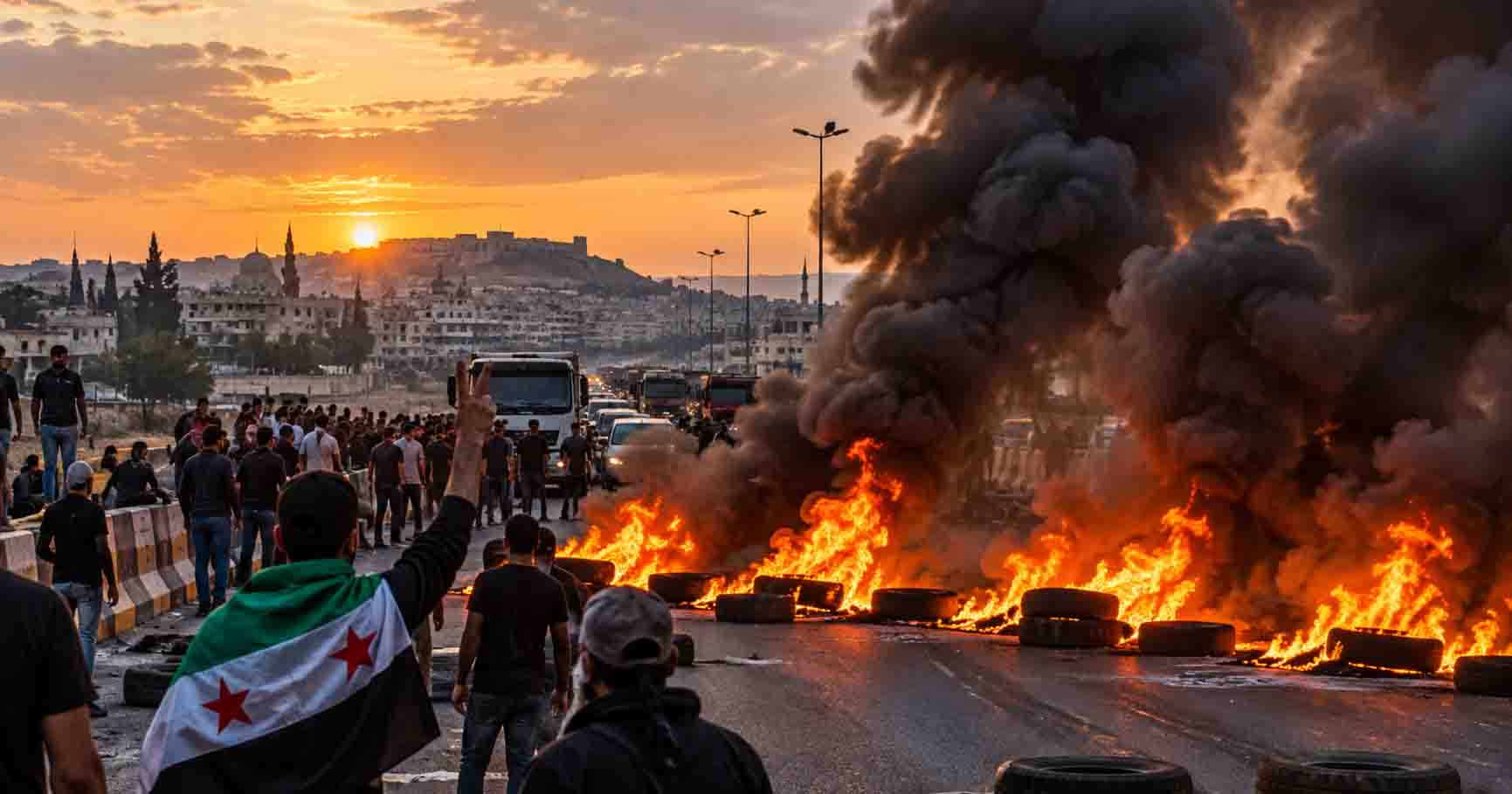
Syria protests widened early this week after a sharp increase in fuel prices, marking the country’s largest wave of demonstrations since the fall of Bashar al-Assad’s government nearly two years ago, according to Reuters, as a prolonged economic crisis continues to strain household budgets, transportation costs and prices for essential goods.
Protesters burned tires and blocked major roads, including the highway linking Damascus with Aleppo, after the Syrian government on Saturday raised the price of diesel fuel by 40% to 175 liras, or about $1.32 per liter.

Syria Protests Widen as Major Roads Are Blocked
The demonstrations extended beyond road blockades. Protesters also disrupted convoys of trucks carrying crude oil to refineries in central Syria. Some called for the dismissal of the energy and economy ministers and the head of the Syrian Petroleum Company.
Yasser Salem told Reuters in Aleppo that protesters wanted diesel prices reduced rather than wages increased. Another protester, Bassam al-Ali, appealed directly to President Ahmed al-Sharaa, saying living conditions had become unbearable.
The demonstrations follow previous waves of protests across Syria over political, security and economic grievances, including protests along Syria’s coast. The latest demonstrations, however, are directly linked to higher fuel prices and their economic impact.
Diesel Price Rises 40% as Gasoline and Gas Costs Increase
The diesel increase was part of a series of price hikes approved by the government since the outbreak of the Iran war. Authorities also raised household and industrial gas prices by about 9%, while the price of 95-octane gasoline rose 28% to 195 liras per liter and 90-octane gasoline increased 26% to 185 liras per liter.
According to Reuters, the increases have pushed the price of 95-octane gasoline about 86% higher since February, while diesel prices have more than doubled over the same period.
The increases are adding to pressure on Syrians after years of economic crisis. The United Nations Development Programme estimates that about 90% of Syrians live below the poverty line, compared with roughly one-third before the Syrian war began in 2011.
Government Says Price Increase Is Temporary
Abdul Hamid al-Sallat, director of the Syrian Energy Ministry’s media department, said the price increases were a temporary measure driven by higher global procurement costs and Syria’s heavy dependence on imports. He said prices could be adjusted upward or downward as conditions change.
Al-Sallat said prices reflect not only the cost of crude oil but also shortages of refined products and higher refining, transportation and supply costs.
The increases came as global oil prices rose, with Brent crude climbing about 44% from $72.48 to $104.61 a barrel.
Russian Supplies Under Pressure
Syria relies heavily on Russian crude oil, importing about 60,000 barrels per day this year despite telling Washington it was prepared to significantly reduce those purchases.
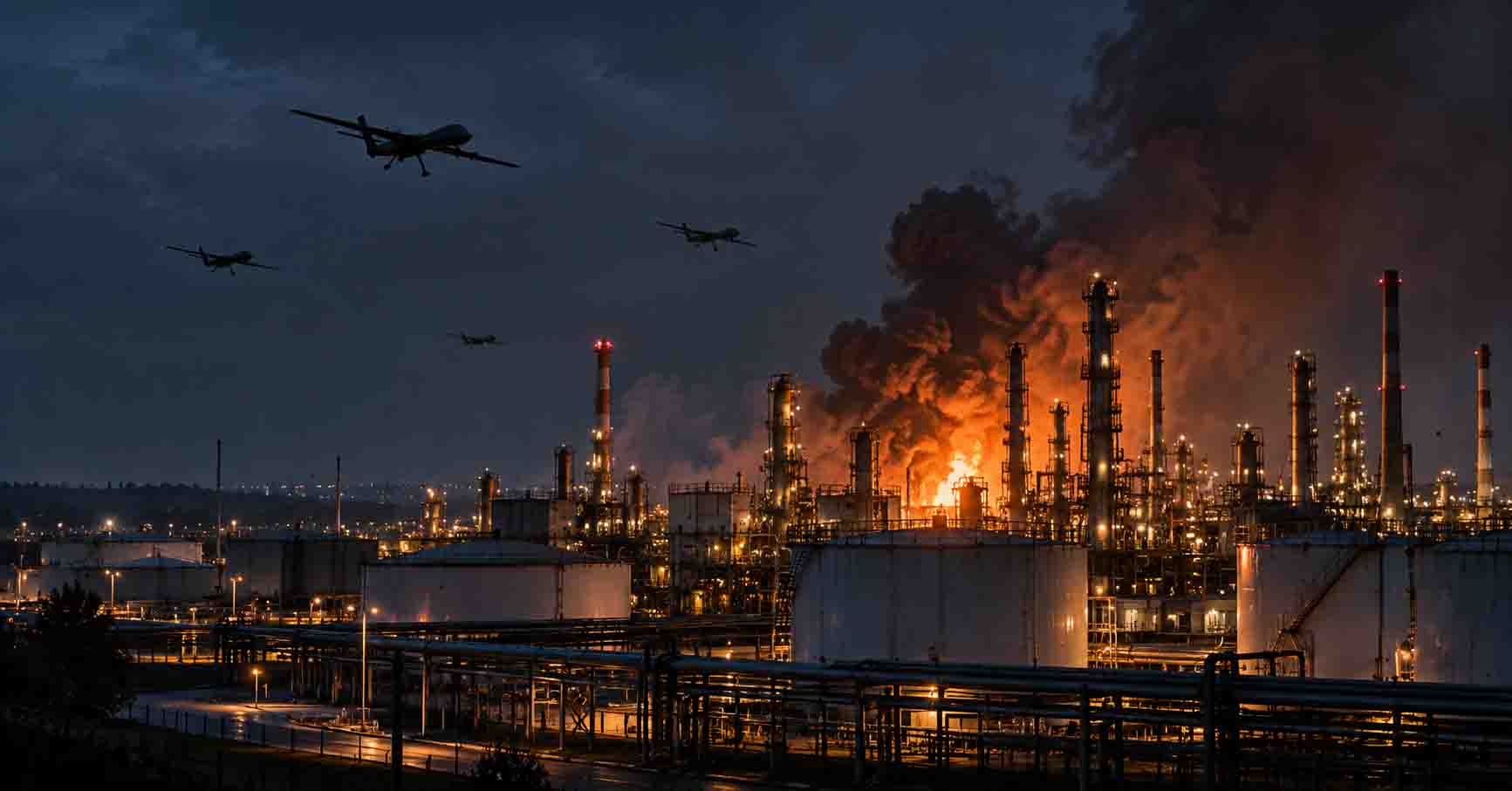
Those supplies are facing growing pressure after Ukrainian attacks on Russian refineries reduced production, prompting Moscow to impose restrictions on gasoline and diesel exports.
Baniyas Refinery Shutdown Adds to Fuel Supply Pressure
The price increases coincided with the closure of the Baniyas refinery, the country’s largest, for three months to undergo its first comprehensive maintenance overhaul, adding further pressure on domestic fuel supplies.
The refinery shutdown increases Syria’s need for imported products at a time of rising global energy costs. Baniyas also plays an important role in Syria’s energy sector and crude transportation projects, including plans involving the transportation of Iraqi oil through Syria to the Mediterranean.
Previous Protests Documented by Profile News
Profile News has previously documented protests in several parts of Syria, including earlier demonstrations and unrest along the coast and in Homs. The two videos below contain archival footage documented by Profile News during previous protests and are not from the current demonstrations over fuel prices.
Higher Fuel Prices Add to Cost-of-Living Pressures
The impact of the new prices has already begun to emerge in the transportation sector. Imad Abu Ras, a 44-year-old taxi driver in Aleppo, said passengers had already begun objecting to higher fares and warned that rising fuel costs would also push up prices for vegetables and other goods.
The protests have brought public opposition to higher energy prices into the streets, while the Energy Ministry says the increases are temporary and linked to higher fuel procurement costs, reliance on imports and shortages of refined products.