

Daily Report September 7, 2026: Lebanon Escalation, Yemen Fighting and Hormuz Tensions
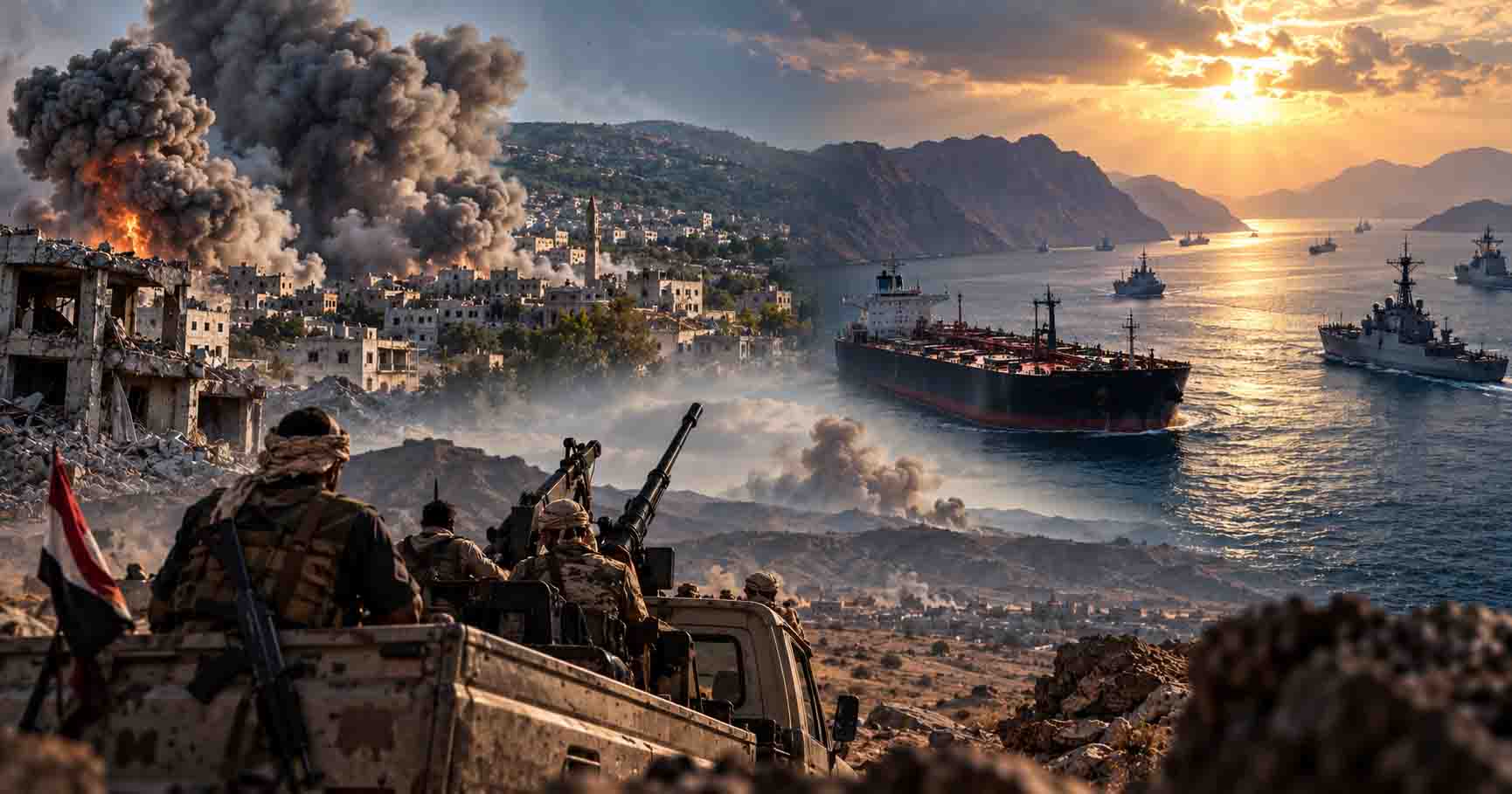
Daily Report for September 7, 2026 was dominated by the military escalation in southern Lebanon, where Israeli strikes continued from the early morning hours, hitting Kfar Rumman, Deir al-Zahrani, Nabatieh al-Fawqa, al-Rayhan and other areas, alongside a reported clash in the Beaufort Castle area. In the latest updates cited during the day, Lebanon’s Ministry of Public Health reported 12 people killed and 10 wounded in two strikes on Kfar Rumman, while two strikes on al-Rayhan and Nabatieh al-Fawqa killed one person and wounded 10 others.
In Yemen, military operations expanded across fronts in Taiz, al-Bayda and al-Jawf, with government forces announcing territorial advances and the launch of an operation toward al-Bayda governorate. The International Organization for Migration said escalating fighting in Taiz and Hodeidah had displaced about 2,519 families since the beginning of the escalation.
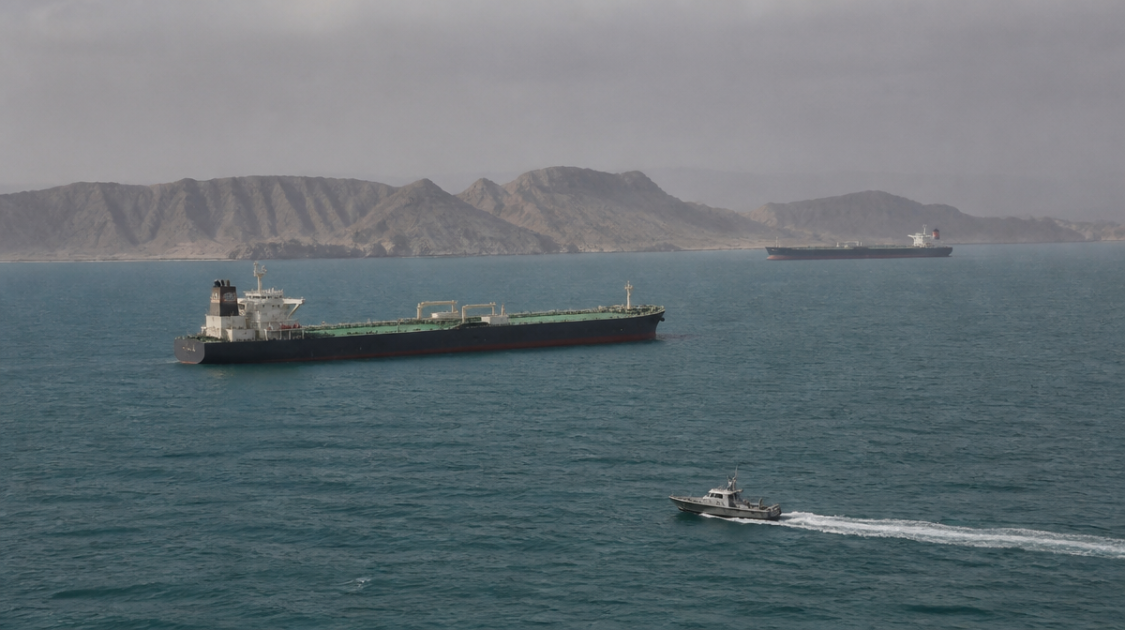
Regionally, the Strait of Hormuz remained at the center of U.S.-Iran tensions. Shipping activity fell to its lowest level since May, according to Kpler data, while Tehran said negotiations with Oman over a temporary corridor were nearing an agreement. Washington, meanwhile, maintained that the strait remained open and that millions of barrels of oil continued to pass through it each day.
Today’s developments follow those documented in Profile News’ Daily Report for September 6, 2026, which tracked developments in southern Lebanon, the Strait of Hormuz, Yemen and the Russia-Ukraine diplomatic track.
Daily Report: Southern Lebanon — Kfar Rumman at the Center of the Escalation
Southern Lebanon witnessed a new wave of Israeli airstrikes and shelling from the early morning hours, with much of the activity concentrated around Kfar Rumman, Nabatieh and their surroundings. Strikes also extended to other towns and areas using warplanes, drones and artillery, alongside reported field demolitions and the burning of homes.
Kfar Rumman, in the Nabatieh district, emerged as one of the main flashpoints. Civil Defense initially reported 10 people killed and seven wounded, before Lebanon’s Ministry of Public Health later reported that the toll from two strikes on the town had risen to 12 killed and 10 wounded.
Profile News correspondents in southern Lebanon reported during the early morning that a residential building in Kfar Rumman had been struck, as emergency teams began transporting the wounded. A vehicle carrying paramedics from the Islamic Risala Scout Association was also reportedly targeted.
According to the field tally compiled by Profile News correspondents, Israeli warplanes carried out strikes during the day on Jabal al-Rafi, Deir al-Zahrani, Arabsalim, Nabatieh al-Fawqa, Kfar Rumman, al-Mansouri and Wadi al-Salouqi. Drone strikes targeted Kfar Rumman, Nabatieh and al-Rayhan.
Nabatieh al-Fawqa was subjected to repeated strikes during the day. Field reporting later indicated a drone strike on Nabatieh city, while a Profile News correspondent also reported an Israeli drone strike near al-Rayhan.
In the evening, Lebanon’s Ministry of Public Health reported one person killed and 10 others wounded in two Israeli strikes on al-Rayhan and Nabatieh al-Fawqa.
Israeli artillery shelling extended to Dawhat Kfar Rumman, Jabal al-Rafi, Jabal al-Suwayda in Kfar Rumman, Zawtar al-Sharqiyah, al-Mansouri, the al-Dabsha area and Nabatieh al-Fawqa.
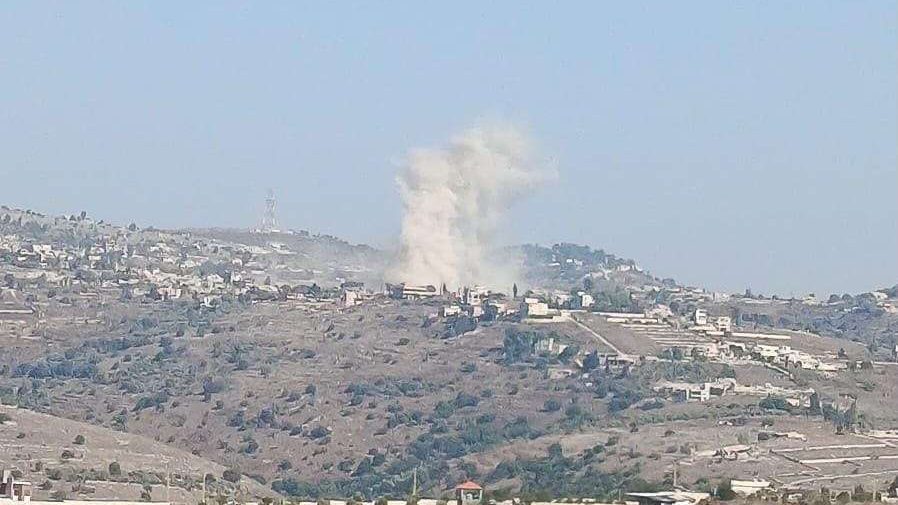
Profile News correspondents also reported demolitions carried out by Israeli forces in al-Mansouri, Kfar Tibnit, Zawtar al-Sharqiyah, Bani Hayyan and Houla, as well as homes being set on fire in Tallousa.

The escalation on September 7 was therefore not limited to airstrikes. It involved warplanes, drones, artillery shelling, field demolitions and the burning of homes, with the geographic scope extending from the Nabatieh area to several towns across southern Lebanon.
These developments form part of the broader wave of Israeli strikes on southern Lebanon, which have expanded in scope over recent days.
Lebanon’s Ministry of Public Health said Israeli attacks over three days had left 27 people dead and 69 wounded. It later reported that the overall toll since March 2 had reached 4,381 killed and 12,402 wounded.
Assessment: Kfar Rumman and the Nabatieh area emerged as major centers of the September 7 escalation, but the map of reported strikes shows a much broader geographic scope and the use of multiple forms of military action. Strikes on populated areas and reported displacement also increase the potential humanitarian consequences if operations continue at the same pace.
Evacuation Warning in Deir al-Zahrani Followed by Strike
During the early morning, the Israeli military issued an evacuation warning for residents of a building in Deir al-Zahrani, in the Nabatieh district, as well as nearby buildings, calling for their immediate evacuation.
About half an hour later, a Profile News correspondent in southern Lebanon reported that an Israeli airstrike hit the building covered by the warning.
The strike was part of the day’s broader air campaign. The warning and subsequent attack coincided with the displacement of residents from parts of southern Lebanon, particularly villages in the Nabatieh area, as Israeli warplanes continued intensive flights over the region.
Beaufort Castle Clash and Further Strikes in Southern Lebanon
In another field development, the Israeli military said a Hezbollah member opened fire from a building toward troops from the Golani Brigade in the Beaufort Castle area, and that Israeli forces returned fire and killed him.
The Israeli military also said two soldiers were lightly wounded during the clash and that it struck weapons depots, command centers and infrastructure it described as belonging to Hezbollah.
These details remain attributed to the Israeli military, as the source material contained no corresponding account or independent confirmation of the outcome of the clash.
Air operations continued throughout the day in Nabatieh, its surroundings and other parts of southern Lebanon, including the drone strike near al-Rayhan reported by a Profile News correspondent.
Politically, Lebanon’s foreign minister condemned the Israeli attacks and called for an international presence under the United Nations. The Lebanese president said the attacks were targeting the framework agreement process and undermining efforts to halt the escalation.
The Lebanese president also welcomed a French-Italian initiative to establish a European force to fill the gap following UNIFIL’s withdrawal, while reaffirming support for renewing the mandate of international forces.
Daily Report: Yemen — Fighting Expands from Taiz to al-Bayda and al-Jawf
Yemeni government forces continued military operations across several fronts, announcing strikes on Houthi gatherings and positions on the southern Marib fronts, as well as 13 strikes on Houthi positions, vehicles and gatherings in al-Bayda governorate.
Government forces also announced the destruction of a command-and-control room and strikes on Houthi gatherings on the Murays front in al-Dhale, alongside heavy clashes in the al-Barh sector of Taiz governorate.
The government forces said fighting on the western coast had entered its sixth day. They later announced the destruction of three Houthi formations using drones in the al-Barh sector amid reports of Houthi reinforcements arriving in the area.
In al-Bayda, government forces announced taking control of Hayd al-Khazzan, al-Fulayhan and al-Nasifah before Yemen’s official news agency reported the start of a military operation toward al-Bayda governorate aimed at retaking it from the Houthis.
Government forces also announced taking control of Naqil and Jabal al-Kura on the al-Kadhah front in Maqbanah district, west of Taiz, and said they had reached the outskirts of Dhi Na’im in al-Bayda.
In al-Jawf, government forces reported extensive fighting, while a military spokesman said the al-Yatamah area had been targeted with rocket launchers ahead of an intended advance by government forces and tribal fighters.
In a notable political and military development, Yemeni state television quoted the assistant defense minister as saying that a decision had been made to retake Sanaa and decisively settle the battle. The head of Yemen’s Presidential Leadership Council said government forces would continue their missions until state institutions were restored.
On the humanitarian front, the International Organization for Migration said escalating fighting in Taiz and Hodeidah had displaced around 2,519 families since the escalation began.
The UN special envoy for Yemen warned that recent Houthi attacks across several fronts risked widening the conflict.
Assessment: The number of active fronts, the declared operation toward al-Bayda and statements concerning Sanaa indicate that government forces have raised the level of their stated military objectives. Any lasting change in territorial control, however, requires independent monitoring of whether the announced gains can be maintained.
Daily Report: Strait of Hormuz — Shipping Declines as Temporary Corridor Talks Advance
Ship-tracking company Kpler reported that shipping activity through the Strait of Hormuz over the previous 10 days had fallen to its lowest level since May.
Iran’s Foreign Ministry, meanwhile, said negotiations with Oman over establishing a temporary corridor through the Strait of Hormuz had reached their final stages and that an agreement could be concluded within days.
On the U.S. side, a senior official told Al Jazeera that the strait was fully open and that the U.S. Navy controlled it, adding that millions of barrels of oil were passing through each day and that shipping traffic would increase following what he described as mine-clearing operations in the strait.
Later in the day, U.S. Central Command said it had rerouted 94 vessels, disabled three and inspected two since the resumption of the maritime blockade on Iran. It also said the USS George H.W. Bush continued supporting enforcement operations in the Arabian Sea.
Qatar, meanwhile, sought to advance the diplomatic track. Its Foreign Ministry spokesman said the priority was to open the Strait of Hormuz and ease economic pressure on the region’s populations, adding that the crisis could only be resolved through a negotiated agreement.
He said Doha was examining multiple scenarios to address the concerns of the parties involved and warned against using waterways as a weapon because of the wider precedents this could create.
The tensions were reflected in energy markets, with oil prices rising to their highest level in six weeks and Brent crude approaching $98 a barrel.
Assessment: Two parallel tracks are emerging around Hormuz: continued maritime and military pressure on one side, and negotiations over temporary transit arrangements on the other. Whether an agreement with Oman is reached will be a key indicator for both the direction of the crisis and regional energy flows.
Iran — Nuclear File and Domestic Pressure
Iran’s Foreign Ministry criticized a U.S.-European draft resolution at the International Atomic Energy Agency, describing it as based on what Tehran called a politicized report.
The IAEA director general said the agency was discussing with Iran how to safely resume inspections of its nuclear facilities under the Cairo agreement.
Iran’s mission to the United Nations in Vienna also called on the agency to stop issuing what it described as politicized and unprofessional reports.
On the security front, Iran’s Intelligence Ministry announced that three people it described as terrorists had been killed, nine others arrested and three cells dismantled in Sistan and Baluchestan province.
Economically, Iran’s vice president announced that subsidies for gasoline imports would be gradually removed, while the Iranian president called on state institutions to continue providing services despite sanctions and economic pressure.
Russia and Ukraine — Progress Toward Possible Trilateral Talks
The Kremlin said Russian President Vladimir Putin appreciated U.S. President Donald Trump’s efforts toward a settlement in Ukraine and that Moscow did not rule out resuming trilateral negotiations.
Later, U.S. envoy Steve Witkoff announced substantial progress toward setting a date for trilateral talks on Ukraine.
Ukrainian President Volodymyr Zelenskyy said the possibility of a U.S.-Ukrainian-Russian round of talks remained open, although no final decision had yet been made.
Zelenskyy added that Ukraine had made the concessions it could and that any diplomatic path required security guarantees and economic support. He said Kyiv’s understanding from the visit by Witkoff and Jared Kushner was that Putin was prepared to discuss ideas aimed at moving negotiations forward.
These developments are part of the broader U.S. diplomatic push related to the Russia-Ukraine war.
On the battlefield, Russia’s Defense Ministry said it had struck a military cargo vessel at Ukraine’s Chornomorsk port and targeted Ukrainian military trains carrying foreign-made drones in the Dnipropetrovsk region.
Gaza — Fatal Strikes and U.S. Criticism of Israel
The day began with hospital sources in the Gaza Strip reporting that five Palestinians, including two children, had been killed and others wounded in Israeli strikes and gunfire in Gaza City and Deir al-Balah.
In Khan Younis, sources reported injuries following a drone strike before Nasser Hospital announced that one person had been killed in a strike targeting a motorcycle.
The Union of Fishermen’s Committees also reported that three fishermen were wounded by Israeli fire while working off the coast of Gaza City.
The UN High Commissioner for Human Rights said Israel continued to restrict the entry of aid into Gaza despite the ceasefire.
In a notable political development, CBS News quoted a U.S. official as saying Washington was frustrated by Israel’s failure to provide the guarantees required to establish a new police force in Gaza and that Israel was not meeting commitments related to allowing materials into the territory for some reconstruction projects.
The official added that some Israeli strikes, in his assessment, went beyond the right of self-defense and were contributing to insecurity in the Gaza Strip.
West Bank — Stabbing Attack and Military Escalation Around Nablus
The Nablus area saw an escalation after an Israeli was seriously wounded in a stabbing attack near the village of Usarin.
Israeli forces announced a manhunt, imposed a security cordon on villages east of Nablus and entered the town of Qabalan.
The Israeli military later announced that it had killed the person suspected of carrying out the attack. The Palestinian Ministry of Health said a Palestinian had died from wounds sustained after being shot by Israeli forces in Qabalan and that his body was being withheld.
Israel’s defense minister said the military was preparing for what he described as an all-out war against terrorism in the West Bank and that Israel would not allow an uprising to continue for years.
In Qalqilya, the Palestinian Ministry of Health reported that a young man was killed by settler gunfire in the village of Hajja. Later, settlers reportedly set fire to Palestinian vehicles in Burqa, north of Nablus.
The Palestinian Red Crescent also reported injuries following assaults by Israeli forces against Palestinians in Anabta near Tulkarm, as well as a child wounded by gunfire in Hebron.
Other International Developments
In the United States, officials in Miami reported that five people were killed and five others injured in the crash of an Amazon cargo aircraft.
In Russian-German relations, Russia’s Foreign Ministry announced the closure of the German consulate in St. Petersburg.
The prime ministers of Russia and North Korea also inaugurated a bridge on the border between the two countries, according to TASS.
What to Watch in the Coming Hours
- Southern Lebanon: Whether Israeli strikes continue following the heavy toll in Kfar Rumman and Nabatieh, and whether the Beaufort Castle incident leads to broader clashes.
- Yemen: Developments in the military operation toward al-Bayda, the extent of government advances in al-Jawf and Taiz, and the impact of fighting on displacement.
- Strait of Hormuz: The outcome of Iranian-Omani negotiations over a temporary corridor, shipping activity and oil prices.
- Ukraine: Whether a date is set for possible U.S.-Russian-Ukrainian trilateral talks and what concessions and security guarantees may be discussed.
- Gaza: Washington’s position on Israeli military operations and the future of security and reconstruction arrangements.
- West Bank: The consequences of the escalation around Nablus and Israeli warnings about expanding military operations.
Breaking News Updates
Follow the latest developments through Mir’at Al-Hadath – Profile News on WhatsApp: