

Global Markets: Oil Jumps as Concerns Grow From Hormuz to Bab el-Mandeb

Global markets returned to the forefront of economic attention at the start of the week after a wave of volatility triggered by military escalation in Tehran, prompting investors to reprice geopolitical risks and increase risk premiums across energy, shipping, and financial markets.
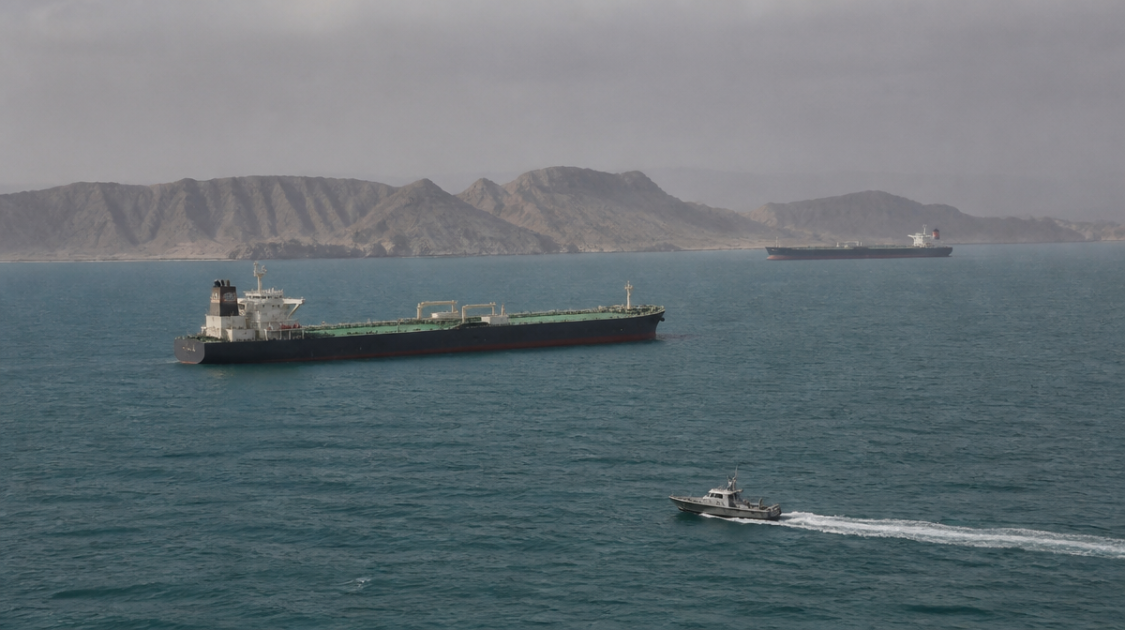
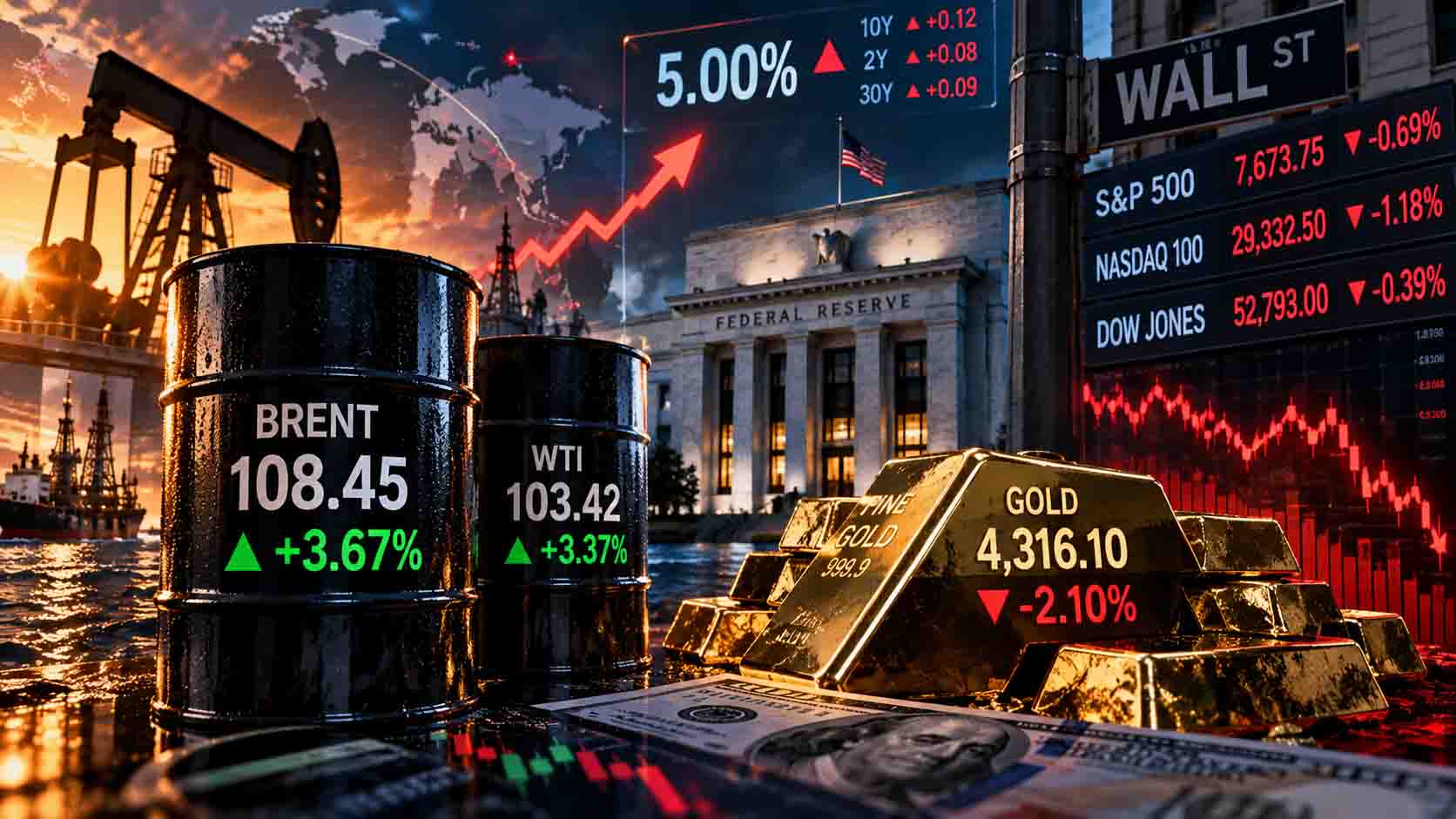
Oil prices surged more than 3% in early trading, with Brent crude futures rising to $97.63 per barrel (+4.88%), while West Texas Intermediate (WTI) climbed to $94.56 per barrel (+4.44%), amid growing concerns over energy supply security in the Middle East and the possibility of expanding risks along strategic maritime routes stretching from the Strait of Hormuz to Bab el-Mandeb.
Concerns across global markets intensified after the military spokesperson for Ansar Allah (the Houthis) announced missile launches toward targets in the Jaffa area and declared a maritime ban on Israeli-linked shipping in the Red Sea, widening fears over the potential impact of the escalation on strategic shipping lanes extending from the Strait of Hormuz to Bab el-Mandeb.
These developments come just days after energy and metals markets came under pressure following stronger-than-expected U.S. jobs data, which reinforced expectations that interest rates could remain elevated for longer, before geopolitical tensions once again shifted investor focus.
According to market data, the U.S. Dollar Index (DXY) remained near the 100-point level, while the yield on the 10-year U.S. Treasury note rose to 4.57%, amid continued elevated market volatility, reflecting heightened investor concern.
- Brent crude: $97.63 (+4.88%).
- WTI crude: $94.56 (+4.44%).
- Gold: $4,330.57 (-0.80%).
- Silver: $67.34 (-2.55%).
- U.S. Dollar Index: 100.03.
- 10-year U.S. Treasury yield: 4.58%.
- 30-year U.S. Treasury yield: 5.03%.
Global Markets Reprice Geopolitical Risk
Analysts say the rapid rise in oil prices reflects a return to pricing energy supply risks after investors had spent much of the previous week focused on U.S. economic data and the outlook for interest rates.
Markets continue to monitor developments related to the Strait of Hormuz and global energy supplies, one of the world’s most strategically important routes for oil and natural gas transportation.
Could the Risk Spread From Hormuz to Bab el-Mandeb?
Global markets are also closely watching developments in the Red Sea and Bab el-Mandeb after Ansar Allah announced an expansion of military measures targeting shipping linked to Israel, adding a new layer of risk to energy and maritime transport markets.
Market participants believe that any major disruption across these two maritime chokepoints could increase shipping and insurance costs while adding further pressure to global oil markets, particularly as tensions persist in the Gulf region.
Investors are also monitoring official data from the U.S. Energy Information Administration (EIA) for trends in inventories, production, and demand indicators that directly influence oil prices.
Why Are Geopolitical Risks Outweighing the Dollar’s Impact?
A stronger U.S. dollar typically weighs on commodity prices, but global markets are currently experiencing an environment in which geopolitical risks are taking precedence over traditional monetary factors.
While the U.S. Dollar Index remained near 100, investors focused on the possibility of disruptions to global oil supplies rather than the effect of a stronger dollar on demand.
This shift is seen as evidence that energy security concerns have become the dominant force influencing global markets, particularly amid growing tensions in the Gulf region, one of the world’s most important centers of oil production and exports.
Meanwhile, U.S. Treasury yields continued to rise, with the 10-year yield reaching approximately 4.57%, reflecting expectations that interest rates may remain elevated for a longer period.
Market expectations for U.S. monetary policy can be tracked through the CME FedWatch Tool, which measures investor expectations regarding Federal Reserve decisions.
- Military escalation in the Middle East.
- Global oil supply security.
- Shipping activity through Hormuz and Bab el-Mandeb.
- The direction of the U.S. dollar.
- U.S. Treasury yields.
- Interest-rate expectations.
Global Markets and Technology Stocks Under Pressure
U.S. technology stocks came under notable pressure, with Nvidia down about 6.2%, Tesla losing more than 6.5%, and Meta falling more than 5.5%, while the Nasdaq dropped more than 4%, reflecting continued caution toward high-growth assets amid rising yields and geopolitical risks.
The Nasdaq fell more than 4%, while the S&P 500 declined 2.64% and the Dow Jones Industrial Average lost roughly 695 points in the previous session.
Observers say global markets are now facing a complex mix of risks, including persistently high interest rates and growing concerns over potential energy supply disruptions.
At the same time, the VIX volatility index jumped approximately 39.68%, reflecting increased demand for hedging instruments amid growing economic and geopolitical uncertainty.

Global Markets Face a New Energy and Inflation Test
The impact of rising oil prices extends far beyond energy markets, directly affecting inflation and economic growth worldwide.
Sustained increases in crude prices raise transportation, shipping, and manufacturing costs, adding pressure on central banks that are still working to contain inflation after years of monetary tightening.
Economists warn that a return of oil prices above $100 per barrel could complicate the task facing major central banks, including the Federal Reserve and the European Central Bank, at a time when markets had been expecting the beginning of a monetary easing cycle in the coming months.
The International Monetary Fund and the World Bank continue to monitor the impact of energy prices on global growth, viewing them as one of the most significant economic variables in 2026.
Global Markets Between the $100 Oil Scenario and De-escalation
- $97.63: Current Brent crude price.
- $100: First major psychological threshold.
- $105: A level that could revive global inflationary pressures.
- $110: A level that could force central banks to reassess interest-rate expectations.
Investors are currently considering two primary scenarios.
The first involves containing the current escalation without materially affecting oil flows, allowing markets to absorb the shock and refocus on inflation data and U.S. interest-rate expectations.
The second involves broader geopolitical risks or actual disruptions to shipping routes or oil exports, which could push oil prices rapidly toward $100 per barrel or higher.
Energy futures markets suggest traders have already begun adding a geopolitical risk premium to prices, particularly following the sharp gains recorded in Brent and WTI contracts in recent hours.
- Containment of the escalation → Oil remains below $100.
- Supply disruptions → Oil rises above $100.
- Closure of strategic maritime routes → Additional price spikes.
- Higher energy costs → Increased global inflation pressures.
- Renewed inflation → Delayed interest-rate cuts.
Why Could This Become the Top Global Markets Story Today?
This development combines three of the most influential drivers of global markets at once: oil, geopolitics, and U.S. monetary policy.
Just days after U.S. jobs data and dollar strength dominated market sentiment, oil has returned to the spotlight with its first major price surge in weeks.
At the same time, sharp declines in U.S. equities and a nearly 40% rise in the VIX highlight a broad repricing of risk across asset classes.
As a result, many market participants view today’s session as a potential turning point for global markets during the second half of the year.
Investors are also monitoring any signs of higher shipping and insurance costs in the Middle East, as further disruptions across strategic maritime routes could place additional pressure on energy prices and global supply chains.
Conclusion
Global markets have shifted their attention back to oil and geopolitics after U.S. jobs data and the dollar dominated trading activity in recent days.
With Brent crude approaching $98 per barrel and WTI rising above $94, investors are reassessing the potential impact of energy supply disruptions on inflation, economic growth, and interest-rate expectations.
While oil supplies have not yet been materially disrupted, global markets have already begun pricing in risks extending from the Strait of Hormuz to the Red Sea and Bab el-Mandeb, pushing oil to its highest levels in weeks and placing energy security back at the center of investor attention worldwide.