

Iran’s Pickaxe Mountain: What Is Tehran Building Under the Granite and Why Is It So Hard to Destroy?
Iran Pickaxe Mountain moved to the center of the confrontation on September 10, 2026, after U.S. President Donald Trump threatened a possible strike on the heavily fortified site near the Natanz nuclear facility, saying Washington had detected activity there and knew what was happening inside.
But the site’s significance extends beyond the latest U.S. threat. An analysis of satellite imagery collected over several years points to accelerated construction in 2026 inside a granite mountain, while analysts are examining three potential nuclear-related uses for the facility. So far, however, there is no independent evidence that uranium enrichment operations have begun at the site.
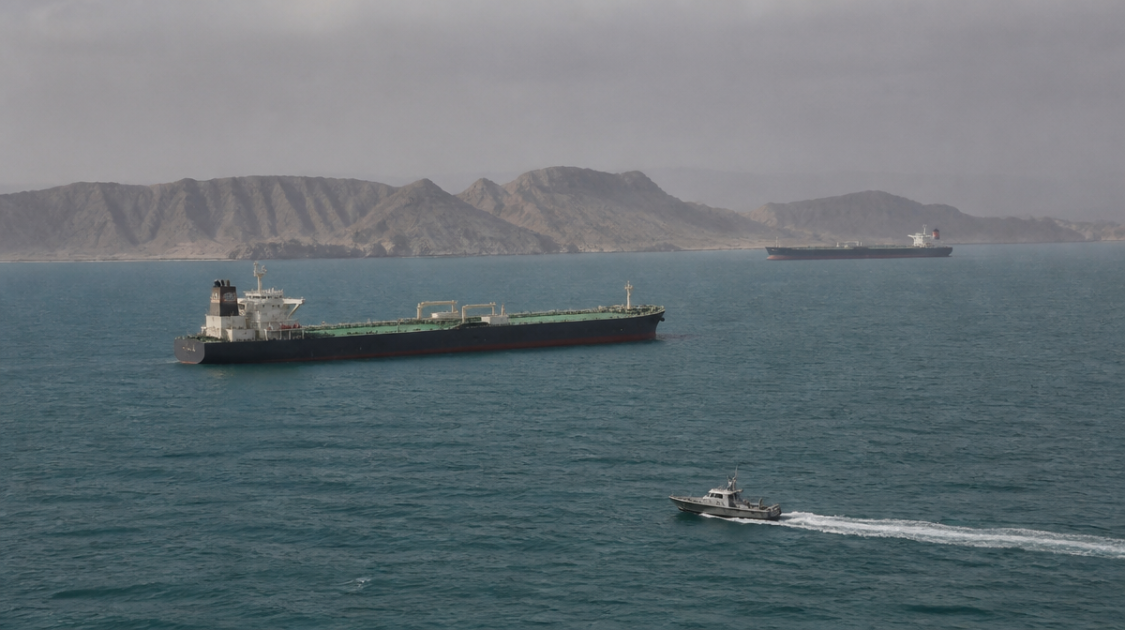
The threat came as tensions between Iran and the United States in the Strait of Hormuz continued, with explosions heard in Qeshm, Sirik and Minab in southern Iran’s Hormozgan province, as shipping and energy flows remained under pressure from the military confrontation.
The developments surrounding Pickaxe Mountain therefore bring together three highly sensitive issues: Iran’s nuclear program, the United States’ ability to destroy deeply buried underground facilities, and the broader war that has extended to energy export routes and the Strait of Hormuz.
أنفاق عميقة وتحصينات قوية ..
ماذا تعرف عن “جبل الفأس” الموقع النووي الإيراني الذي يصعب استهدافه لشدة تحصينه وعمقه تحت الأرض.
والذي توعد ترامب قبل قليل بتدميره كلياً… https://t.co/B3HncgDTiw pic.twitter.com/P8PdWT8GPw
— أحداث الشرق الأوسط (@MiddleEast_ev) July 13, 2026
What Is Iran Pickaxe Mountain, the Site Trump Threatened to Strike?
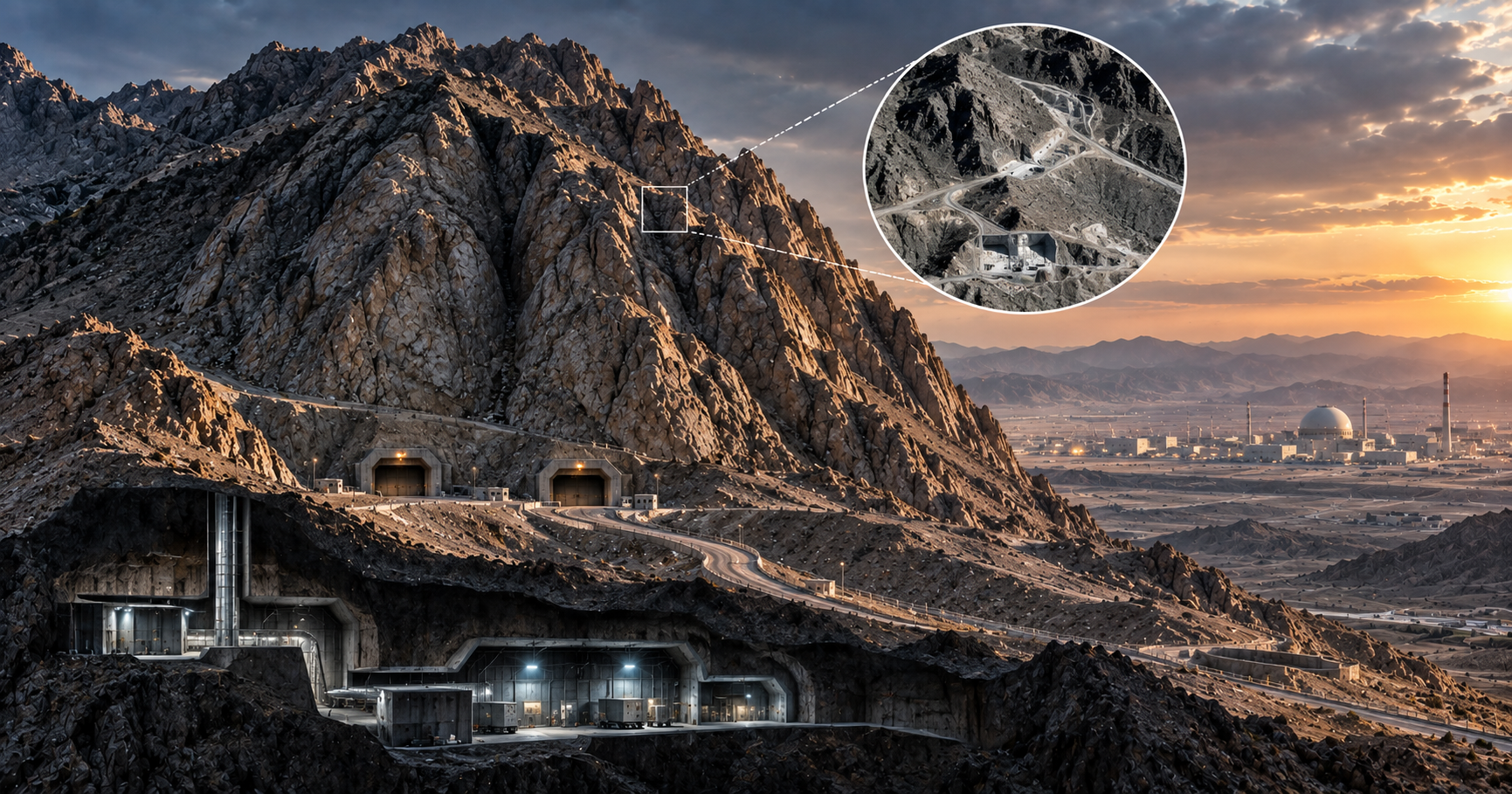
Iran Pickaxe Mountain is located near the Natanz nuclear complex, about 140 miles south of Tehran. The site has drawn the attention of intelligence agencies and analysts because of its deeply buried underground facilities and the surrounding geology.
According to Reuters, the site is near the damaged Natanz complex and contains two deeply buried tunnel complexes.
A satellite imagery analysis by the Center for Strategic and International Studies (CSIS), examined by CNN and detailed by Sky News Arabia, showed a clear increase in construction activity this year.
Analysts examined satellite imagery spanning about six years, with activity increasing particularly between September 30, 2025, and August 9, 2026.
However, the imagery does not establish that the facility has become an operational uranium enrichment site. That distinction is important because the site’s ultimate purpose remains the subject of intelligence assessments and analysis.
What Changed at Pickaxe Mountain in 2026?
The latest indications go beyond the existence of the tunnels themselves. The CSIS analysis identified a shift in the nature of work underway at the site.
According to the analysis, activity appears to have moved from intensive excavation toward what is likely internal construction and continued external reinforcement.
Changes visible in satellite imagery included raising and hardening tunnel entrances, paving the internal road network, reinforcing areas around the entrances, and grading and removing material produced by tunnel excavation.
Analysts also observed increased vehicle traffic on roads within the area in 2026 compared with earlier periods covered by the analysis.
Those indicators reinforce assessments that work at the facility is advancing, but they do not by themselves reveal what equipment may be inside the tunnels or the site’s ultimate purpose.
Three Possibilities for What Iran Is Building Under the Mountain
The CSIS analysis identified three possible purposes for the facility, all related to Iran’s nuclear program.
The first is that the site could be used to assemble centrifuges. The second is that it could become a uranium enrichment facility. The third is that it could serve as a fortified refuge for other nuclear-related activities, potentially including processes linked to converting uranium into metal.
Israeli intelligence assessments have also suggested that Iran may seek to move centrifuges to the site as part of enrichment-related efforts.
Those scenarios, however, are not evidence that Iran is currently enriching uranium inside Pickaxe Mountain. CSIS analysts said ongoing construction and other factors indicate the site does not yet appear capable of conducting enrichment operations, if that is ultimately its intended purpose.
Iran maintains that its nuclear program is intended for peaceful purposes, while the United States says it will not allow Tehran to obtain a nuclear weapon.
Trump: We May Have to Strike Pickaxe Mountain
Trump brought Iran Pickaxe Mountain back into focus after saying the United States had detected activity there and knew what was happening at the site.
The U.S. president said Washington might have to strike the site, placing the facility directly within the calculations surrounding military escalation with Iran.
The comments follow strikes on other Iranian facilities during the confrontation, covered by Profile News in its reporting on U.S. strikes on Iran.
Trump’s threat does not mean a decision has been made to strike the site, but it significantly raises Pickaxe Mountain’s profile and places it directly within the pressure and deterrence messaging between Washington and Tehran.
Why Is Pickaxe Mountain So Difficult to Destroy?
One of the site’s most important characteristics is the rock surrounding the facility. According to the CSIS analysis, the tunnels lie beneath layers of granite, providing a high degree of natural protection.
The center’s team said the site’s geology could make it difficult to destroy even with the heaviest non-nuclear bombs in the Pentagon’s arsenal.
That is not the only challenge facing U.S. military planners. Deeply buried facilities differ from surface targets because a successful strike depends not only on hitting a tunnel entrance, but also on a weapon’s ability to reach the required depth and inflict decisive damage inside the facility.
The same challenge has previously emerged in dealing with other deeply buried Iranian facilities.
Can U.S. Bombs Destroy the Site?
The United States previously used weapons designed to penetrate fortified targets against Iranian nuclear facilities during Operation Midnight Hammer in June 2025.
But the ability of existing weapons to destroy even deeper facilities has remained under debate. According to information reported by CNN and carried by Sky News Arabia, the Pentagon believed that Massive Ordnance Penetrator bombs, known as MOPs, would not be capable of completely destroying some of Iran’s most deeply buried facilities.
The U.S. military is developing a new generation of bunker-penetrating weapons that could provide greater capability against facilities buried at significant depths.
According to the published information, a contract to work on a prototype next-generation penetrator was awarded in September 2025, following a request for proposals from defense companies to develop the capability.
U.S. Tests Capabilities for Striking Deep Underground Facilities
Other information adds an important dimension to the U.S. threat against Pickaxe Mountain. Days before the start of a U.S. military operation against Iran, federal contracting documents showed moves to repair a unique underground testing facility at White Sands Missile Range in New Mexico.
According to information reported by CNN, the emergency contract was worth about $1.2 million and was tied to preparations for live-fire testing intended to validate classified capabilities against rapidly emerging threats.
CNN cited three sources familiar with the matter as saying the test plans were linked to the war with Iran and the need to develop methods for targeting deeply buried Iranian facilities, as well as simulating possible strikes against specific nuclear facilities.
The comparison is particularly significant because the White Sands test site is also excavated in granite, according to an environmental assessment cited in the reports.
However, CNN said it could not independently verify whether the test was actually conducted and could not confirm the purpose of activity seen at the test site in satellite imagery.
Does Washington Have a Plan to Strike Iran Pickaxe Mountain?
According to a source familiar with the matter who spoke to CNN, the U.S. military maintains operational plans for striking Pickaxe Mountain, and the site was among targets previously considered as threats against Iran escalated.
The source said one plan under consideration involved using some of the largest bombs in the U.S. arsenal.
But the technical question remains unresolved: Can those weapons penetrate the rock deeply enough to destroy facilities or equipment that may be inside the mountain?
A source familiar with the matter also told the network that personnel within the U.S. Defense Department had held an intensive planning session to discuss options for dealing with deeply buried underground facilities.
The information remains attributed to CNN’s sources, and the Pentagon has not announced a plan to strike Pickaxe Mountain.
Explosions Reported in Qeshm, Sirik and Minab
As U.S. threats intensified, Iran’s southern Hormozgan province saw unexplained developments during the early hours of September 10.
Iran’s official news agency reported that an explosion of unknown origin was heard on Qeshm Island, saying in an initial report that it was unclear whether the sound came from the sea or from the island itself.
Fars news agency later reported several explosions on Qeshm Island and in Sirik, before reporting sounds of explosions in the coastal areas of Sirik, Minab and Qeshm in Hormozgan province.
The agency cited provincial authorities as saying the sounds heard in Sirik, Minab and Qeshm came from the direction of the sea.
In a later development, Iran’s official news agency reported that areas in the southern city of Sirik had been hit by projectiles it described as “hostile.”
The party responsible for the developments and the nature of the projectiles could not be independently established, and there is no reliable information linking the Hormozgan explosions directly to the threat involving Pickaxe Mountain.
Trump Says the United States Controls the Strait of Hormuz
Trump’s remarks were not limited to the nuclear issue. He also said the United States “controls” the Strait of Hormuz and went as far as saying he believed it should be called the “Trump Strait.”
The comments came after a broad wave of attacks involving oil tankers and commercial vessels, developments covered in detail in the Profile News Daily Report for September 9, 2026.
Iran has said it targeted vessels near the Strait of Hormuz, while U.S. Central Command said it had targeted Iranian oil tankers during recent waves of operations.
Trump’s assertion of U.S. “control” over the strait, however, remains a political and military characterization by the U.S. president and does not in itself indicate any change in the legal or sovereign status of the maritime passage.
Strait of Hormuz Remains Under Wartime Pressure
Despite Trump’s remarks, shipping through the strait remains affected by the military confrontation and the risks facing commercial vessels and energy tankers.
The risks posed by the escalation stem from the importance of the Strait of Hormuz to global shipping and energy flows.
According to Reuters’ coverage of oil markets and traffic through Hormuz, energy flows through the waterway remained below previous levels as attacks and war-related risks continued.
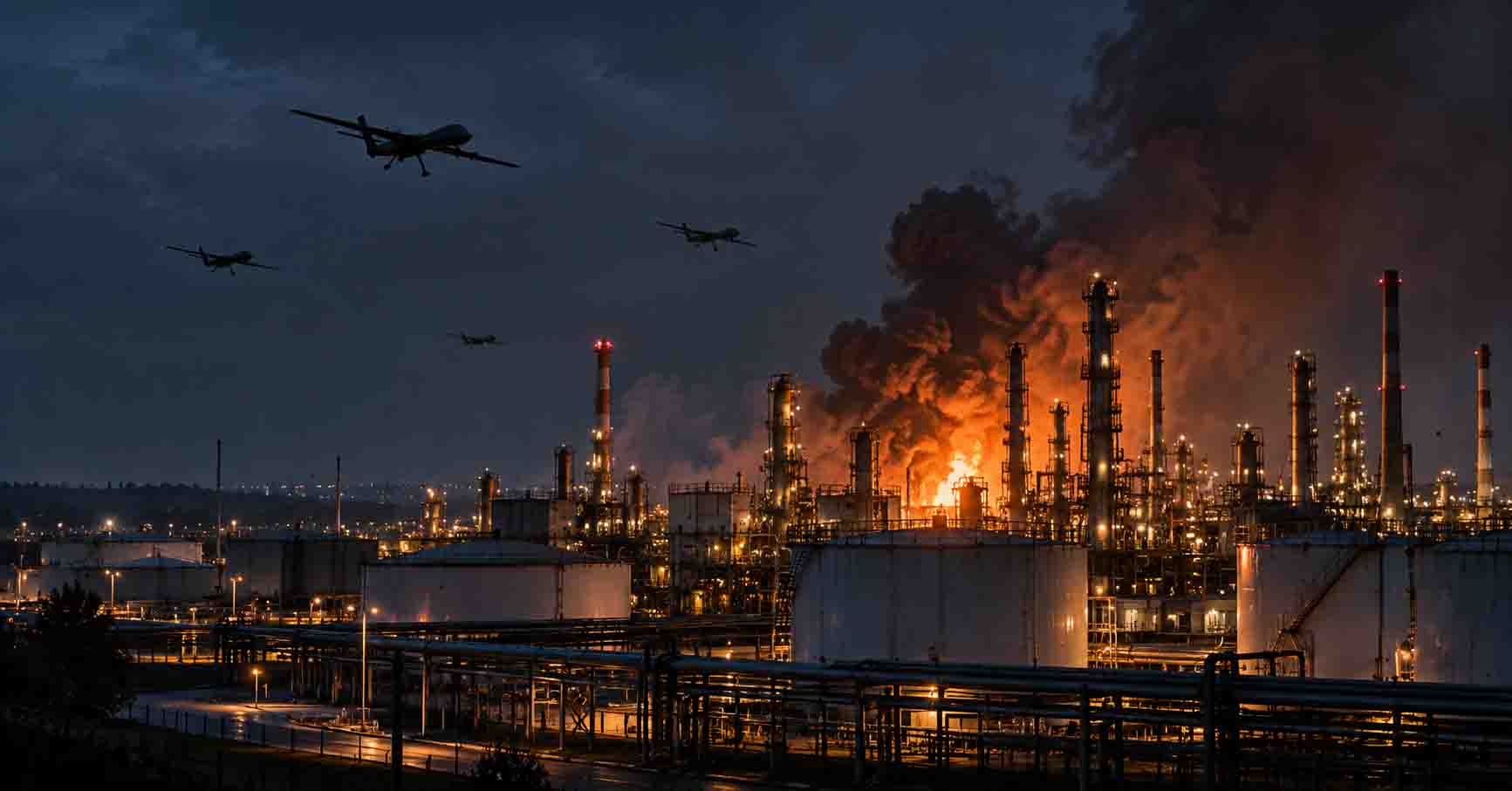
Commercial vessels have been attacked in the Gulf and Gulf of Oman, while a tanker carrying about 2 million barrels of Iraqi fuel oil was hit by a drone in Iraqi waters during developments on September 9.
Oil Remains Above $100 a Barrel
The continuing escalation has affected energy markets, with Brent crude remaining above $100 a barrel amid persistent concerns over supplies and oil tanker traffic.
Risks surrounding the Strait of Hormuz remain a major factor for markets because any further disruption to shipping could affect the amount of oil and gas available to global markets, as well as shipping and insurance costs.
The developments follow the surge covered by Profile News in its report on oil rising above $100 a barrel.
With the confrontation extending to ships and tankers, markets are no longer watching production levels alone. The ability to move oil to market has also become a central part of the risk assessment.
Iran Pickaxe Mountain: Could It Become the Next Target?
Iran Pickaxe Mountain emerging in Trump’s remarks marks a new development in the confrontation. The site combines questions about its potential future role in the nuclear program with extensive underground fortification, while also raising questions about the limits of the current U.S. arsenal against facilities buried at great depths.
At the same time, the available information does not establish that enrichment operations are taking place at the site. CSIS analysis indicates it may not yet be ready for enrichment, if that is indeed the purpose Iran intends for it.
The question in the coming period will therefore be twofold: What is Iran actually building beneath Pickaxe Mountain, and could Trump’s threats turn into military action if Washington concludes that activity at the facility has crossed the lines it has set?
Meanwhile, the explosions reported by Iranian media in Hormozgan, continued disruption to shipping in the Strait of Hormuz and oil prices remaining above $100 a barrel are making the military, nuclear and economic dimensions of the crisis increasingly interconnected.
For the full background to the events preceding these developments, see the Profile News Daily Report for September 9, 2026.
What to Watch Next
- Pickaxe Mountain: Any new activity detected by satellite imagery, particularly around tunnel entrances and internal roads.
- U.S. decision-making: Whether Trump’s threats remain part of pressure and deterrence efforts or develop into military action.
- Deep underground facilities: Any new information about U.S. weapons being developed to penetrate fortified targets.
- Hormozgan: Further information on the source of the explosions and projectiles reported by Iranian media in Qeshm, Sirik and Minab.
- Strait of Hormuz: Ship and oil tanker traffic following the latest wave of attacks.
- Oil: Whether Brent crude can remain above $100 as supply risks persist.
Follow Breaking News
For the latest military, political and economic developments around the clock, visit the Profile News breaking news page.
Breaking news from “Mirror of the Event” is also available through the Profile News WhatsApp channel.