Congo Ebola Outbreak Passes 9,000 Cases With 4,381 Deaths and No Approved Vaccine for Strain
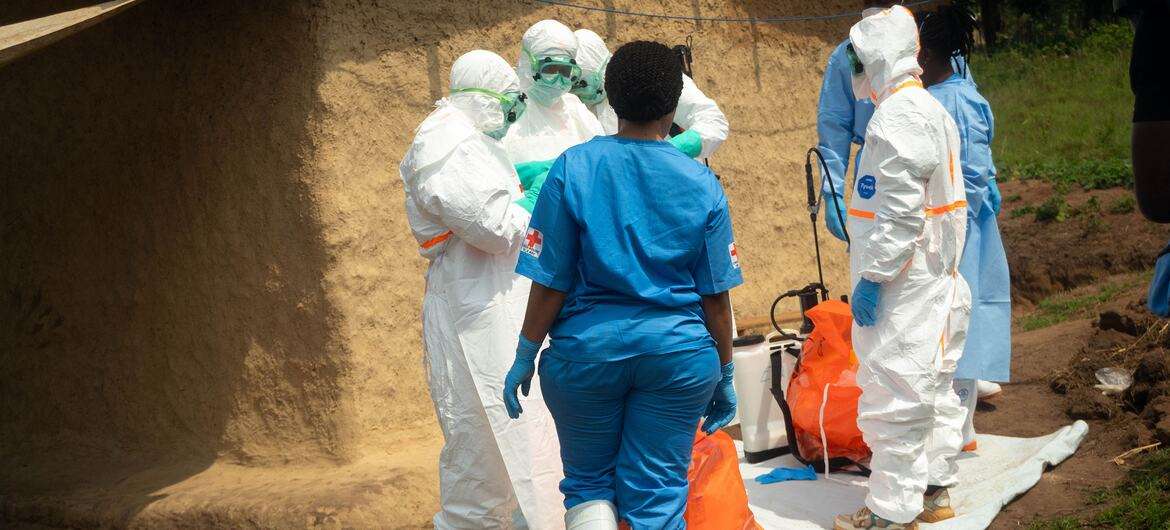
The Congo Ebola outbreak has surpassed 9,000 confirmed infections, with the latest government data showing 9,066 cases and 4,381 deaths in what has become the largest and deadliest Ebola epidemic ever recorded in the Democratic Republic of the Congo.
The figures imply a case fatality rate of about 48.3% among confirmed cases and make the current outbreak the second-largest Ebola epidemic globally, behind the 2014-2016 West Africa outbreak.
Congo Ebola outbreak reaches 9,066 confirmed cases
The Democratic Republic of the Congo’s latest health data recorded 9,066 confirmed infections and 4,381 deaths as transmission continues across multiple hotspots.
The World Health Organization had reported 8,728 confirmed cases and 4,205 deaths as of October 6, meaning hundreds of additional infections have been recorded within days.
Cases have spread across seven provinces, with Ituri remaining the outbreak’s main epicenter and North Kivu another major center of transmission.
The largest Ebola outbreak in Congo’s history
The current epidemic has surpassed the 2018-2020 outbreak, previously the country’s largest and deadliest.
Globally, only the 2014-2016 West Africa epidemic was larger. That outbreak infected more than 28,600 people and killed over 11,000 across Guinea, Liberia and Sierra Leone, according to the World Health Organization.
The rapid rise past 9,000 confirmed cases underscores the difficulty responders are facing in breaking chains of transmission.
Why is the Bundibugyo strain different?
The outbreak is caused by Bundibugyo virus, one of several orthoebolaviruses known to cause severe disease in humans.
There is currently no licensed vaccine specifically approved for Bundibugyo virus disease and no approved strain-specific treatment, according to WHO.
That differs from Ebola disease caused by the Zaire virus species, for which an approved vaccine and effective monoclonal antibody treatments are available.
Is any vaccine being used?
Yes, but as part of research rather than as a proven Bundibugyo vaccine.
WHO says animal evidence suggests the Ervebo vaccine may offer some protection, but there is not yet enough evidence to establish whether it protects humans against Bundibugyo virus disease.
The organization therefore recommends its use against the current strain only within research protocols designed to measure effectiveness.
A total of 70,000 Ervebo doses were allocated to Congo, including doses for a clinical trial and for frontline and healthcare workers under the research response.
Scientists are also searching for an effective treatment
WHO and international partners are running the PARTNERS clinical trial to evaluate potential treatments for Bundibugyo virus disease.
The trial is assessing therapies including remdesivir and experimental monoclonal antibodies, alone and in combination.
Until an effective specific therapy is established, optimized supportive care — including aggressive fluid and electrolyte replacement and management of complications — remains central to treatment and can improve survival when patients receive care early.
Virus crosses the border into Kenya
Regional concern intensified after Kenya confirmed its first imported Ebola case in October.
The patient was a Kenyan national who had been living in Congo, traveled overland through Uganda and then flew to Nairobi, where he died on October 5.
The journey prompted extensive contact tracing and tighter health surveillance at borders and airports.
Kenyan authorities later said they had detected no additional cases after 293 tests, while continuing to monitor contacts and prepare for any further infections.
Uganda had also recorded cases
Uganda reported 20 cases and two deaths earlier in the outbreak before being declared Ebola-free in August.
WHO continues to warn that sustained transmission inside Congo, high population movement and informal border crossings maintain a risk of additional international spread.
Why has the outbreak been so difficult to contain?
The response is taking place amid armed conflict, displacement, weak health infrastructure, remote communities and high levels of population and trade movement.
Response teams have also faced mistrust in some communities, complicating early reporting, contact tracing, isolation and safe burial procedures.
WHO says rapid detection, testing, optimized supportive care and community engagement are critical to reducing deaths and interrupting transmission.
A fatality rate close to 50%
The 4,381 deaths among 9,066 confirmed cases correspond to a crude case fatality rate of roughly 48.3%.
That rate does not mean every infected patient faces the same individual risk. Early diagnosis, access to care and underlying health all influence survival.
Health experts also caution that some infections may never enter official statistics, particularly in insecure or difficult-to-reach areas.
Does the outbreak pose a global threat?
Ebola spreads primarily through direct contact with the blood or bodily fluids of an infected person or contaminated materials. It does not spread in the same way as common respiratory viruses.
But the imported Kenyan case demonstrated how regional travel can carry the disease beyond an outbreak’s epicenter when cases are not detected early.
That is why international response efforts are emphasizing border surveillance, contact tracing, laboratory testing and preparedness in neighboring countries.
From 8,000 to 9,000 cases in roughly two weeks
Confirmed infections had only crossed the 8,000 mark in late September before exceeding 9,000 by mid-October.
The increase shows that transmission has not yet been brought under control despite expanded surveillance, treatment capacity and research efforts.
Profile News previously tracked the Congo Ebola outbreak, but crossing 9,000 confirmed cases marks a significant new stage in the epidemic’s scale and regional risk.
The next challenge: stopping further spread
The most important measure of progress now will not be another cumulative milestone, but whether authorities can reduce new infections and prevent the virus from reaching additional areas and countries.
While vaccine and treatment trials continue, outbreak control still depends heavily on proven public-health tools: rapid diagnosis, isolation, contact tracing, infection prevention, early supportive care and sustained engagement with affected communities.
Sources
- Reuters — Congo’s Ebola infections surpass 9,000
- World Health Organization — Bundibugyo virus disease outbreak update
- World Health Organization — Ebola vaccines
- World Health Organization — DRC Ebola outbreak 2026