

Daily Report: Saudi Oil Pipeline Hit as Tensions Rise at Bab el-Mandeb

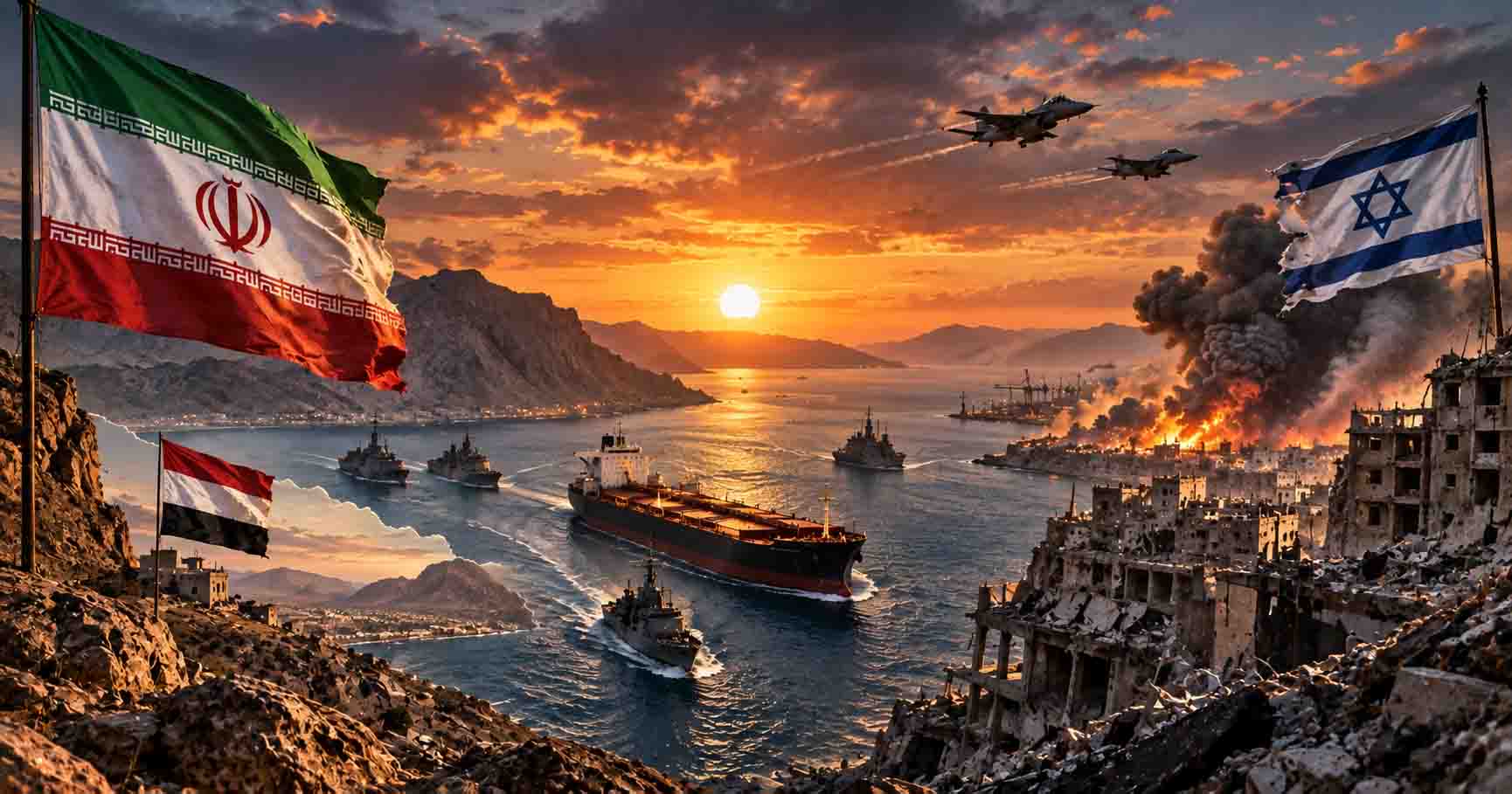
Daily Report, September 12, 2026 tracks a day in which the regional confrontation shifted more visibly toward energy routes and maritime chokepoints, from a Saudi oil pipeline hit by drones launched from Iraq to a Houthi advance near Bab el-Mandeb and competing U.S. and Iranian claims over control of the Strait of Hormuz. At the same time, diplomatic efforts stretched from New Delhi to Muscat, while escalation continued in southern Lebanon and the aerial war between Russia and Ukraine intensified.
Saudi Oil Pipeline Attack Puts Iraq and Iran in Focus
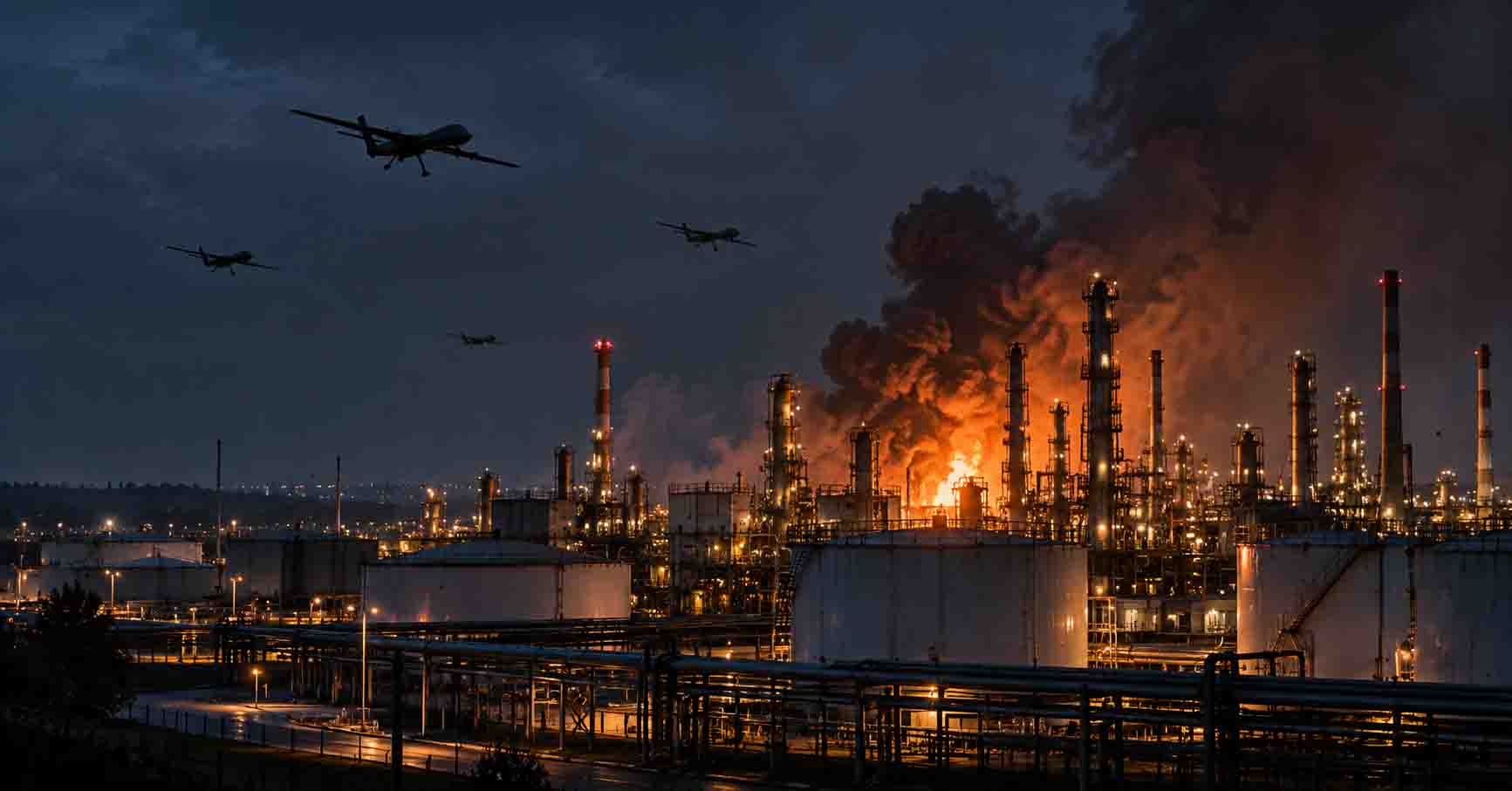
The attack on Saudi Arabia’s East-West pipeline emerged as one of the day’s most significant developments after Baghdad confirmed that the drones targeting the kingdom were launched from Iraqi territory. Iraq’s prime minister dismissed the commander of Maysan Operations, while the province’s police chief was later removed and security officials were referred for investigation.
Iraqi forces also launched raids and searches in the al-Tayeb area of Maysan province. A security source reported finding evidence indicating that drones had been launched from an area near the Iranian border. Baghdad also agreed to Tehran’s request for a joint investigation into the discovery of drone launch platforms near the border.
The Islamic Resistance in Iraq, meanwhile, denied responsibility for targeting Saudi facilities. U.S. President Donald Trump said Iran was “probably” responsible for the attack, without presenting public evidence to substantiate the claim.
The attack prompted the precautionary shutdown of the East-West pipeline, adding to concerns because the route is a major conduit for transporting Saudi crude to the Red Sea while bypassing the Strait of Hormuz. More details are available in Profile News’ report on the Saudi oil pipeline attack and the investigation into who was behind it.
Houthis Increase Pressure Near Bab el-Mandeb
In Yemen, government forces continued operations against the Houthis, announcing strikes on positions in Mokha and Dhubab, followed by attacks on dozens of trucks that they said were carrying weapons north of Taiz, as well as sites and missile launch platforms in al-Bayda.
The operations came as the Houthis advanced near Bab el-Mandeb and Mayyun Island, a development that heightened concerns over shipping at the southern entrance to the Red Sea. The U.S. State Department reaffirmed Washington’s commitment to defending navigation in the Red Sea and said it remained in regular contact with allies and partners over developments in Yemen.
The Kremlin also expressed concern about the situation around Bab el-Mandeb, while Spain’s foreign minister called for an end to attacks targeting Gulf states and for freedom of navigation through the Strait of Hormuz and Bab el-Mandeb.
The humanitarian cost of the fighting also increased, with the United Nations refugee agency reporting that escalating clashes had displaced about 50,000 Yemenis in Taiz, southern Hodeidah and neighboring areas. More: the Houthis at Bab el-Mandeb and the Trump administration’s options.
Hormuz: Competing U.S. and Iranian Accounts
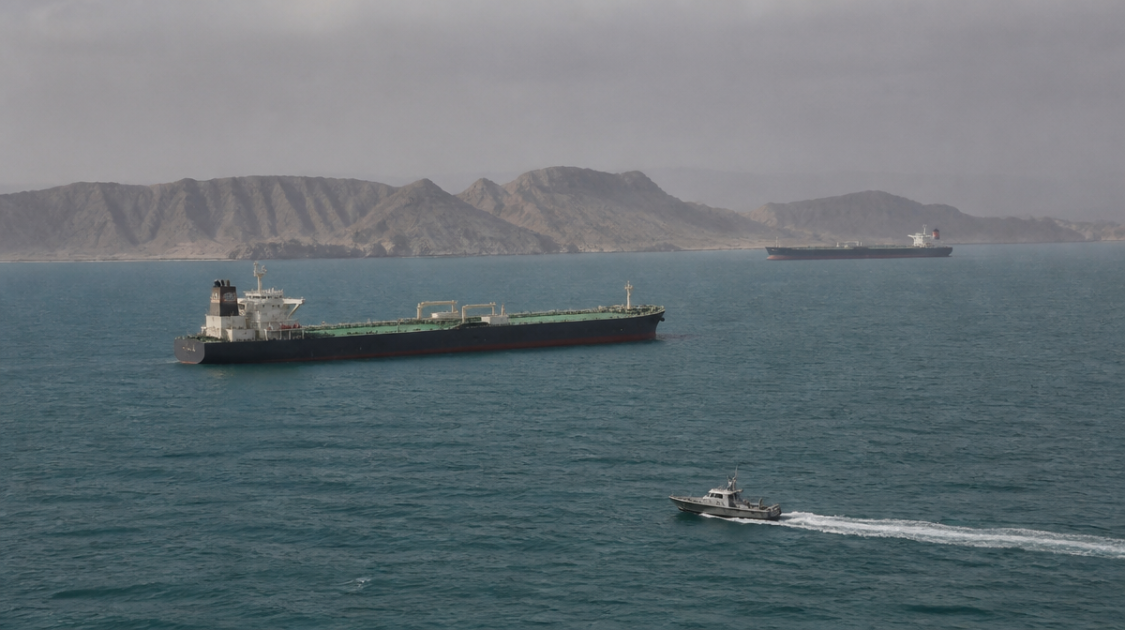
The Strait of Hormuz remained at the center of the crisis. Trump said the United States “controls” the strait and had cleared naval mines from it, while the U.S. State Department said ships were currently passing through following measures taken by Washington to facilitate maritime traffic.
Tehran offered a different account. Iran’s Foreign Ministry said its understanding with Oman on transit routes did not mean the strait had become safe for shipping, linking the restoration of security to an end to what it described as the U.S. blockade and U.S. actions.
Iran and Gulf states are expected to discuss the issue at an upcoming meeting in Oman. An Iranian official, however, said the meeting was not expected to produce a signed agreement at this stage, while Bahrain said it would not participate in a meeting that included Iran.
BRICS Seeks a Diplomatic Path
Against the backdrop of the escalation, the BRICS summit in New Delhi adopted a joint declaration calling for the peaceful resolution of disputes through dialogue, consultation and diplomacy, as well as efforts to prevent conflicts and address their root causes.
The declaration expressed concern about growing nuclear risks and stressed the importance of maintaining the flow of global trade, supply chains and energy. Chinese President Xi Jinping said the war in the Middle East did not serve the common interests of BRICS countries, while Iranian President Masoud Pezeshkian urged the group to oppose unilateral sanctions.
The declaration came despite differing interests among the group’s members and differences in their positions on the war.
Profile News examined the BRICS declaration and efforts to bridge divisions over the Middle East.
Southern Lebanon: Aoun Visits as Escalation Continues
In Lebanon, President Joseph Aoun visited the city of Nabatieh accompanied by Lebanese Army commander Gen. Rodolphe Haykal and security officials, in a show of support for residents of the south and to underscore the presence of state institutions. Aoun said an Israeli withdrawal, the return of prisoners and displaced people, and reconstruction were national commitments that the state was working to fulfill.
According to Profile News correspondents in southern Lebanon, Israeli airstrikes on September 12 hit Kfar Tibnit, the al-Arish neighborhood of Hadatha, al-Mansouri, the area between Mays al-Jabal and Shaqra, al-Qantara, Wadi Zibqin and Nabatieh al-Fawqa.
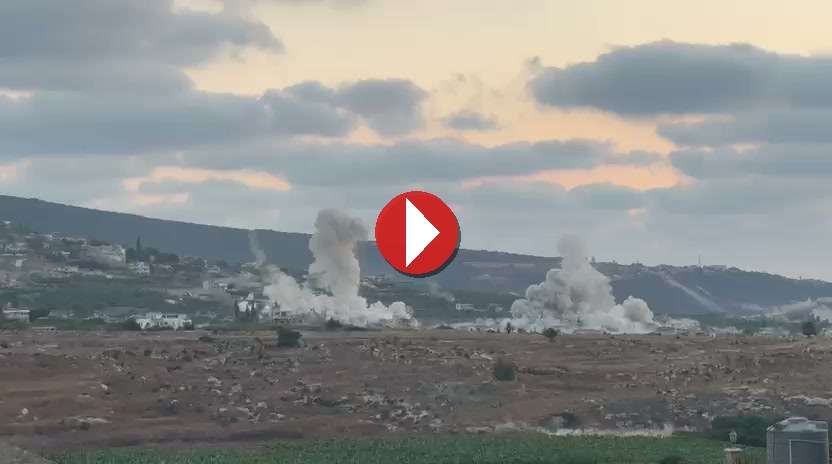
The correspondents also reported artillery fire targeting Wadi al-Salouqi, Wadi al-Hujair, Nabatieh al-Fawqa, Mays al-Jabal, Kfar Tibnit, Houla, Srebbine, Zawtar al-Sharqiya, the area around Ali al-Taher, al-Mansouri, Aita al-Jabal and Bayt Yahun. Explosions were also reported in al-Mansouri, al-Taybeh, Ainata, al-Qantara, Mays al-Jabal and Khiam.
On the political track, a U.S. official said the Lebanese and Israeli ambassadors would meet in Washington, while the next round of formal talks in Rome was postponed until October. More details are available in Profile News’ report on Aoun’s visit to Nabatieh and his position on negotiations.
Russia and Ukraine Expand Drone Warfare
On the Russia-Ukraine front, Russia’s Defense Ministry said it shot down 230 Ukrainian drones overnight, while Ukraine’s air force said it intercepted eight missiles and more than 100 Russian drones.

Moscow said it targeted port infrastructure and a strategic transport facility in the Odesa region, as well as factories involved in producing materials with military applications. It also said it struck two ships carrying weapons for Ukraine at the port of Chornomorsk.
People were killed and wounded in attacks in Dnipropetrovsk, Zaporizhzhia and Belgorod, while Russian President Vladimir Putin warned that the deployment of European troops in Ukraine would, in his words, mean those countries were entering a war with Russia.
More details on the latest strikes and deep-strike campaign are available in Profile News’ report: Russia, Ukraine and 230 drones in the deep-strike war.
Gaza and the West Bank
In the Gaza Strip, medical sources and the Palestinian Red Crescent reported casualties in Israeli attacks on the al-Mawasi area of Khan Younis, including a strike on a tent housing displaced people. A Palestinian was later reported to have died from injuries sustained in an airstrike on the area.
In the West Bank, two Palestinians were wounded by settler gunfire during an attack on farmers in the village of Faqqua near Jenin, while Israeli forces accompanied by settlers entered Masafer Yatta, south of Hebron. Israeli forces also raided the Jenin home of journalist Ali al-Samoudi, according to an Al Jazeera correspondent, demanded that he turn himself in and assaulted his son.
September 12: Pressure Builds Across Strategic Routes and Borders
The events of September 12 highlighted growing links between arenas that had appeared separate: an attack launched from Iraq against a Saudi oil pipeline designed to bypass Hormuz, a Houthi advance increasing risks near Bab el-Mandeb, and diplomatic efforts aimed at keeping trade and energy routes open.
At the same time, escalation continued in southern Lebanon, the drone war between Russia and Ukraine widened, and BRICS sought to present a common position supporting de-escalation.
The day’s defining theme was therefore not a single military front, but growing pressure on strategic chokepoints and energy infrastructure alongside diplomatic efforts aimed at preventing interconnected crises from developing into a broader confrontation.
For comparison with the previous day’s developments: Daily Report, September 11, 2026.
Follow the latest developments: 24-hour breaking news.