

Yemen Escalation Nears Bab al-Mandab as Reinforcements Reach Key Fronts
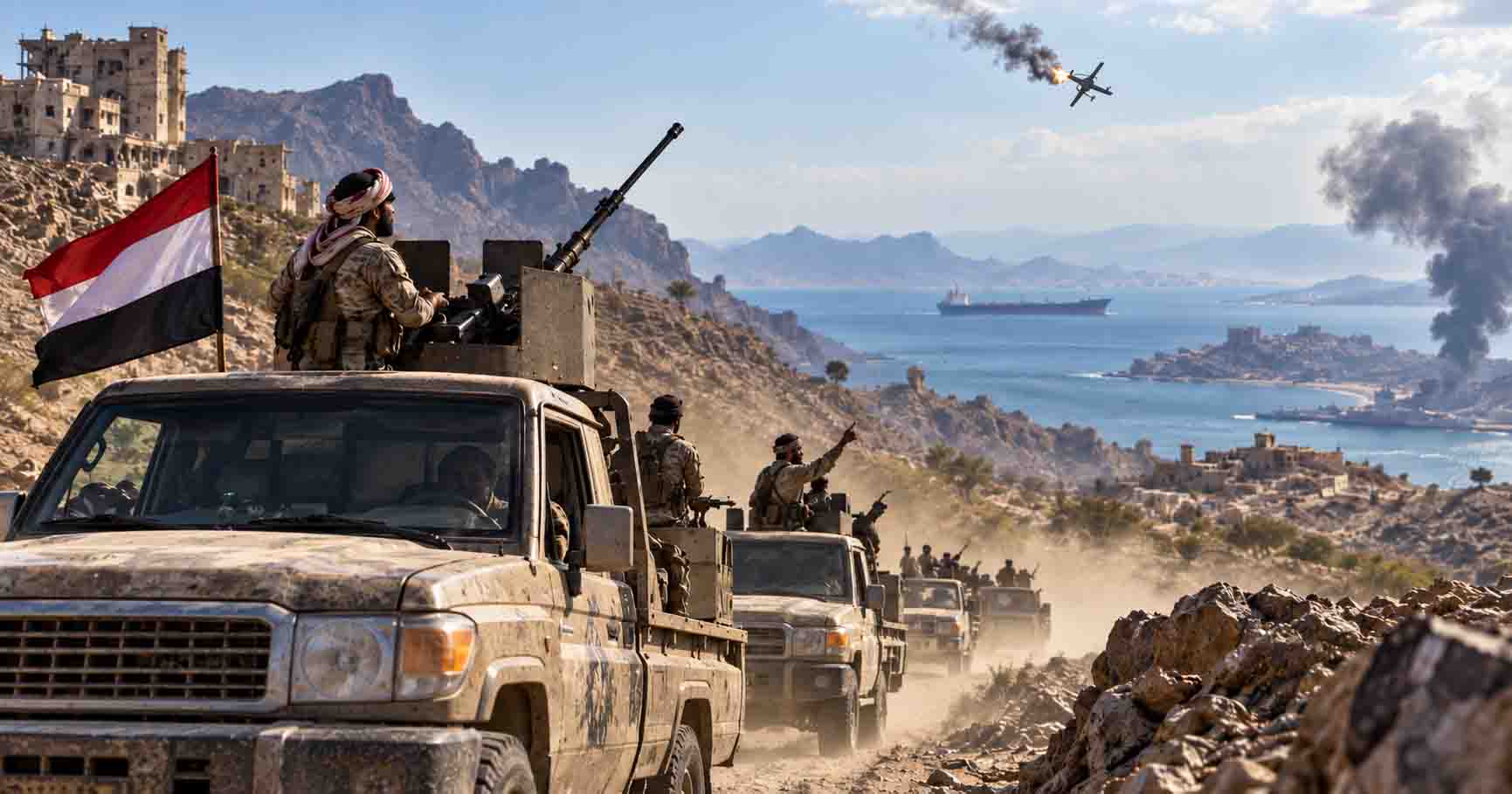
The military escalation in Yemen has taken a broader course in recent hours, after government forces announced the arrival of reinforcements from the Giants Brigades and Nation Shield Forces to the Taiz and western coast fronts, while clashes continue with the Houthi group in the areas of Al-Kadha, Maqbana and Hays.
These developments come in a sensitive field context, where ground battles intersect with growing concerns over the security of navigation in Bab al-Mandab, one of the most important maritime passages in the region. While the Yemeni government says its movements aim to protect civilian areas and shipping lanes, both sides continue to exchange accusations over the escalation and responsibility for casualties.
The military escalation in Yemen extends to Taiz and the western coast
Yemeni government forces announced that military reinforcements had arrived at the Taiz and western coast fronts, including units from the Giants Brigades and Nation Shield Forces, in a move they said was intended to support troops deployed along the lines of contact and raise field readiness.
The clashes are concentrated on the Al-Kadha and Maqbana fronts west of Taiz, as well as the Hays front in southern Hodeidah Governorate. These areas carry military significance because of their proximity to supply routes and contact zones between government forces and the Houthi group.
The developments indicate that the confrontation is no longer limited to intermittent clashes, but is moving toward a broader pattern of mutual military buildup. In such a context, controlling the escalation becomes more difficult, especially when ground fronts overlap with drone and missile attacks.
Observers say any long-term expansion of operations could affect the humanitarian situation in Taiz and Hodeidah, two of the governorates most affected by years of war. Continued shelling near populated areas also increases the risk of displacement and disruption of basic services.
Air force involvement changes the calculations of the military escalation in Yemen
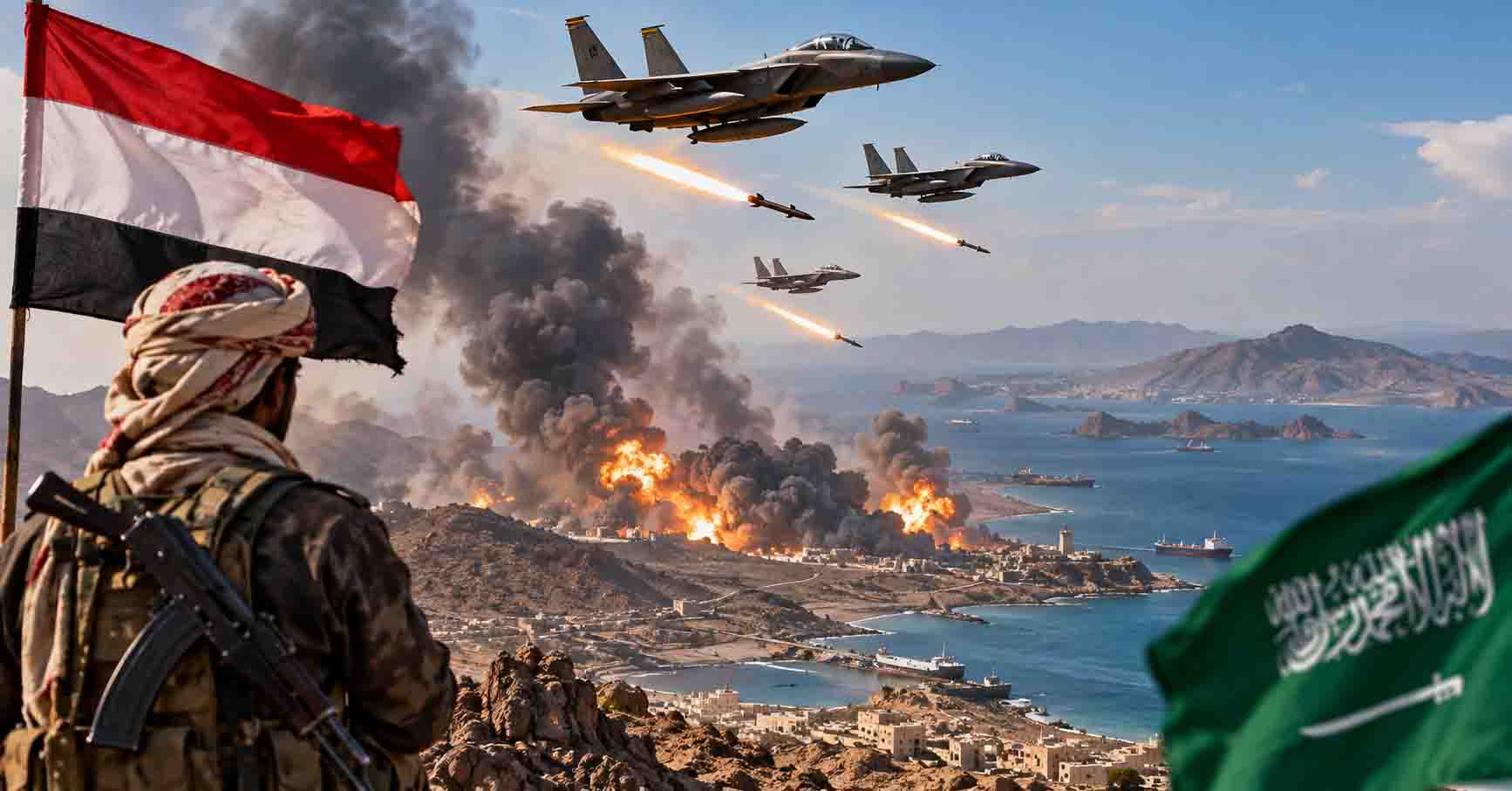
Government forces announced that the air force had entered the military operations for the first time on the Hays front, coinciding with the announcement that a drone said to belong to the Houthis had been downed. This development signals a shift in the confrontation toward a more complex level in terms of the combat tools being used.
The use of drones has become a key element in modern conflicts, especially when wide and open fronts are involved. In Yemen, the spread of this type of weapon has increased risks to military positions and civilian areas near the lines of confrontation.
Yemeni authorities say the Houthi group shelled civilian areas, causing casualties. In return, the group usually denies targeting civilians and accuses its opponents of escalation. This makes independent documentation of any possible violations urgently needed, particularly in areas that are difficult for aid teams and journalists to reach.
The involvement of the air force on the Hays front raises questions about the direction of the next phase of the battle: will operations remain within a framework of deterrence and defense, or turn into broader attacks aimed at changing the lines of contact? So far, government forces say their objective is to repel attacks and protect the areas under their control.
Bab al-Mandab at the heart of the military escalation in Yemen
The head of Yemen’s Presidential Leadership Council said the government would not allow any threat to navigation in Bab al-Mandab, holding the Houthis responsible for the humanitarian and military consequences of the escalation. This position reflects the sensitivity of the strait for Yemen, the region and international trade.
Bab al-Mandab connects the Red Sea with the Gulf of Aden and the Indian Ocean, and is considered a vital passage for commercial shipping and energy flows. Any disruption there would not affect Yemen alone, but could extend to global supply chains, shipping and insurance costs, as well as potential effects on global oil prices.
The Yemeni government fears that the Houthi group could use maritime navigation as a card to increase political and military pressure. The group, meanwhile, says its actions are linked to broader regional contexts. Between these two positions, commercial vessels and Yemeni civilians remain the most exposed to the consequences of any new escalation.
Linking ground battles to the security of maritime routes also increases the possibility of greater regional and international involvement, especially if attacks are repeated or expand toward areas close to shipping lanes. This makes Bab al-Mandab a decisive factor in assessing the course of the Yemeni war in the coming phase.
The humanitarian and political consequences of the military escalation in Yemen
The current escalation cannot be separated from Yemen’s ongoing humanitarian crisis after years of war. Every new round of fighting creates additional risks for civilians, whether through direct shelling, displacement, road closures or the declining ability of local institutions to provide basic services.
Taiz in particular has long suffered from siege conditions and field division, while areas along the western coast have witnessed repeated waves of displacement due to fighting and shelling. As operations expand, the need for safe corridors and measures to protect civilians may increase, especially in areas near the lines of contact.
Politically, the escalation threatens to undermine chances of returning to a more stable negotiating track. As the cost of fighting rises and its scope expands, the space for political solutions narrows and pressure on international and regional mediators increases.
Still, de-escalation remains possible if guarantees are put in place to halt attacks on civilian areas and shipping lanes, and if humanitarian files are treated as a priority independent of military calculations. Continued escalation will not give any party a quick decisive outcome, but it could increase the cost of war for Yemeni society as a whole.
In conclusion, the military escalation in Yemen is entering a more sensitive phase with the arrival of reinforcements to Taiz and the western coast, the involvement of the air force on the Hays front, and rising warnings over Bab al-Mandab. Between military calculations and humanitarian concerns, civilians and maritime security remain at the forefront of the risks that may shape the next phase.
What are the reasons for the current military escalation in Yemen?
The current escalation is linked to intensified clashes on the Taiz and western coast fronts, along with mutual accusations between government forces and the Houthis over ground attacks, drone use and shelling. The sensitivity of Bab al-Mandab also gives the developments a wider security dimension beyond local fronts.
Why is the Hays front important in the military escalation in Yemen?
The Hays front is important because it lies within the western coast area, close to vital lines of contact in Hodeidah Governorate. The announcement of air force involvement on this front for the first time reflects a change in the level of operations and could affect deterrence calculations and military movements in the coming phase.
How does the military escalation in Yemen affect Bab al-Mandab?
Any expansion of operations near the western coast could raise concerns over the security of navigation in Bab al-Mandab, an important maritime passage for international trade. For this reason, the Yemeni government says protecting navigation is a priority, while observers warn that continued escalation could lead to wider economic and humanitarian consequences.
Sources
- Anadolu Agency
- Al Jazeera
- Ministry of Foreign Affairs and Expatriates – Republic of Yemen
- Office of the Special Envoy of the Secretary-General for Yemen
- International Committee of the Red Cross
- International Maritime Organization