October 7-8, 2026 News Roundup: South Lebanon, Saudi Airport Attacks and Iraq’s Dinar

The October 7-8, 2026 news roundup covers two days in which military conflicts increasingly spilled into aviation, energy and national economies. Israeli operations continued across southern Lebanon, Houthi attacks disrupted Saudi aviation, Iraq sharply devalued its currency, Washington tightened sanctions on Iran and Russian strikes killed dozens across Ukraine.
October 7-8, 2026 news roundup: Southern Lebanon remains under pressure
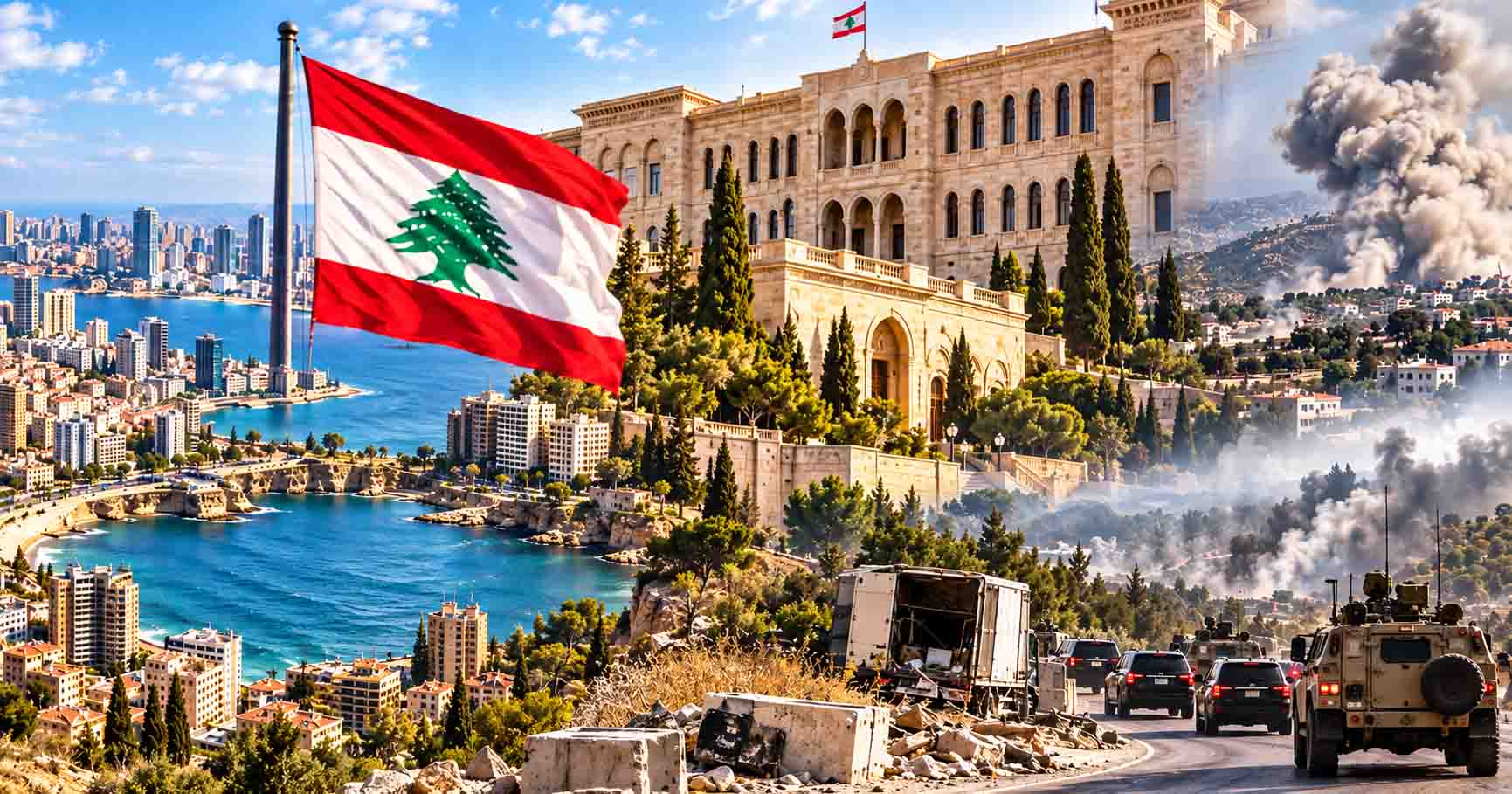
A field summary received by Profile News recorded Israeli air strikes on Wadi al-Salouqi, Mansouri and Nabatieh al-Fawqa on October 7, along with artillery fire across a wide range of southern Lebanese towns and valleys.
The following day, the field report recorded strikes on Bani Hayyan and Mansouri and further artillery fire affecting areas including Baraachit, Wadi al-Salouqi, Srebbine, Kfar Tebnit, Beit Yahoun, Kfar Shouba, Nabatieh al-Fawqa, Kounine, Mays al-Jabal, Houla and Zawtar al-Sharqiya.
The report also cited demolitions in Adshit al-Qusayr and Kfar Kila. A claim that phosphorus munitions were used in Zawtar al-Sharqiya remains attributed to the field reporting available to Profile News unless separately confirmed through detailed official or independent evidence.
The developments followed the pattern documented in the October 6, 2026 daily report, suggesting continued military pressure rather than isolated incidents.
Reported Iranian funding for Hezbollah is disputed by Washington
Reuters reported, citing two people with direct knowledge of the transaction, that Hezbollah received about $200 million from Iran to help support roughly 50,000 Lebanese families displaced or otherwise affected by the conflict.
The US State Department disputed the report and said the money did not exist. Iran had not publicly confirmed the transfer, meaning the $200 million figure remains a sourced Reuters report rather than an officially acknowledged Iranian payment.
Houthi attacks disrupt Saudi aviation
Saudi Arabia faced a sharper escalation on October 8 as Houthi missile and drone attacks increasingly affected civilian aviation. Saudi authorities said three people had been killed during attacks on Riyadh and Abha airports earlier in the week.
Three people briefed on the matter told Reuters that shrapnel from an interception or another projectile struck a Saudia aircraft parked at King Khalid International Airport in Riyadh, leaving it badly damaged after a fire.
Reuters verified video showing a large column of smoke and flames at the airport. Aviation analytics firm Cirium reported that almost half of scheduled departures from Riyadh had been cancelled by mid-afternoon on October 8, while several international airlines suspended services to the Saudi capital.
Syria weighs support while Türkiye limits its role to defence
US and Syrian officials told Reuters that Damascus was considering options for military assistance to Saudi Arabia. The discussions included defensive support and potentially broader military cooperation, but Syria had not announced that troops would be deployed to Yemen.
Türkiye also said it was assessing support under the Makkah Agreement, with Foreign Minister Hakan Fidan highlighting air defence, electronic warfare and technical assistance while ruling out Turkish participation in offensive operations.
The discussions come as fighting continues around the strategic Bab el-Mandeb Strait and Yemen’s Red Sea coast.
Iraq devalues the dinar to 1,520 per dollar
Iraq’s cabinet approved a new exchange-rate structure that places the final official rate at 1,520 dinars per US dollar, a significant devaluation from the previous level.
The move gives the government more dinars for every dollar of oil revenue but also raises the cost of imports and increases pressure on household purchasing power. Iraqi lawmakers and political figures have warned that higher consumer prices could follow.
US sanctions 17 vessels linked to Iranian oil
Washington imposed a new package of Iran-related sanctions on October 8, targeting individuals, networks and 17 vessels accused of transporting Iranian crude, petroleum products and petrochemicals.
At the same time, US President Donald Trump said talks with Iran had been productive and indicated that the United States would not carry out another attack before the November 3 midterm elections, leaving economic pressure and diplomacy running in parallel.
Zelenskiy says Russian strikes killed 78 people in two days
Russia launched a major missile and drone assault across Ukraine on October 7, killing at least 32 people in the initial nationwide toll and damaging residential buildings, industrial facilities and energy infrastructure.
Strikes continued on October 8, including a devastating attack on Kramatorsk. Ukrainian President Volodymyr Zelenskiy said 78 people had been killed and 215 wounded across Ukraine during the two days.
The figure is attributed to Zelenskiy and Ukrainian authorities. Russia has not issued a corresponding civilian casualty count.
Nord Stream returns to the geopolitical conversation
Reuters reported that senior US and Russian officials had discussed the possibility of bringing an American investor into the Nord Stream pipeline infrastructure, potentially creating a route for future Russian gas sales to Europe if political conditions change.
No agreement has been reached, and any proposal would face major obstacles involving sanctions, pipeline ownership and European resistance to renewed dependence on Russian energy.
Europe presses China over a widening trade imbalance
European officials held talks in Beijing over a trade imbalance that now exceeds one billion euros per day in China’s favour.
The European Union is seeking greater access for its companies to the Chinese market while expressing concern about rising imports of Chinese vehicles, machinery and other manufactured goods. Beijing rejects accusations that its trade model is unfair and has described some European measures as protectionist.
Google pushes AI agents deeper into the workplace
Google Cloud unveiled its Gemini agent for work, designed to answer questions, manage tasks, generate content and assist with coding across enterprise applications.
The launch reflects a wider shift in the AI industry from standalone chatbots toward autonomous agents capable of carrying out sequences of work across multiple applications.
Separately, USA Today and several affiliated newspapers sued OpenAI in federal court, alleging that copyrighted journalism had been used without permission to train artificial-intelligence models.
Anne Carson wins the 2026 Nobel Prize in Literature
Canadian poet and writer Anne Carson won the 2026 Nobel Prize in Literature for a body of work that crosses conventional boundaries between poetry, prose, dialogue, translation and classical literature.
In chemistry, France’s Henri Kagan and Japan’s Kenso Soai received the Nobel Prize for research into asymmetric molecules and chemical reactions capable of favouring one molecular mirror image, work with major implications for pharmaceutical development.
El Niño could rank among the strongest since 1950
The World Meteorological Organization said the current El Niño was almost certain to continue through February 2027 and could become one of the strongest recorded since at least 1950.
The organisation forecast sea-surface temperatures in the central and eastern tropical Pacific at around 3.7 degrees Celsius above normal during October to December, increasing the risk of major disruptions to rainfall and temperature patterns around the world.
Two days in which conflict spilled far beyond the battlefield
October 7 and 8 showed how quickly military conflicts are spreading into civilian aviation, energy markets and national economies. Southern Lebanon remained under military pressure, the Yemen conflict reached deeper into Saudi aviation, and Iraq responded to financial stress with a major currency adjustment.
At the same time, sanctions tightened around Iranian oil, Russia intensified its air campaign against Ukraine, and competition over trade, energy and artificial intelligence continued to reshape the wider global landscape.
Sources
Reuters – Saudi Arabia, Yemen and regional military developments; Reuters – Russian strikes on Ukraine, October 7-8.