AI Stocks Lose $80 Billion as Hot Inflation Exposes the Cost of the Boom
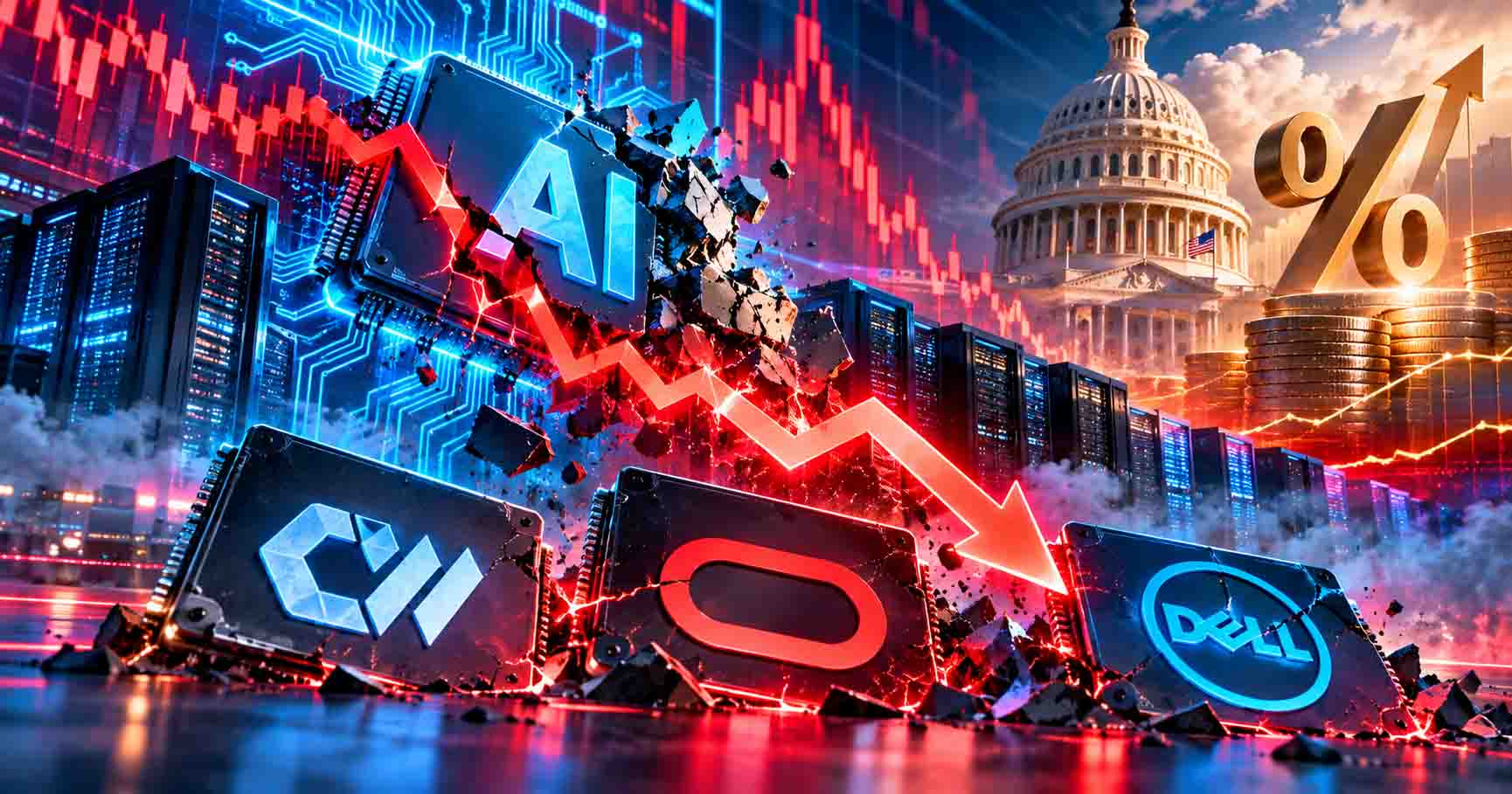
AI stocks suffered a sharp Wall Street selloff after hotter US inflation revived fears that rising interest rates will make the massive buildout of data centers more expensive, wiping roughly $80 billion from the combined market value of four major AI-linked companies in a single session.
CoreWeave fell 16%, Nebius dropped 11%, Oracle lost 9% and Dell Technologies declined 11%, while the Nasdaq fell about 2%.
AI stocks hit by higher borrowing costs
The selloff followed data showing US inflation accelerated to 3.7% in September, pushing Treasury yields higher and bringing the possibility of another Federal Reserve rate increase back into investors’ calculations.
Higher rates are particularly important for AI infrastructure companies because building data centers and acquiring chips and servers require extraordinary amounts of long-term capital.
CoreWeave falls 16% as financing risk comes into focus
CoreWeave was among the biggest decliners, falling 16% during Wednesday’s session.
The company has issued about $22 billion in bonds and taken out $26 billion in loans, according to LSEG data cited by Reuters.
A CoreWeave bond issued in June at a 9.625% yield was recently yielding around 15%, highlighting the higher return investors now demand to hold the company’s debt.
Oracle, Dell and Nebius lose billions
The pressure extended well beyond CoreWeave.
Oracle fell roughly 9%, while Dell Technologies dropped 11% after Barclays downgraded the company and other enterprise-hardware stocks.
Dell shares had previously quadrupled in 2026 as investors poured money into companies supplying servers and infrastructure for AI data centers.
Nebius, another AI infrastructure provider, fell about 11%.
Is AI financing becoming the next problem?
The AI investment story has largely been built around surging demand for chips, cloud computing and data centers.
The emerging question is different: how expensive will it become to finance that expansion, and when will large infrastructure projects generate enough profit to justify their debt and capital spending?
Higher long-term yields increase borrowing costs and tend to hurt unprofitable and less-profitable companies first.
30-year Treasury yield reaches 5.63%
The US 30-year Treasury yield briefly climbed as high as 5.63% following the inflation report before pulling back later in the session.
Long-term borrowing costs matter directly to data-center projects that require billions of dollars in upfront investment and can take years to deliver returns.
Nvidia is no longer the only AI risk
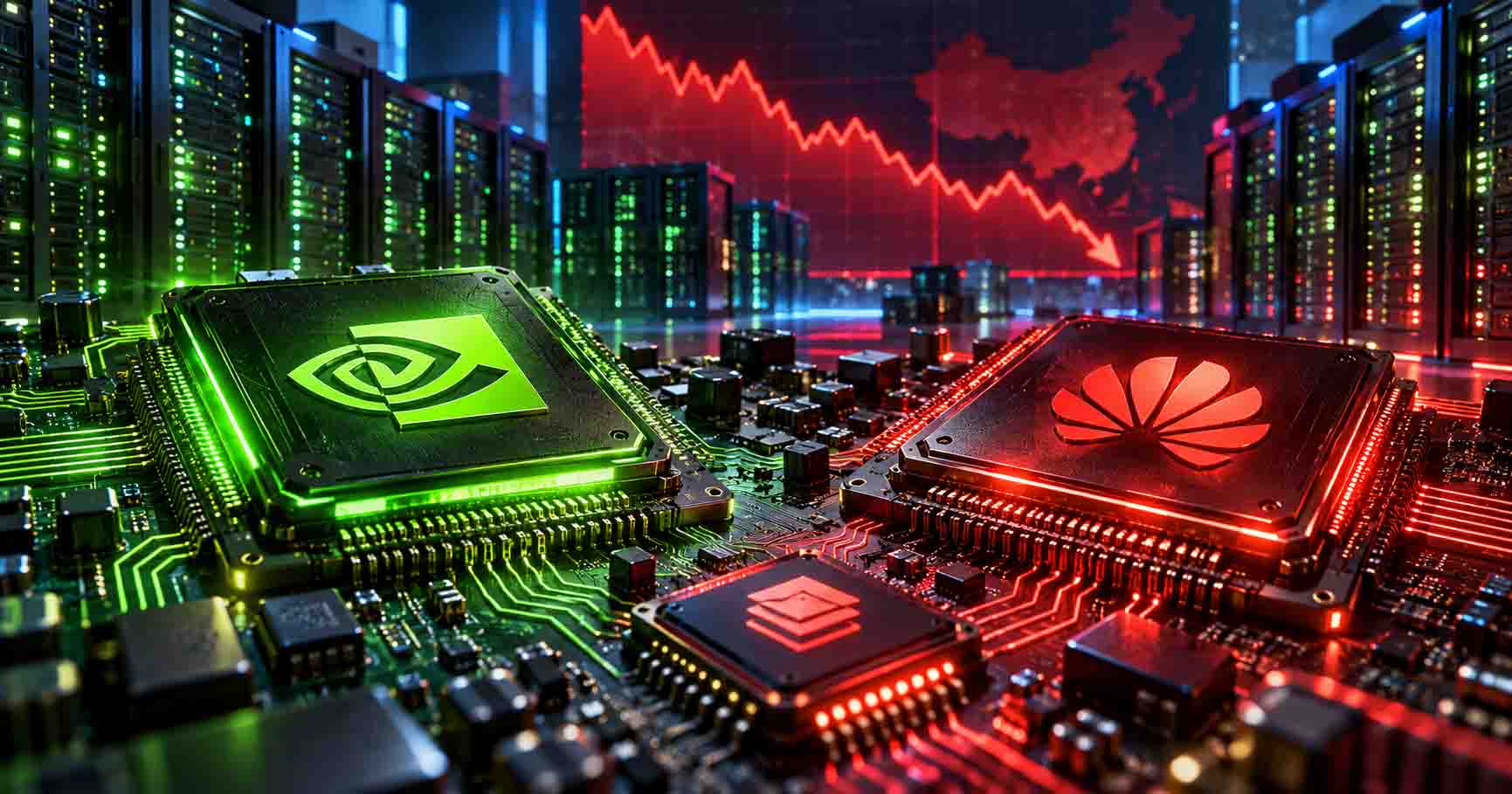
The selloff came just after renewed pressure on the chip industry as Nvidia in China lost market share to Huawei and other domestic suppliers.
But Wednesday’s concern was different: the question moved beyond which company produces the strongest chip to whether companies building AI infrastructure can afford to finance their expansion if interest rates stay high.
Big Tech remains in a stronger position
Investors are not treating all AI companies equally.
Nvidia and major hyperscalers including Alphabet, Microsoft, Meta and Amazon generate substantial profits and hold stronger balance sheets than younger infrastructure firms that depend more heavily on borrowing.
That gives the largest companies greater capacity to absorb high financing costs while continuing to invest heavily in AI.
ASML sends the opposite signal
Industrial demand for AI technology itself still appears strong.
ASML reported robust chip-equipment orders and said AI-related demand extends well into the coming years, with customers already showing interest in equipment for 2029 and 2030.
The Dutch company reported third-quarter net profit of €4.96 billion on €11.7 billion in sales and raised its full-year revenue outlook to €44 billion to €45 billion.
ASML also plans to increase manufacturing capacity by roughly 30% in both 2027 and 2028.
Is the AI bubble bursting?
There is little evidence so far that demand for artificial intelligence or data-center computing is collapsing.
Instead, markets appear to be becoming more selective and less willing to reward every AI-linked company without clear evidence of sustainable profits, cash flow and manageable debt.
The divide could increasingly run between companies that can fund expansion from their own profits and those that rely on continuous borrowing to sustain growth.
From a chip race to a capital race
The next stage of the AI boom may be defined by finance as much as technology.
With demand still strong but borrowing costs elevated, access to cheap capital is becoming a competitive advantage in its own right.
The winners may therefore be determined not only by who builds the fastest chips or largest data centers, but by who can finance that expansion without undermining its balance sheet.
Sources
Reuters — Red hot CPI report fuels AI rout