Lebanon Between a Burning South and Mounting Pressure Over Arms and the Economy: Where Is the Country Heading?

Lebanon’s crises in October 2026 can no longer be viewed as separate files. Continued Israeli military operations in the south now intersect with the debate over exclusive state control of weapons, while the Lebanese Army prepares to assume greater responsibilities as UNIFIL’s mission approaches its end. At the same time, the country is facing renewed economic contraction and reconstruction needs that exceed the state’s current financial capacity.
In that sense, the Lebanon crisis can no longer be reduced to the war, the weapons issue or the IMF track individually. The central test is whether the state can expand its security, political and economic authority at the same time, while parts of the south remain under Israeli control and other areas continue to face air strikes, artillery fire and demolitions on an almost daily basis.
Lebanon’s crisis begins in a south that has not entered a post-war phase
October 11 brought another extensive day of Israeli military activity across Lebanese territory. According to a field summary received by Profile News, Israeli warplanes carried out strikes on Mansouri, Tallousa, Kfar Tibnit and Wadi Hujeir, while a drone strike targeted Nabatieh al-Fawqa.
Artillery fire was reported in Kfar Tibnit, Wadi Zebqine, Mansouri, Beit Yahoun, Majidiyeh, Wadi Khansa, Haddatha, Nabatieh al-Fawqa, Khiam, Zawtar al-Sharqiya, Beit Lif, the Ruba al-Tibn–Kfar Shouba area, the outskirts of Baraachit and Wadi al-Salouqi.
The field summary also recorded Israeli demolitions in Khiam and Buyout al-Sayyad, as well as illumination rounds between Mays al-Jabal and Shaqra.
The geographic spread points to more than a continuation of isolated strikes. Pressure now extends from border villages to areas deeper inside the Nabatieh region, keeping the return of residents, agricultural activity, public services and local infrastructure under continuing threat.
Civilian killed in Yater brings protection of residents back into focus
In a separate development, the Lebanese Army said it accompanied the recovery of the body of retired First Adjutant Ali Abdel Hassan Sweidan, who was in his seventies, after he was directly targeted by an Israeli tank while inspecting his property in Yater, Bint Jbeil.
The army said the incident came within the context of continuing Israeli attacks and described it as a clear violation of existing understandings and international law.
The incident highlights a fundamental problem facing communities in southern Lebanon: even where residents can physically return, access does not necessarily mean the restoration of normal life or safe access to homes and farmland.
عملت وحدة من الجيش على مواكبة عملية سحب جثمان المؤهل الأول المتقاعد علي عبد الحسن سويدان وهو في العقد السابع من العمر جراء استهدافه بشكل مباشر بدبابة إسرائيلية معادية أثناء تفقُّده ممتلكاته في بلدة ياطر – بنت جبيل، بعد أن فُقد الاتصال به في وقت سابق، وذلك في سياق الاعتداءات الإسرائيلية المستمرة. تمثّل هذه الاعتداءات خرقًا فاضحًا للتفاهمات القائمة، كما تشكّل انتهاكًا صريحًا للقوانين الدولية. #الجيش_اللبناني #LebaneseArmy https://t.co/v29FlQihfD
— الجيش اللبناني (@LebarmyOfficial) October 11, 2026
Lebanon’s “model zones” have yet to become a scalable model
The gap between diplomatic frameworks and conditions on the ground has been particularly visible in West Zawtar, the first pilot area under a US-backed concept linking a gradual Israeli withdrawal with expanded Lebanese state authority and disarmament.
But after Israeli forces withdrew from the village in July, troops remained nearby in surrounding areas, while drones, demolitions and restrictions on residents’ access to some land continued, according to a Reuters field investigation.
Dozens of families who returned to West Zawtar also found electricity, water and other essential infrastructure either limited or unavailable, while prefabricated housing units remained unused because basic services were missing.
The experience suggests that the success of any withdrawal model cannot be measured simply by whether troops leave a particular village. The real test is what happens after they withdraw and whether civilian life can actually resume.
Arms debate shifts from principle to sequencing
Domestically, the issue of exclusive state control over weapons remains one of Lebanon’s most sensitive political questions. Recent positions, however, suggest that the debate has shifted more in its formulation than in the parties’ fundamental positions.
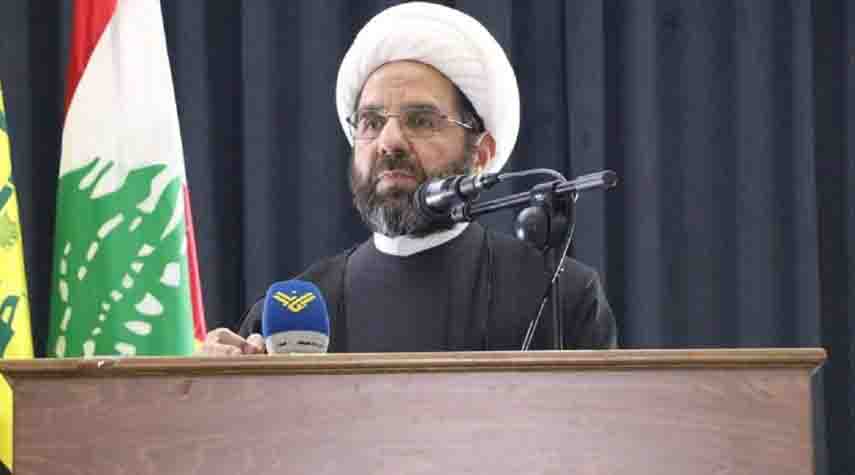
Hezbollah Secretary-General Naim Qassem said on October 6 that the group was prepared to cooperate on domestic issues, including exclusive state control over weapons, within the framework of Lebanon’s constitution and laws and without what he described as external dictates.
At the same time, Qassem continued to make a full Israeli withdrawal a central element of Hezbollah’s position. He did not announce the handover of the group’s weapons or provide a timetable for doing so.
Prime Minister Nawaf Salam, by contrast, has argued that the tracks of Israeli withdrawal and exclusive state control over weapons should advance in parallel rather than one waiting for the other to be completed.
The core dispute has therefore become not only whether weapons will eventually come under exclusive state control, but also which side moves first and what guarantees accompany each step.
The Lebanese Army faces two missions at once
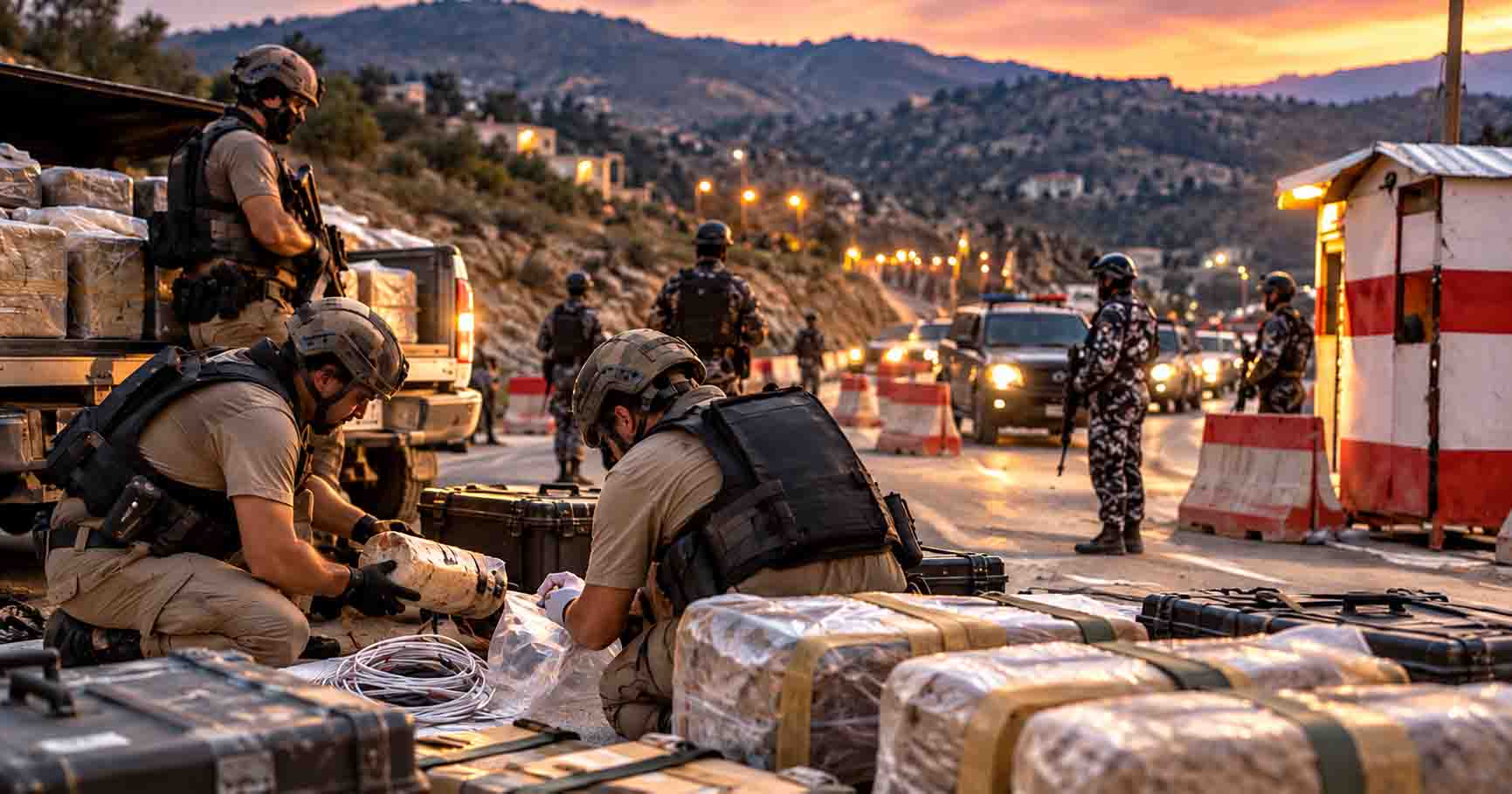
The pressure on the Lebanese Army does not come from the south alone. On October 11, the army announced raids in Riha, Baalbek, where it arrested several wanted individuals and seized weapons, ammunition and narcotics. Additional security operations in Nabha, Sabra and Ain al-Dhahab led to further arrests.
This domestic-security dimension matters because the army is simultaneously being asked to expand its deployment in southern Lebanon, secure the borders, address illegal weapons and maintain internal security across several regions.
Any plan to expand state authority in the south will therefore face a basic question of resources: troop numbers, equipment, transport, surveillance, intelligence capabilities and sustainable long-term financing.
UNIFIL’s withdrawal adds a new deadline
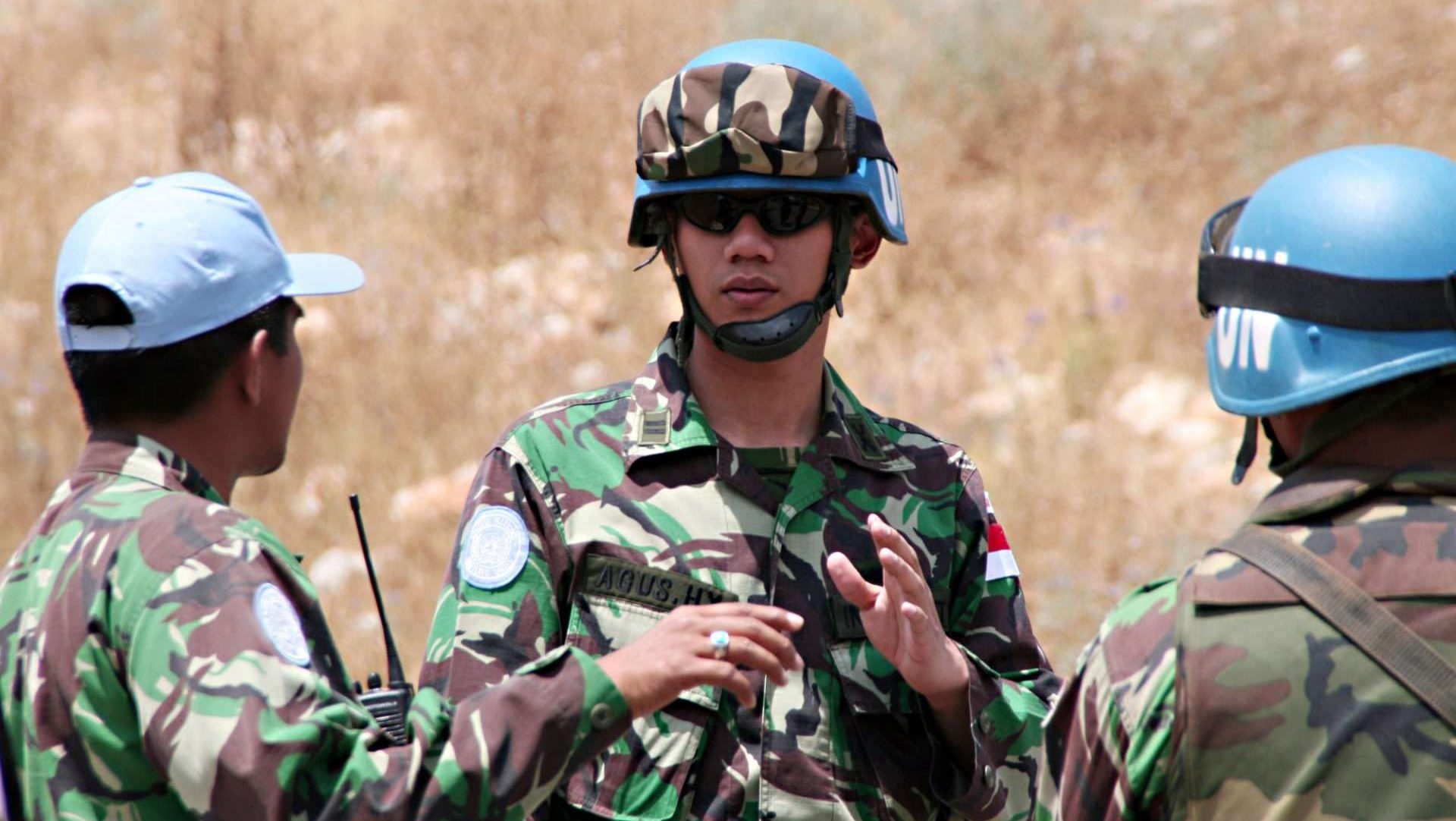
The challenge is becoming more urgent as UNIFIL approaches the end of its mission in its current form. Operations are scheduled to conclude on December 31, 2026, followed by a gradual withdrawal of personnel and equipment during the first half of 2027.
UNIFIL commander Major General Diodato Abagnara has said the transition must be orderly so that Lebanese forces and other United Nations agencies are able to assume responsibilities currently carried out by the peacekeeping mission.
UNIFIL includes thousands of troops and operates dozens of positions. Its role extends beyond monitoring the Blue Line to supporting humanitarian convoys and facilitating access to areas that can become difficult to reach during periods of heightened tension.
The end of the mission is therefore not merely an administrative UN matter. It is a test of whether the Lebanese state can prevent the emergence of a new security and institutional vacuum in the south.
Rome talks seek to turn ceasefire arrangements into a lasting framework
On the diplomatic track, Lebanon and Israel are preparing for a new round of talks in Rome during October under a US-sponsored framework.
Seven previous rounds failed to resolve the main territorial and security disputes, while Washington has argued that continued negotiations offer a path toward restoring Lebanese sovereignty and providing security on both sides of the border.
Reuters has reported that Israeli forces continue to control what Israel describes as a security zone extending roughly 10 kilometres into Lebanese territory in parts of the south.
Beirut, meanwhile, places a full Israeli withdrawal at the centre of its position, meaning any future arrangement will be directly linked to the weapons issue, Lebanese Army deployment and a mechanism for monitoring the border.
The economy: a fragile 2025 recovery has reversed
Away from the front line, economic indicators show how little financial room the Lebanese state has left to absorb further shocks.
The World Bank said in its latest Lebanon assessment that the economy is expected to contract by 6.4% in 2026 after estimated growth of 4.2% in 2025.
The Bank linked the reversal to the renewed conflict since March, including destruction of homes and infrastructure, displacement, disruption to supply chains, weaker tourism and softer domestic demand.
Lebanon therefore entered 2026 with the beginnings of a limited recovery, only to approach the end of the year needing once again to rebuild lost physical and economic capital rather than direct resources toward growth and investment.
IMF: the path has not yet become a rescue programme
On the financial front, the International Monetary Fund has welcomed progress on Lebanon’s bank-restructuring framework but says a new financing programme still requires additional steps.
These include bringing the bank-resolution framework into force, passing legislation addressing the financial gap in line with international standards, approving the 2027 budget and establishing a medium-term fiscal framework capable of putting public debt on a sustainable path.
President Joseph Aoun, however, referred part of the bank-restructuring legislation to the Constitutional Council for review, reopening debate over the independence of the Banque du Liban and regulatory powers.
Lebanon’s relationship with the IMF therefore remains at the reform stage rather than the stage of receiving new financing.
Reconstruction: the old estimate no longer captures the scale of the problem
Before the renewed conflict of 2026, the World Bank had estimated Lebanon’s recovery and reconstruction needs from the fighting through the end of 2024 at around $11 billion.
That assessment does not include the full extent of destruction caused since fighting resumed in March 2026.
Prime Minister Nawaf Salam said in September that reconstruction costs resulting from the wars since 2024 could exceed $27 billion, according to Reuters.
The gap between the two estimates shows how fundamentally the scale of the problem has changed. Lebanon is no longer discussing the reconstruction of damage from a conflict that has ended; it is trying to calculate reconstruction needs while new destruction continues to accumulate.
$200 million raises the question of who finances the return
With official reconstruction delayed, sources familiar with the matter told Reuters that Hezbollah had received $200 million from Iran to help support around 50,000 displaced or affected families.
A Hezbollah official confirmed that funds had been secured and said a distribution plan would be announced, but did not identify the source of the money. Washington, meanwhile, disputed the account regarding Iranian financing.
Regardless of the disagreement over the source, the issue exposes a deeper structural problem: when the state is unable to finance compensation and reconstruction quickly, parallel financial networks can emerge and potentially become part of the country’s political and social balance of power.
Sovereignty, reconstruction and the economy have become one file
For that reason, the future of southern Lebanon can no longer be separated from the future of the Lebanese state itself.
An Israeli withdrawal requires security arrangements. Security arrangements require an army capable of deploying. Exclusive state control over weapons requires a domestic political agreement. The return of residents requires reconstruction and public services. Reconstruction, in turn, requires financing, reform and international confidence.
A breakdown in any one of these links slows the others.
What should be watched in the coming weeks?
Five developments will help determine the direction of the Lebanon crisis before the end of 2026: whether the Rome negotiations produce a credible timetable for withdrawal; whether daily Israeli military operations actually decline; whether discussions over exclusive state control of weapons move from political positions toward an implementation mechanism; how the transition after UNIFIL is managed; and whether banking and fiscal reforms advance far enough to open the door to a new IMF agreement and meaningful reconstruction financing.
Lebanon’s central problem is that these processes are moving at very different speeds. Destruction can accumulate rapidly, while reform, diplomacy and reconstruction move slowly. Closing that gap may prove to be the state’s most difficult challenge during the final months of 2026.
Sources
- Reuters – Conditions on the ground and the return of residents to southern Lebanon
- World Bank – Lebanon Economic Monitor 2026
- Profile News – Field coverage